
Known in Akkadian as a “kudurru,” the stone commemorates a land transaction.
Like the Blau Monuments which we looked at in a previous entry, the Ushumgal Stele is an early example of a kudurru (Akkadian. “boundary marker”). It was probably set up in a temple to commemorate a land purchase. The face of the stele shows Ushumgal standing before the gate of a city, holding what appears to be a solid-footed goblet to his lips. The accompanying inscription reads,
Ušumgal, the pab-šeš priest of (the deity) Šara”1Gelb 1989, 44
Shara was the the patron god of Umma. It has been suggested therefore that the stele came from there.
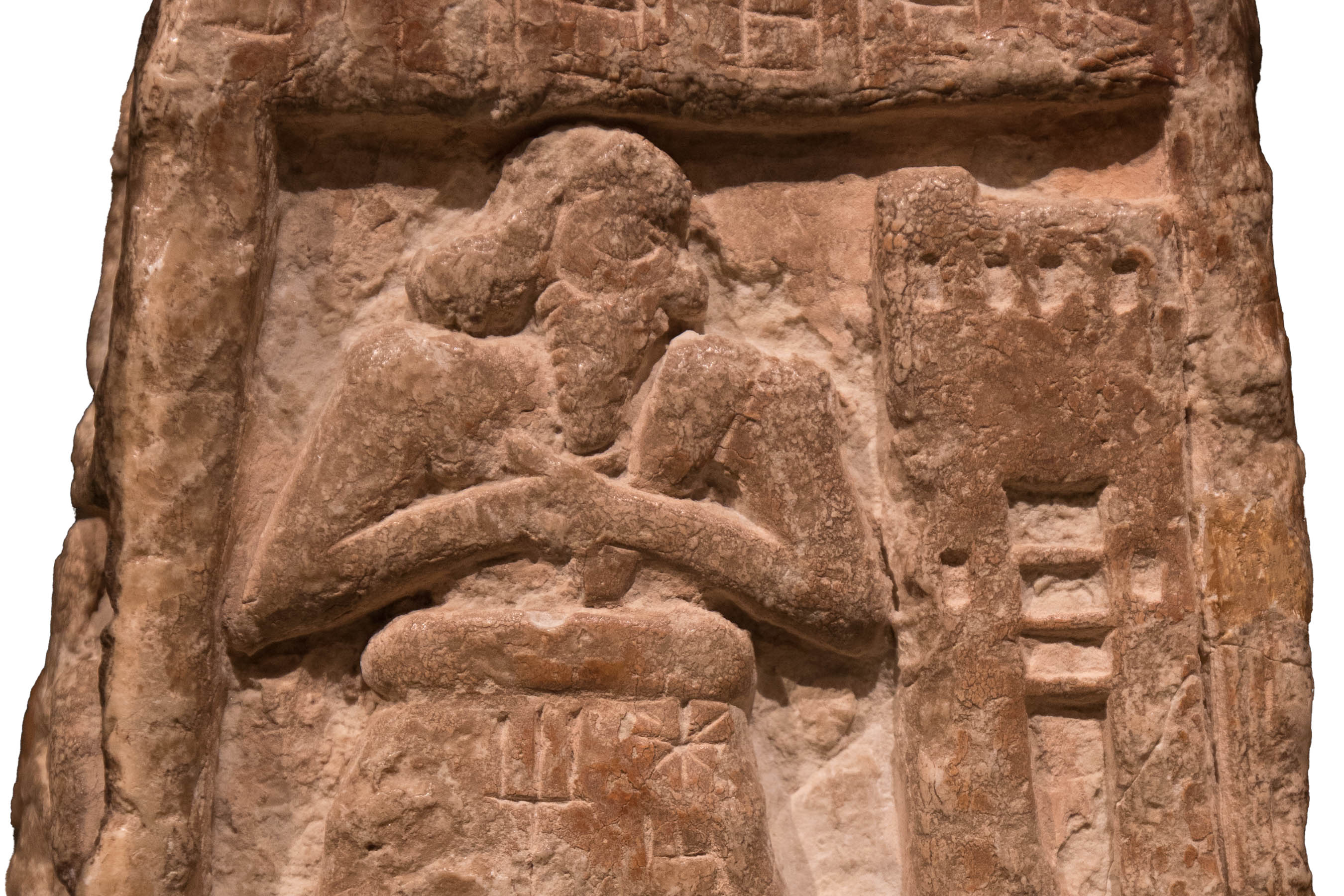
The main figure on the stele is dressed and has the same hair style as the statues found in the Abu Temple at Tell Asmar. He holds what may be interpreted as a solid-footed goblet.
The left side of the stele shows a woman, Shara-igizi-abzu, who is identified as the daughter of Ushumgal. She appears to be pouring out a vessel onto an altar at her feet. The longer inscription which wraps around the top of the stone lists fields and personal names. According to Gelb’s reconstruction, the total amount of land recorded on the stele amounts to approximately 400 acres.2Gelb 1989, 45
It is not clear who is doing the buying or selling or even what price was paid for the land. According to one proposal, Ushumgal is granting land to his daughter. This would explain why none of his sons are represented and why no purchase price is mentioned. It would also explain why his daughter is shown so prominently on the stele.3Gelb 1989, 45
The representation of a gate on the stele is significant since it is in the gate of the city where agreements of this kind would traditionally have been finalized. It is also worth noting that that the dress and hair-style of Ushumgal and his daughter are identical to those worn by the statues found in the Abu Temple at Tell Asmar.

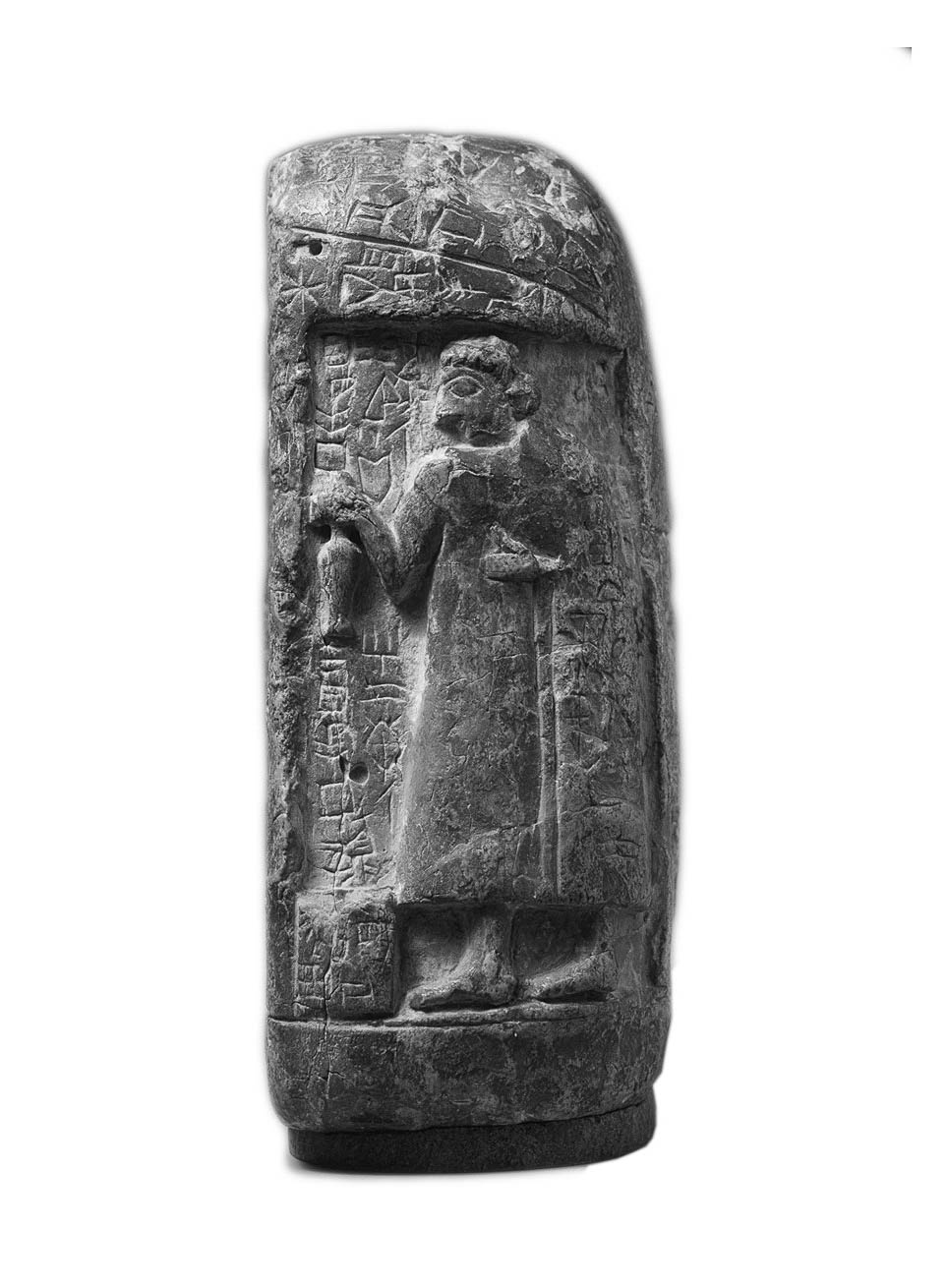
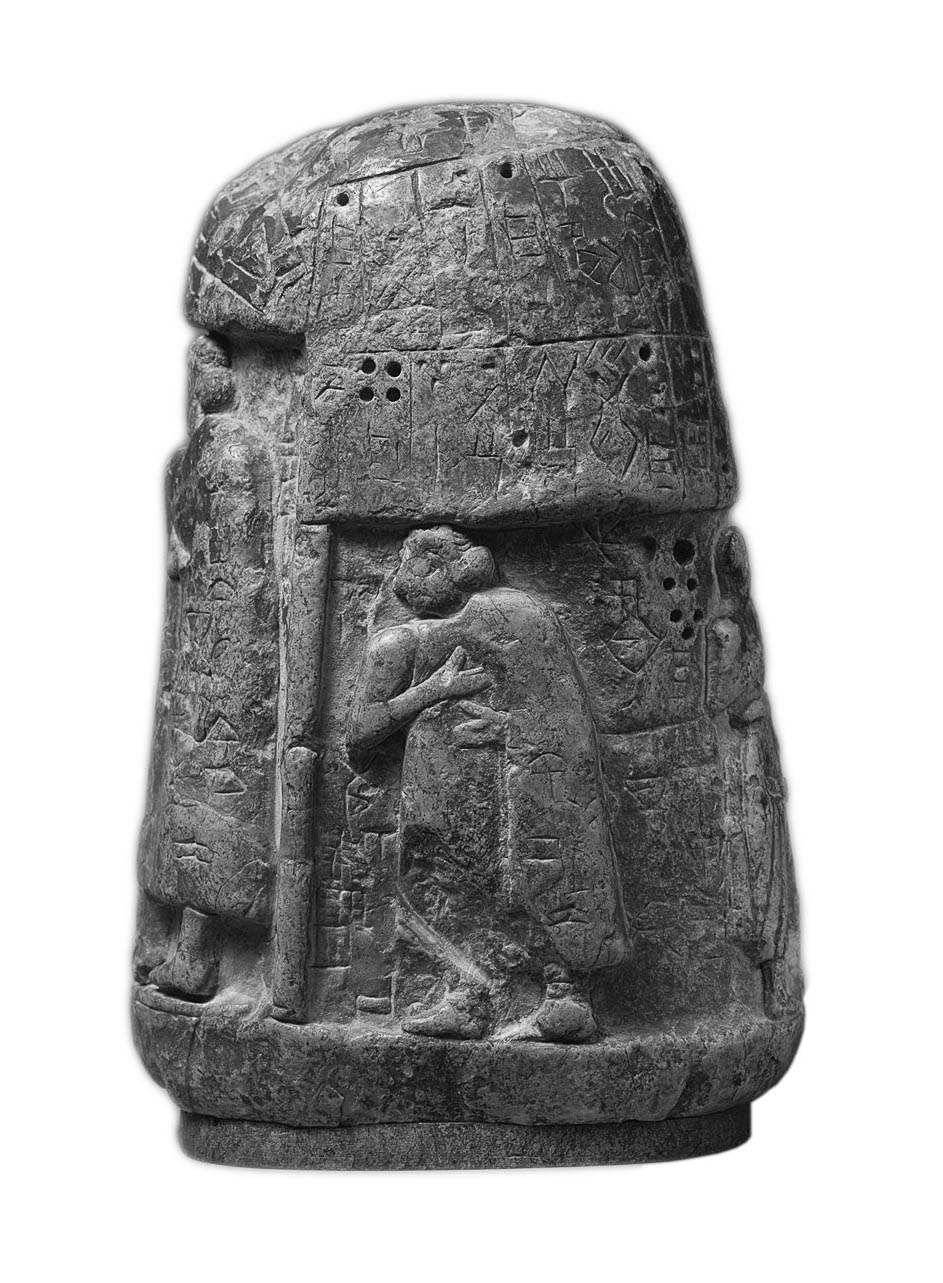

The Ushumgal Stele dates to the Early Dynastic I. It represents the next stage in the development of writing after the Jemdet Nasr period. Translations from Gelb (1989), 45 ff.
Photos: Met ArchivesAga of the Great Assembly
One of the individuals named on the stele is “Aga, of the Great Assembly.” It is curious to note that an individual with this name appears in the Sumerian King List (SKL) in connection with Kish.
Aka, son of Enme(n)-baragesi, reigned 625 years… Kish was defeated; its kingship was taken to Eanna.
Another Sumerian text, known as Gilgamesh and Aga, recounts the defeat of Aga at the hands of Gilgamesh. Although it is unnecessary to equate the Aga on the Ushumgal Stele with the Aga of the SKL, it proves that this name was current in Sumer during the Early Dynastic I period.

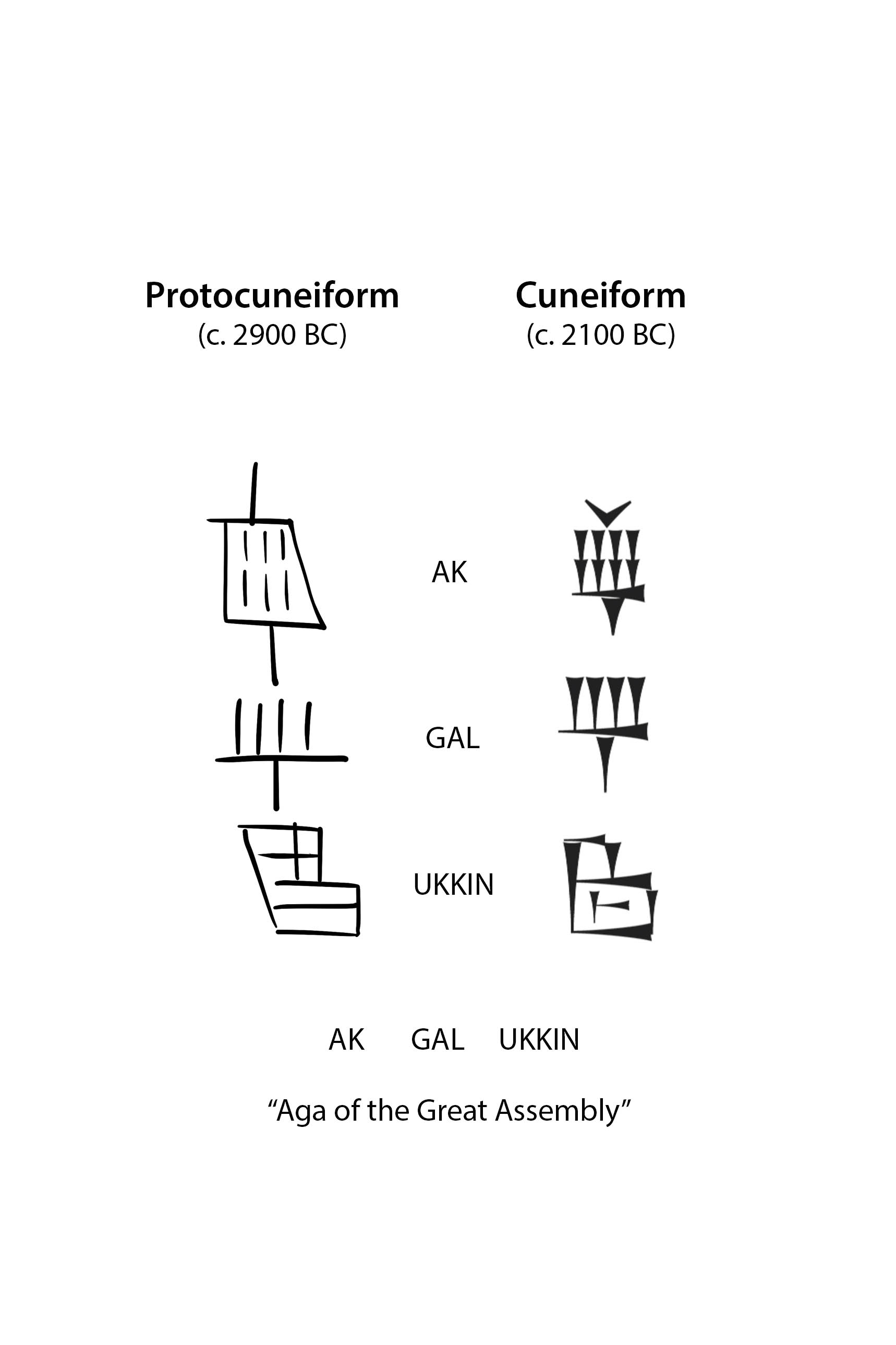

Gelb suggested that individuals named on this side of the stele were witnesses to the transaction, including a certain “Aga, of the Great Assembly.”1Gelb 1989, 44-45
Gelb, Ignace J, P. Steinkeller, R. M. Whiting Jr..
Earliest Land Tenure Systems in the Near East: Ancient Kudurrus. OIP 104 vols.
Chicago: The Oriental Institute, 1989. Link
Lecompte, Camille, Giacomo Benati. “Nonadministrative Documents from Archaic Ur and from Early Dynastic I-II Mesopotamia: A New Textual and Archaeological Analysis.” Journal of Cuneiform Studies 69 (2017): 3-31. Link