
A small painted jar typical of Jemdet Nasr period pottery.
As noted previously, Langdon found a unique type of painted jar at Jemdet Nasr. Painted with plum red and purple or black pigments, this polychrome pottery became one of the defining features of the Jemdet Nasr period.
Characteristics
- Painted polychrome jars
- Decorated with geometric shapes or highly stylized representations of animals
- A pronounced “ledge rim”
- The upper and lower halves of the pot are joined to form a sharp angle or line of “carination”
- A small pierced knob on the side of the pot known as a “lug handle”
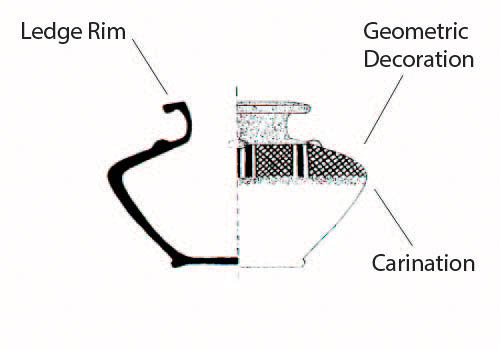
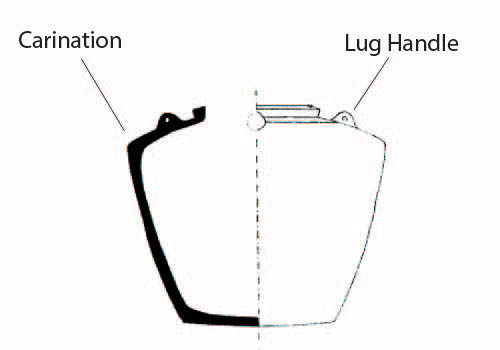
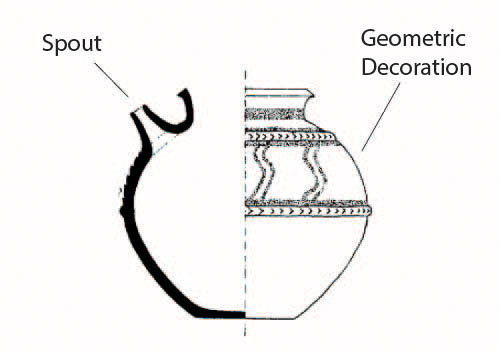
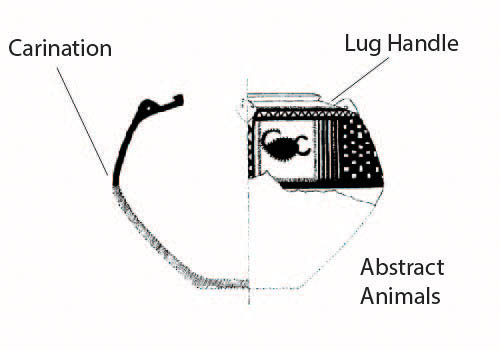
The pottery featured geometric decorations or, more rarely, highly abstracted animals.
Geometric and Abstract
In contrast to the unadorned naturalism of the Uruk period, the pottery and cylinder seals associated with the Jemdet Nasr period display a fascination with the geometric and abstract. If animals are depicted, it is always in a highly stylized form. Scorpions, goats, and birds are favorites. The abstract style displayed on these jars seems to emanate from the Iranian highlands. If so, then this explains its prevalence at Jemdet Nasr, given its proximity to the main trade route that connected Mesopotamia with Iran. It has even been argued that Jemdet Nasr ware should not be used to define a single period, since it is often found together with pottery of the Uruk period. Rather, it is better understood as a “luxury product of Late Uruk date.”1Abu al-Souf 1977, 6 If so, then neither the Jemdet Nasr cylinder seals nor the polychrome painted jars are particularly helpful for distinguishing the Late Uruk and Jemdet Nasr periods.
The more advanced style of writing displayed by the tablets discovered at Jemdet Nasr nevertheless remain an important chronological marker. One may still speak of a Jemdet Nasr period, characterized by advancements in writing, although the amount of time assigned to the period may be quite a bit less, even, than the two hundred years assigned to it by the standard chronology.
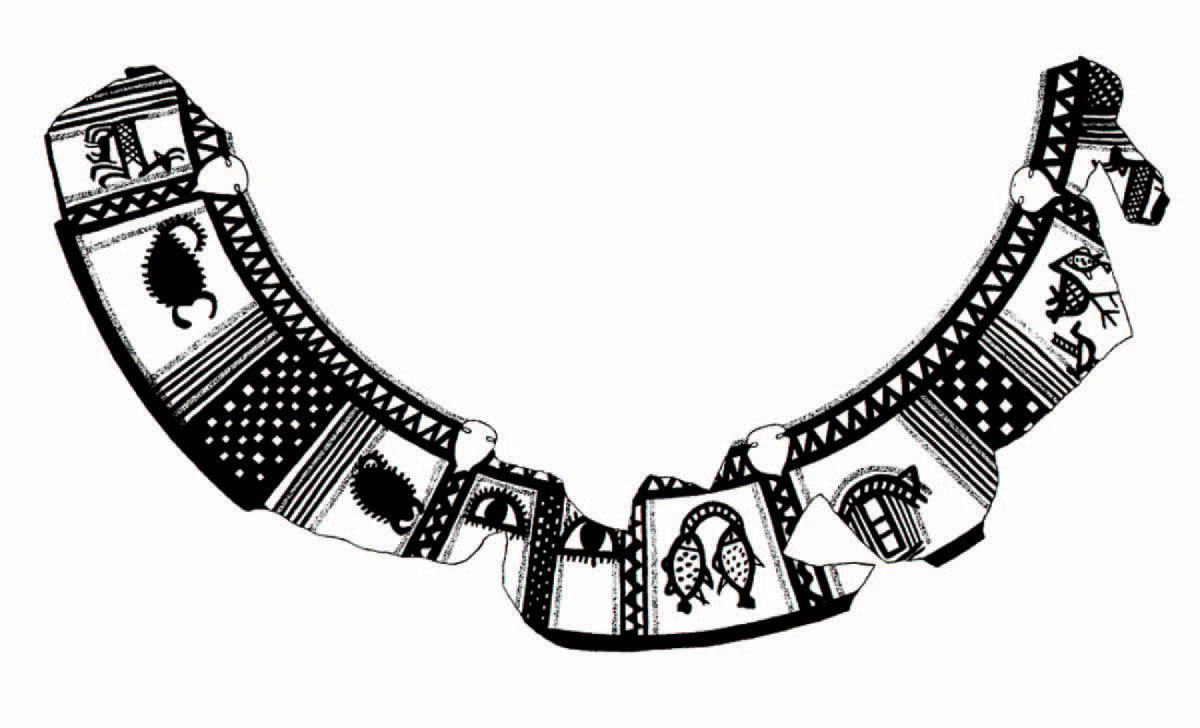
The decorations include, from left to right: a caprid (sheep-goat-antelope) and its young, scorpions, two eyes, two fish, a building facade, birds, caprid.
Abu Al-Soof, Behnam. “Notes on the Late Prehistoric Pottery of Mesopotamia.” Sumer XXVIII (1972). Link
Field, Henry, Richard A. Martin. “Painted Pottery from Jemdet Nasr, Iraq.” American Journal of Archaeology 39, no. 3 (1935): 310-20. Link
Frankfort, Henri.
Mesopotamia, Syria, and Egypt and their Earliest Interrelations. Occasional Papers, No. 6. vols.
London: Royal Anthropoligical Institute of Great Britain and Ireland, 1924.
Matthews, R. J. “Defining the Style of the Period: Jemdet Nasr 1926-28.” Iraq 26, no. 54 (1992): 1–34. Link