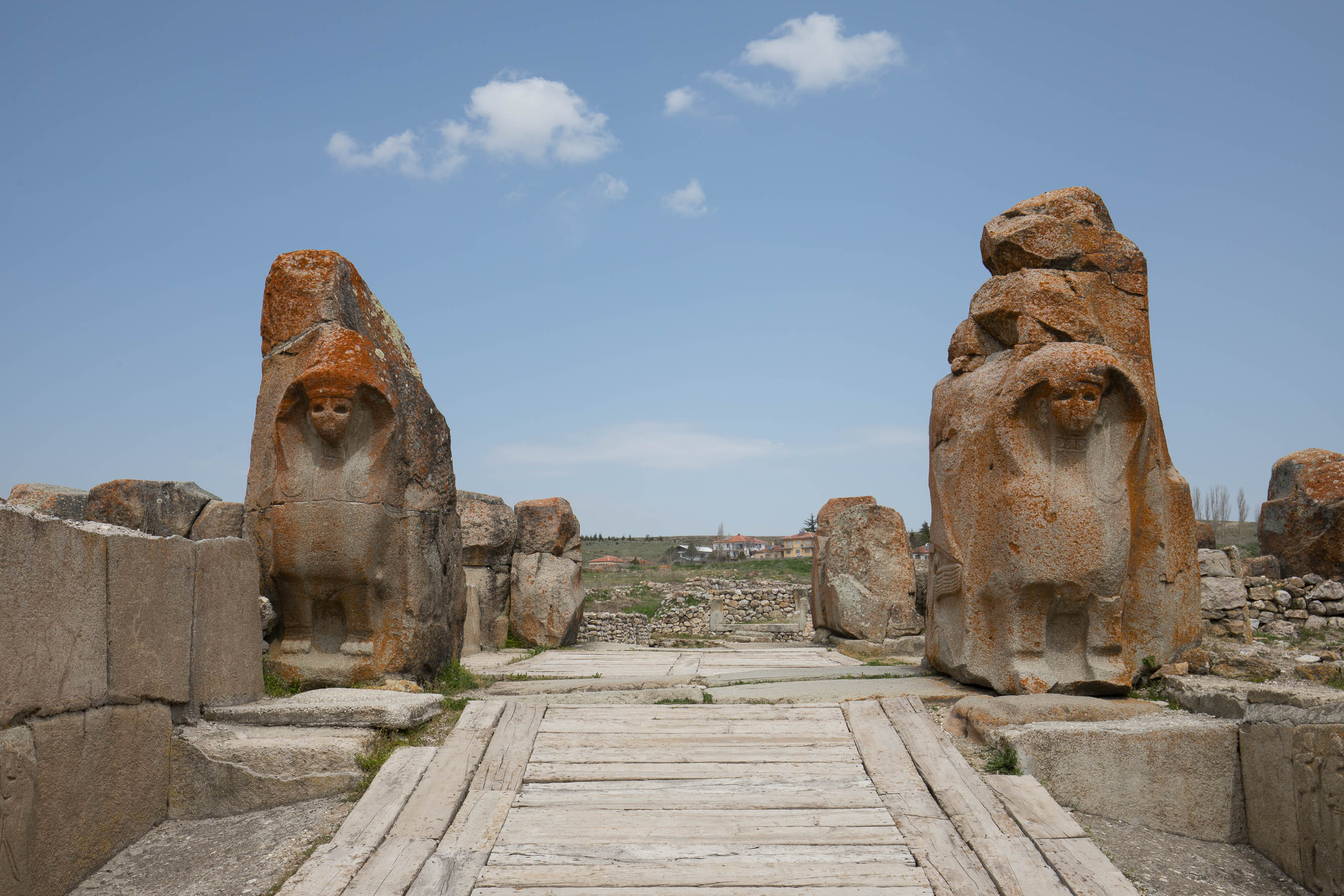
The city gate of Alacahoyuk, flanked by two sphinxes, was constructed in the Late Bronze period, when the Hittite Empire ruled most of Anatolia and Syria.
As one travels northwards from Mesopotamia, up the Euphrates River, the terrain grows increasingly mountainous, and the river increasingly narrow and difficult to navigate. The northernmost city on the Euphrates accessible to large boat traffic was Arslantepe (Greek. “Melitene”, modern day Malatya). From here the river divides into two branches: the Murat Su and the Kura Su, which have their origins in the mountains of Armenia. The region beyond Arslantepe was mountainous and heavily forested, rich in minerals, known to outsiders as “the land of the Hatti” after the name of the people who lived in those parts. It is generally thought that sometime around the end of the 3rd millennium BC, three major groups of Indo-European speaking peoples migrated into Anatolia: the Luwians, Palaians, and Nesites. The latter group settled in the region occupied by the Hatti where they are thought to have eventually displaced them, either peacefully through assimilation, or by conquest. In either case, the Nesites continued to refer to their lands as the “land of Hatti” while they themselves became known as the Hittites (Hebrew ‘Hittim‘). Although they share the same name, the Indo-European speaking “Hittites” should not to be confused with the earlier inhabitants of the land, the “Hatti,” who spoke a different and completely unrelated language.

The language of the Hittites (Nesite) is one of the oldest branches of the Indo-European family of languages. In contrast, the Hattian language (hattili) was not Indo-European but an isolate, like Sumerian.
It is admittedly a confusing picture and, as the Hittitologist Trevor Bryce observes, the whole theory of migrations is built on quite a few suppositions. The only reason we know anything about the Hattians is because their language has been preserved in a few Hittite religious texts where it appears together with the subscript “written in the language of Hatti (hattili).”1Bryce 1998, 11 The Hittites seem to have regarded hattili as a sacred language, like Latin.
The early bronze cultures of central Anatolia are generally viewed as “Hattic” whereas the Hittites are not thought to have entered onto the world stage until the Middle Bronze period. However, as we will see, the evidence from the “Hattic” tombs of Alacahoyuk suggests that there was considerable continuity between the supposed “Hattic” and “Hittite” cultures.
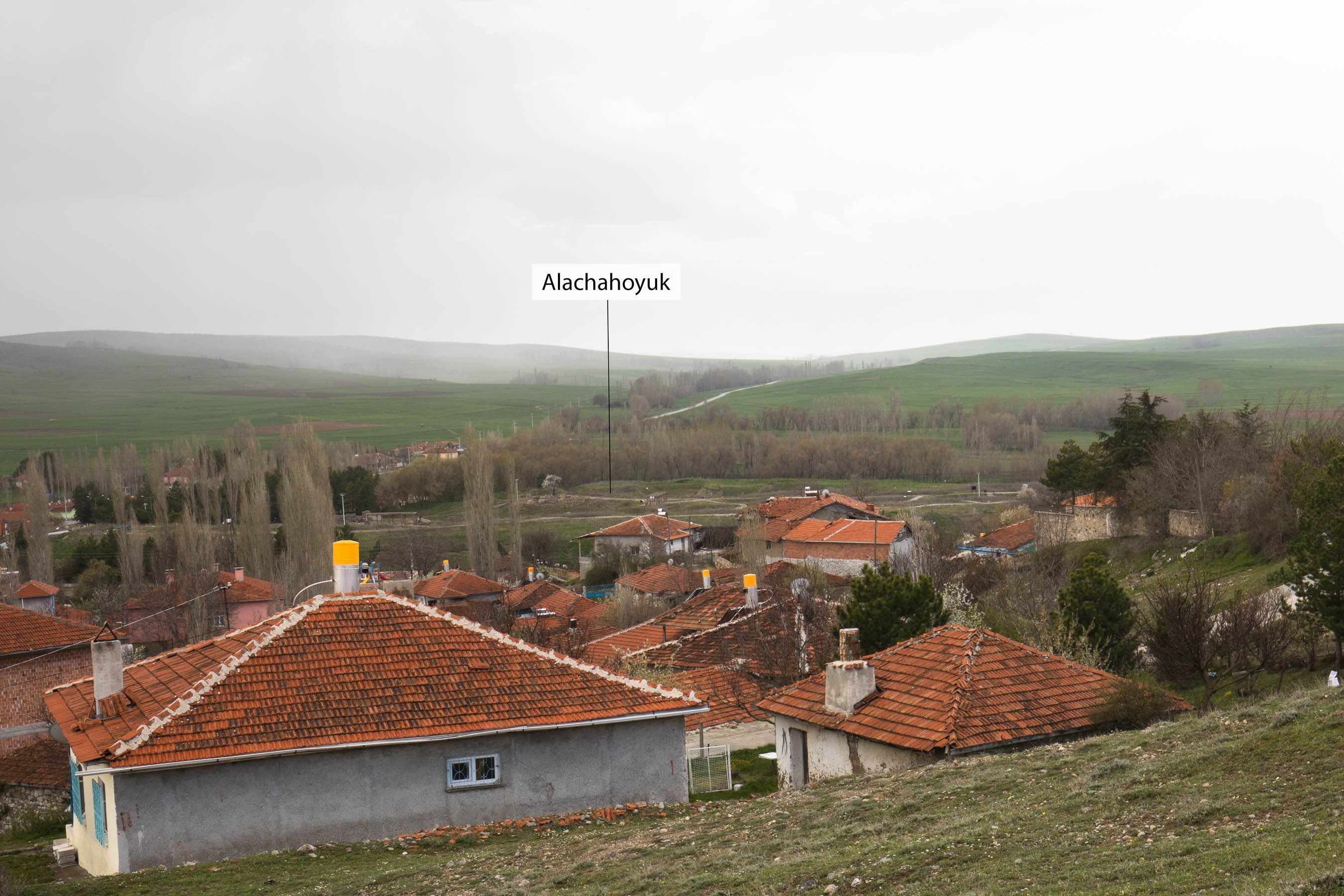
The ancient site is situated in a valley surrounded by rolling hills in north central Anatolia.
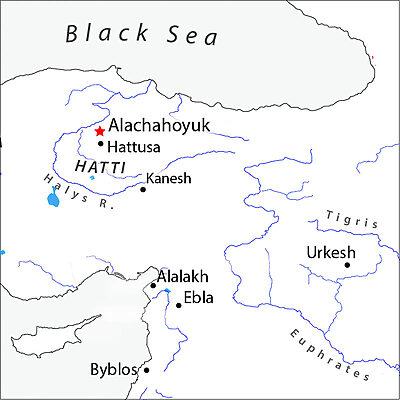
Alacahoyuk
Alacahoyuk was an important Hittite city situated amid low, rolling hills in the great bend of the river, known today as the Kizilirmak (“Red River”), or to the ancient Greeks as the Halys, which cuts a two thousand mile-long channel through central Anatolia before emptying into the Black Sea. Compared to the great Hittite capital of Hattusa, it would be easy to dismiss Alacahoyuk as a mere outpost of the Hittite empire. However, its elaborately carved walls and the two giant stone sphinxes guarding its entrance suggest that, although not very large, the Hittites seem to have attached special importance to Alacahoyuk although the reason why was not discovered until 1935, when two Turkish archaeologists, Remzi Arik and Hamit Kosay, unearthed a royal cemetery directly beneath the city. The incredibly rich tombs must have belonged to the ancestorial kings and queens of the Hittites. Or did they?
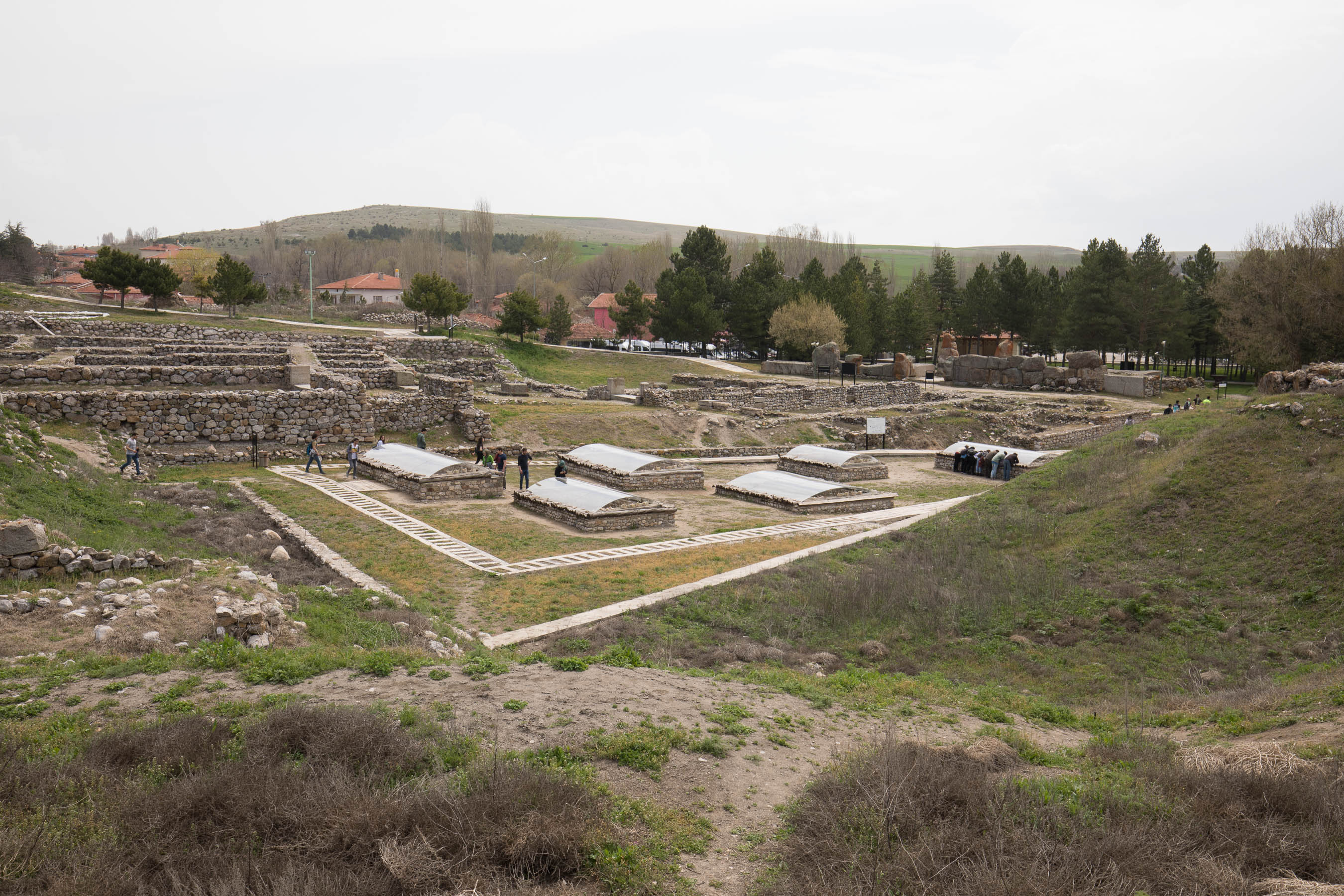
The tomb chambers are visible today in the middle of what would become an important Hittite city in the Late Bronze Age. The tombs must originally have been located on the edge of the settlement.
The Royal Tombs
Fourteen royal tombs were found in the early bronze levels of the city. According to one estimate, these tombs span a period of approximately 200 years, from approximately 2300 to 2100 BC.2Akurgal 1962, 22 More recent estimates based upon C14 dating have pushed back these dates to 2850-2450 BC.3Yalcin and Yalcin 2013, 38 This cannot be correct, however, since weapons were found in the tombs which clearly belong to the end of the 3rd millennium BC.
The tombs consist of a rectangular, stone-lined pit covered with wooden beams. The largest measures 11 feet wide by 26 feet long and 3 feet deep. Most contain just a single body, placed on a mudbrick platform in a corner of the chamber, with jewelry, weapons, musical instruments, ceremonial objects, and vessels of gold, silver, tin-bronze, and arsenical-copper. Both male and female burials are found in the cemetery.
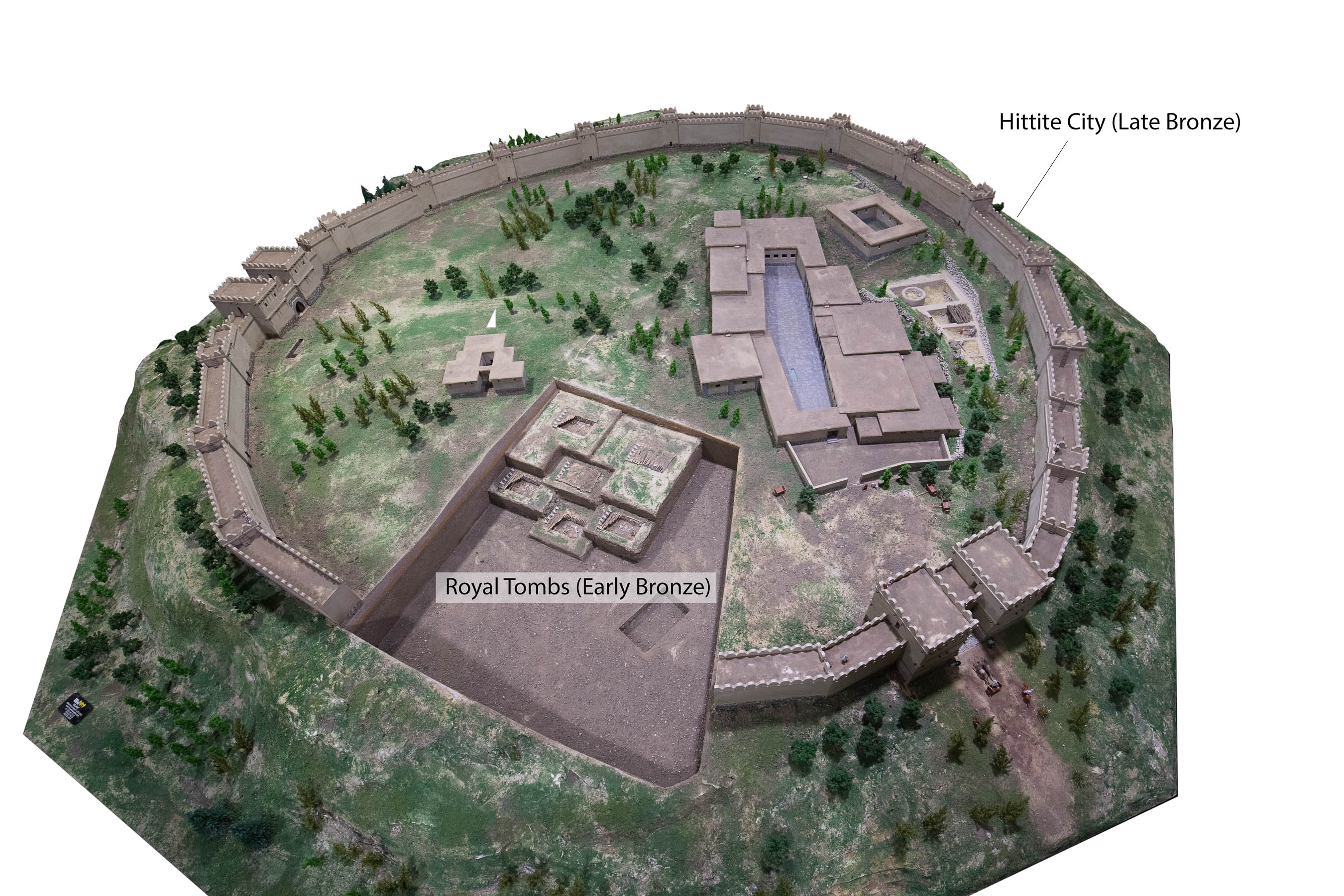
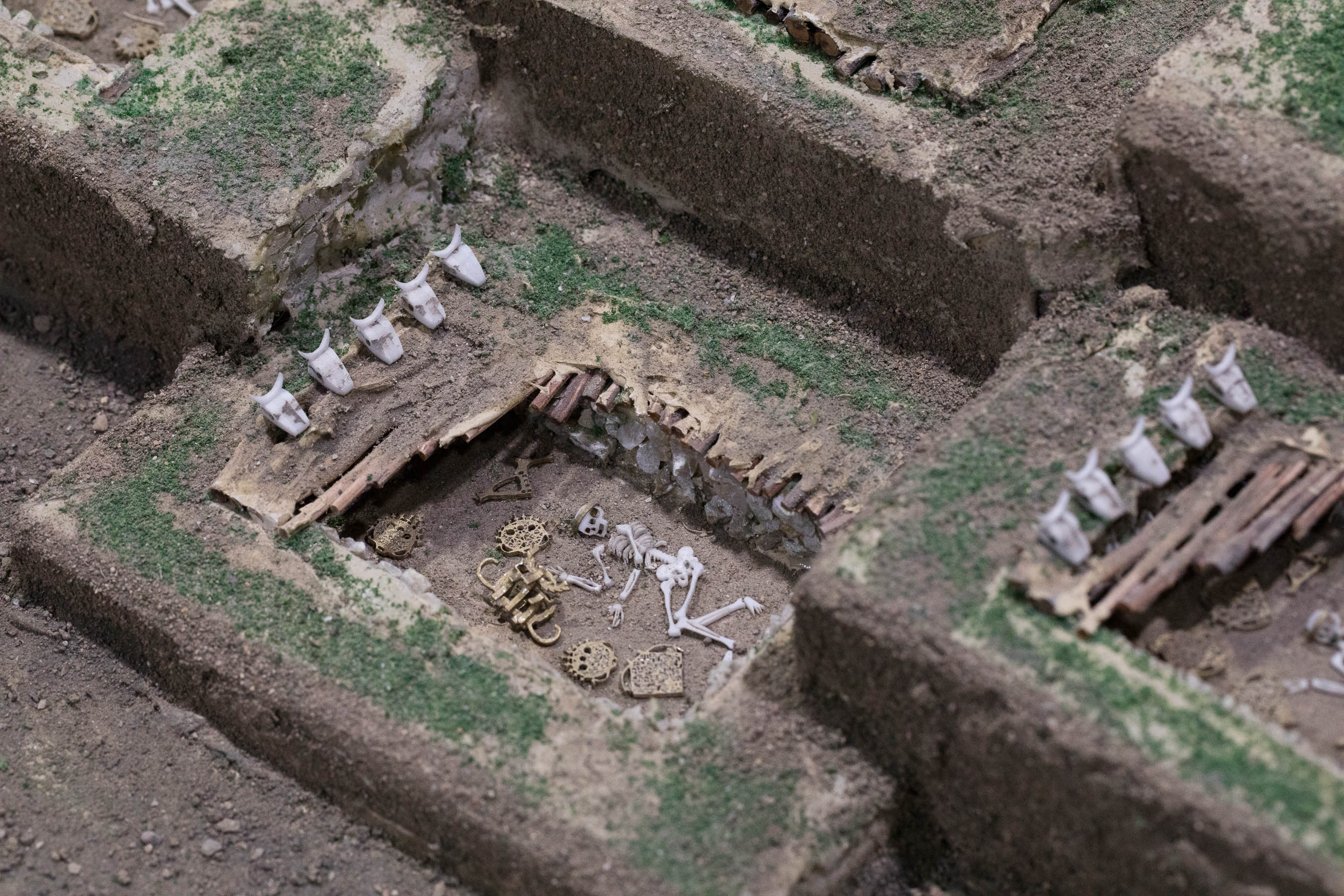
Left: A model of the city showing where the tombs were found in relation to the city. Right: A model of a tomb showing the body lying in a crouched position, facing west, surrounded by rich grave goods, including distinctive copper standards known as “sun disks.” The tomb chamber was covered with wooden planks.
The burials have been interpreted alternatively as “Hattic” or “Hittite” royalty.4In his first book, The Art of the Hittites, published in 1962, Akurgal argued that the tombs belonged to Hattian nobles. In a later publication, The Hattians and the Hittites, published in 2001, Akurgal changes his position somewhat and argues that the tombs belong to Hittite kings although he suggests that the grave goods were the work of Hattian craftsmen. Akurgal suggests that the Indo-European tribes who migrated off the steppe were barbarians compared to the native Hattians, who were more advanced (Akurgal 2001, 14). It is not clear to me on what basis Akurgal makes this statement since the Maikop people of the north Caucasus are known to have had quite an advanced knowledge of metallurgy. I will argue that the tombs are best understood as early Hittite burials inasmuch as they are found beneath an important Hittite city and contain grave goods linking them to the Hittites.
Oxen
One of the interesting features of these tombs are the rows of bovine heads and hooves arranged in a row across the top of the tomb facing west.5Bachhuber 2011, 63 Archaeologists found metal rings next to the skulls such as were used to control oxen. (Note: Oxen are castrated bulls (steers) that were used as draft animals.) Bronze statuettes of bulls with pierced noses have also been found in the tombs of Alacahoyuk and a statuette of a bull from nearby Horoztepe was found with the nose ring still attached.6Whalen 2005, 98 Although no remnants of a cart were found next to the tombs, the animals were likely oxen that were used as draft animals. As you may recall, oxen with bronze nose rings were found in association with graves of the Maikop culture in the northern Caucasus and a pair of oxen were found in PG789 at Ur, also wearing nose rings, although in this instance the rings were made of silver.
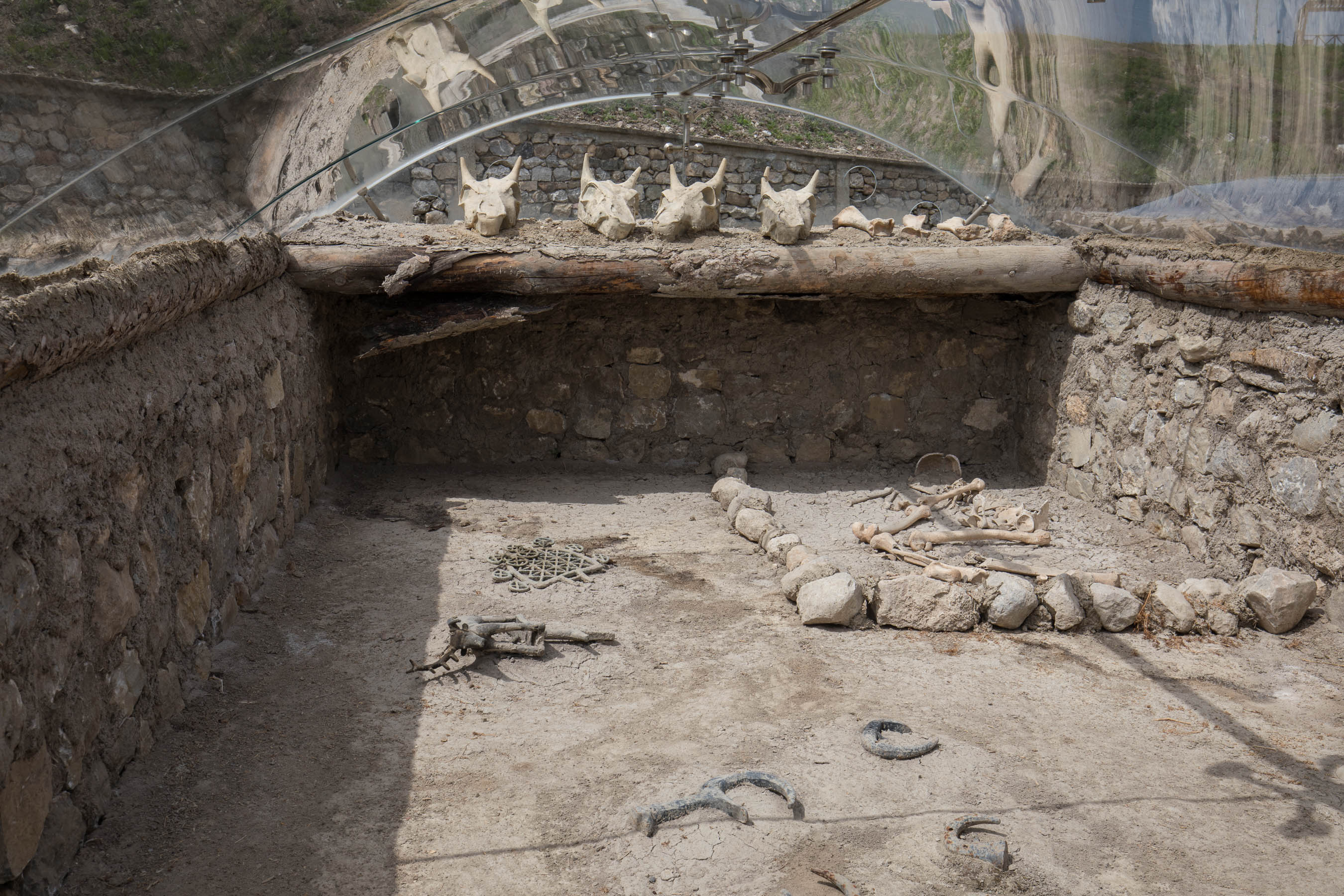
The tombs are preserved today beneath a glass cover. The head of four oxen can be seen on one end of the tomb. The body was placed in a corner of the pit.
How old are they?
The rich jewelry and metal objects recovered from the tombs of Alacahoyuk have elicited comparisons with objects found in the Royal Cemetery of Ur, although the latter was far richer. Both cemeteries produced knob-headed pins, swords with crescent-shaped pommels, objects made of tin-bronze and meteoric iron, and oxen. The similarities are indeed striking. But so are the differences. For example, no seals were recovered from the royal tombs at Alacahoyuk, nor any evidence of writing. Chronologically, the Royal Cemetery of Ur dates to the Early Dynastic II and IIIa periods, whereas the tombs of Alacahoyuk probably date a little later, to the Early Dynastic IIIb and Akkadian periods.

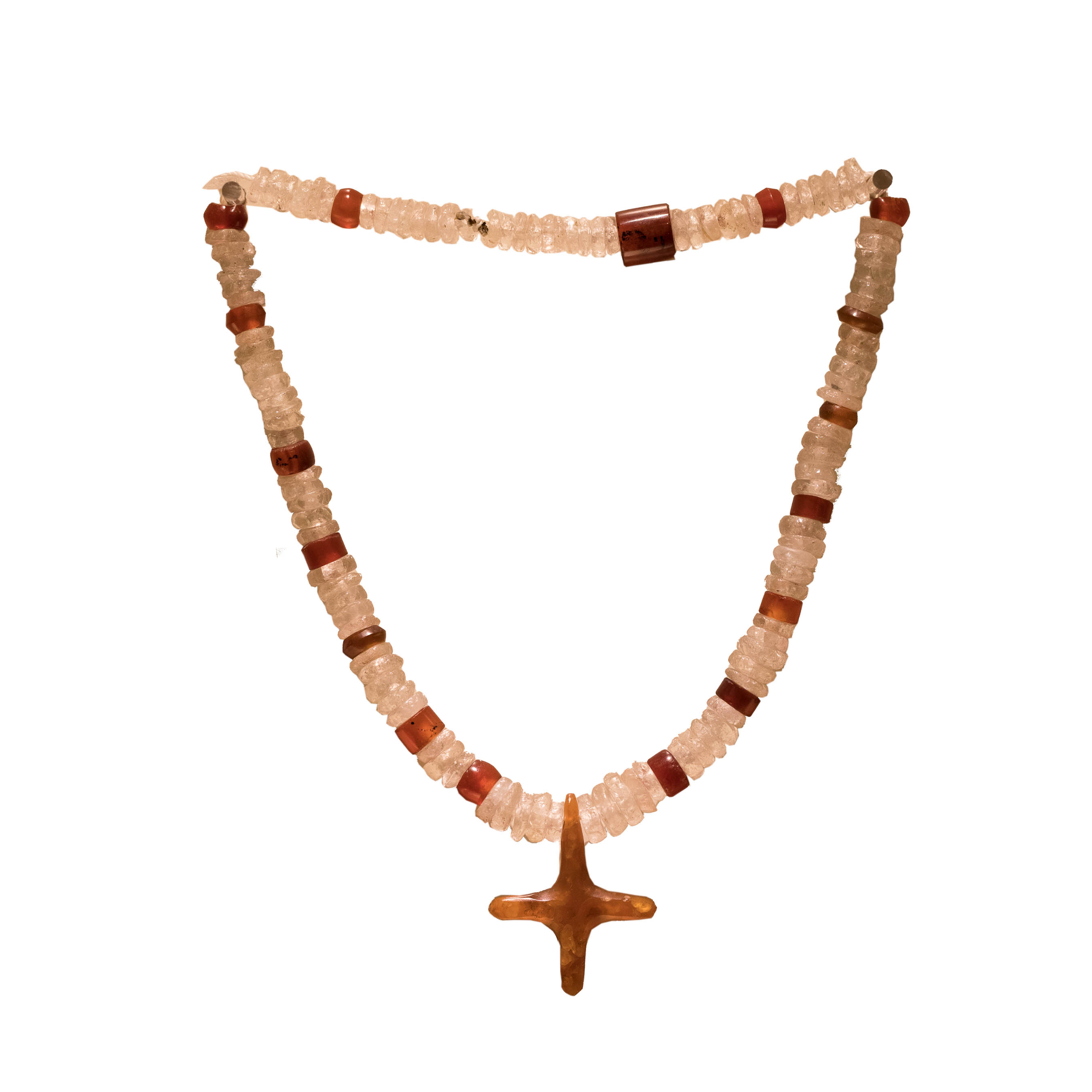
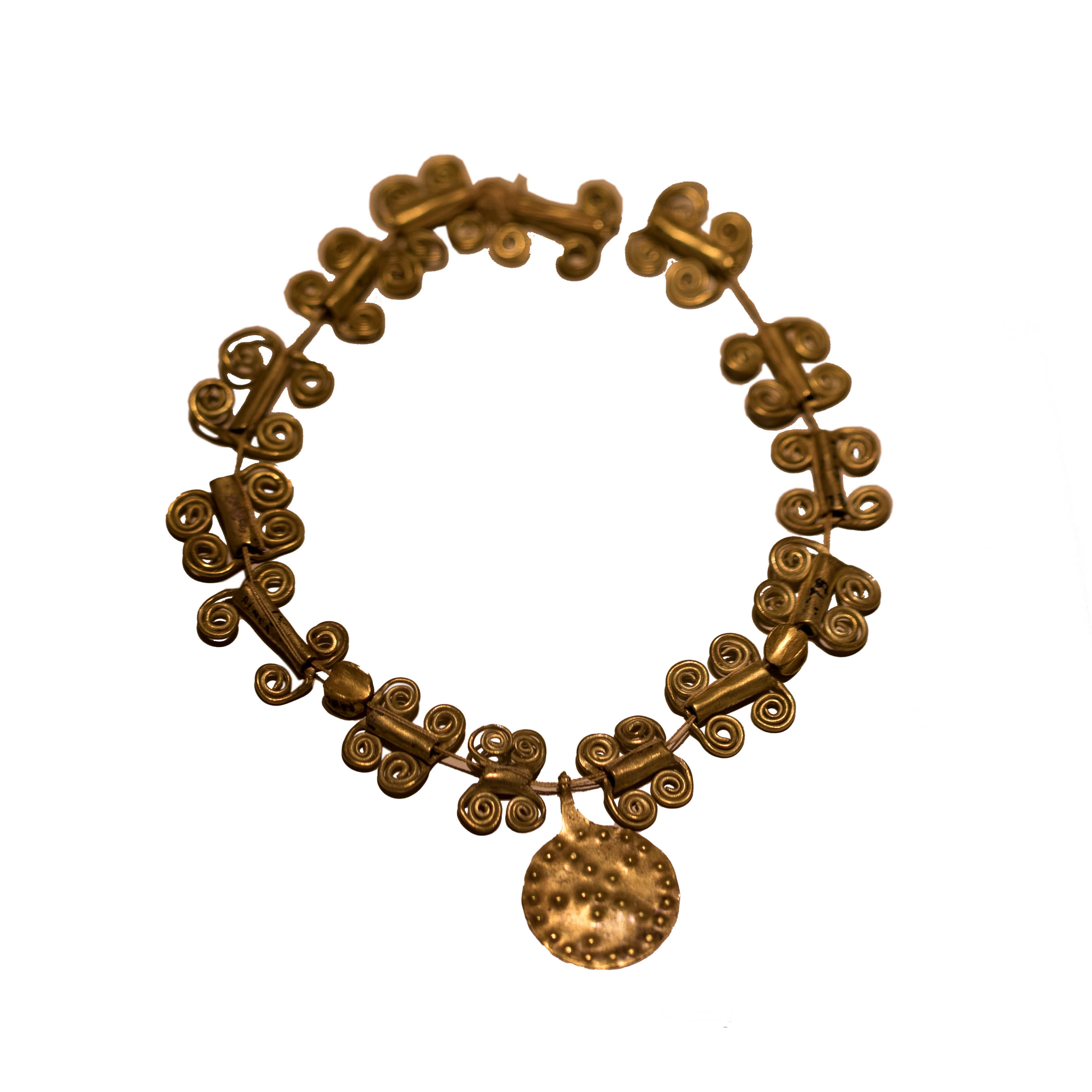
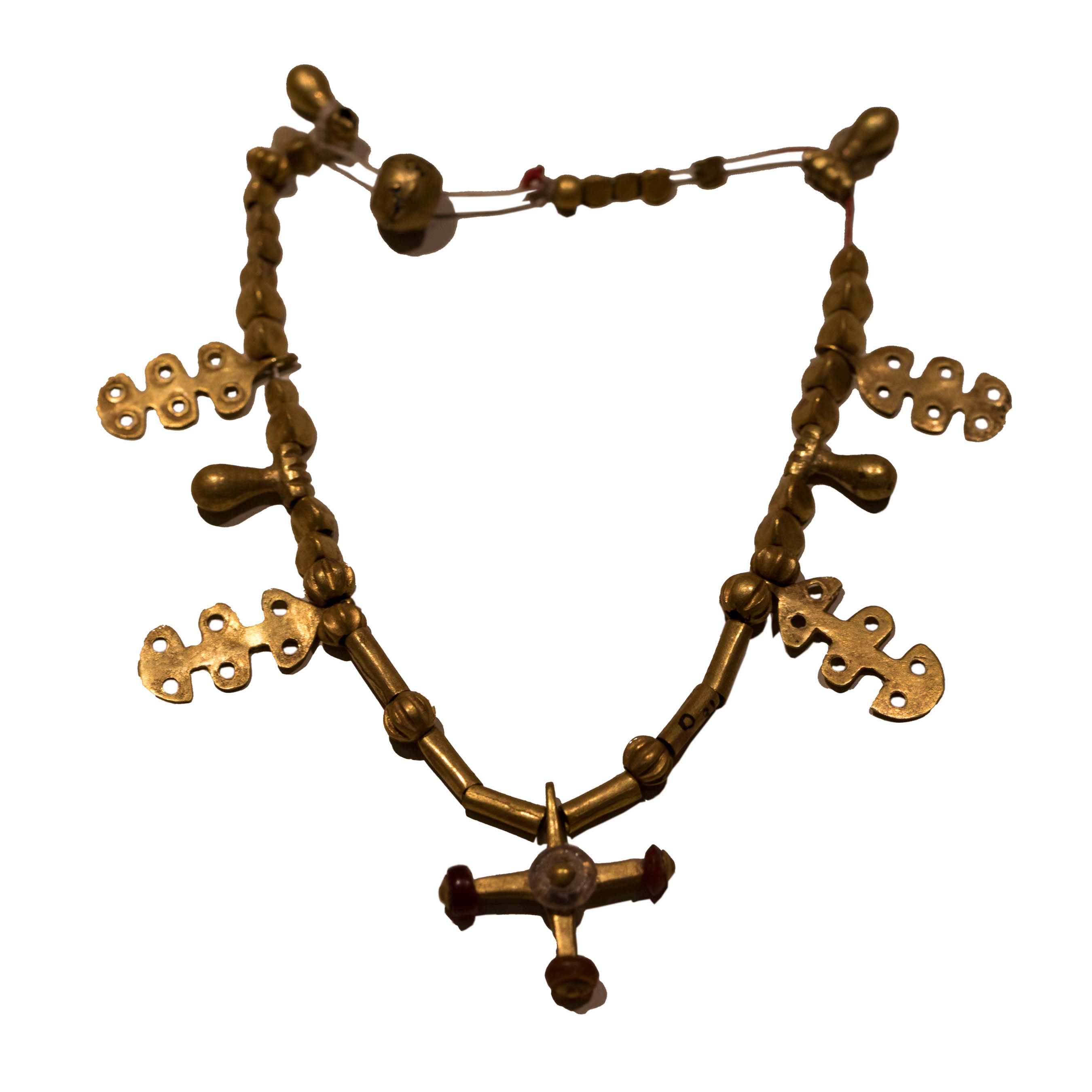
The necklace pictured top-right is made from rock crystal and agate. Gold plates with punched patterns were also found in Troy II.

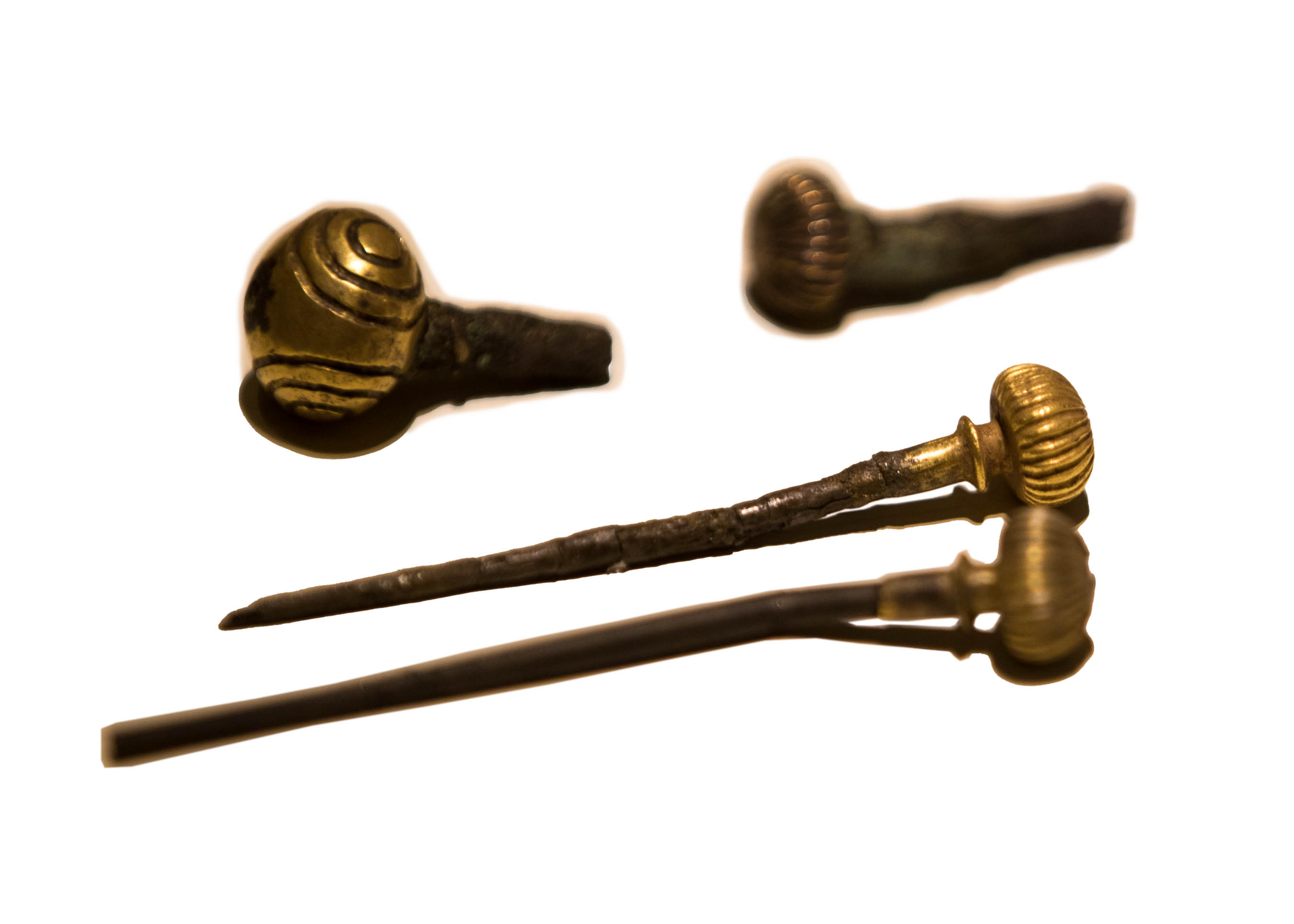
Left: The bracelet was made using a goldsmithing technique known as granulation in which tiny beads of gold were soldered to the surface to form intricate patterns. The earliest artifacts to make use of this technique were found in the Royal Cemetery of Ur. Granulation requires an advanced knowledge of soldering techniques. Right: Knob-headed pins from Grave MA at Alacahoyuk.
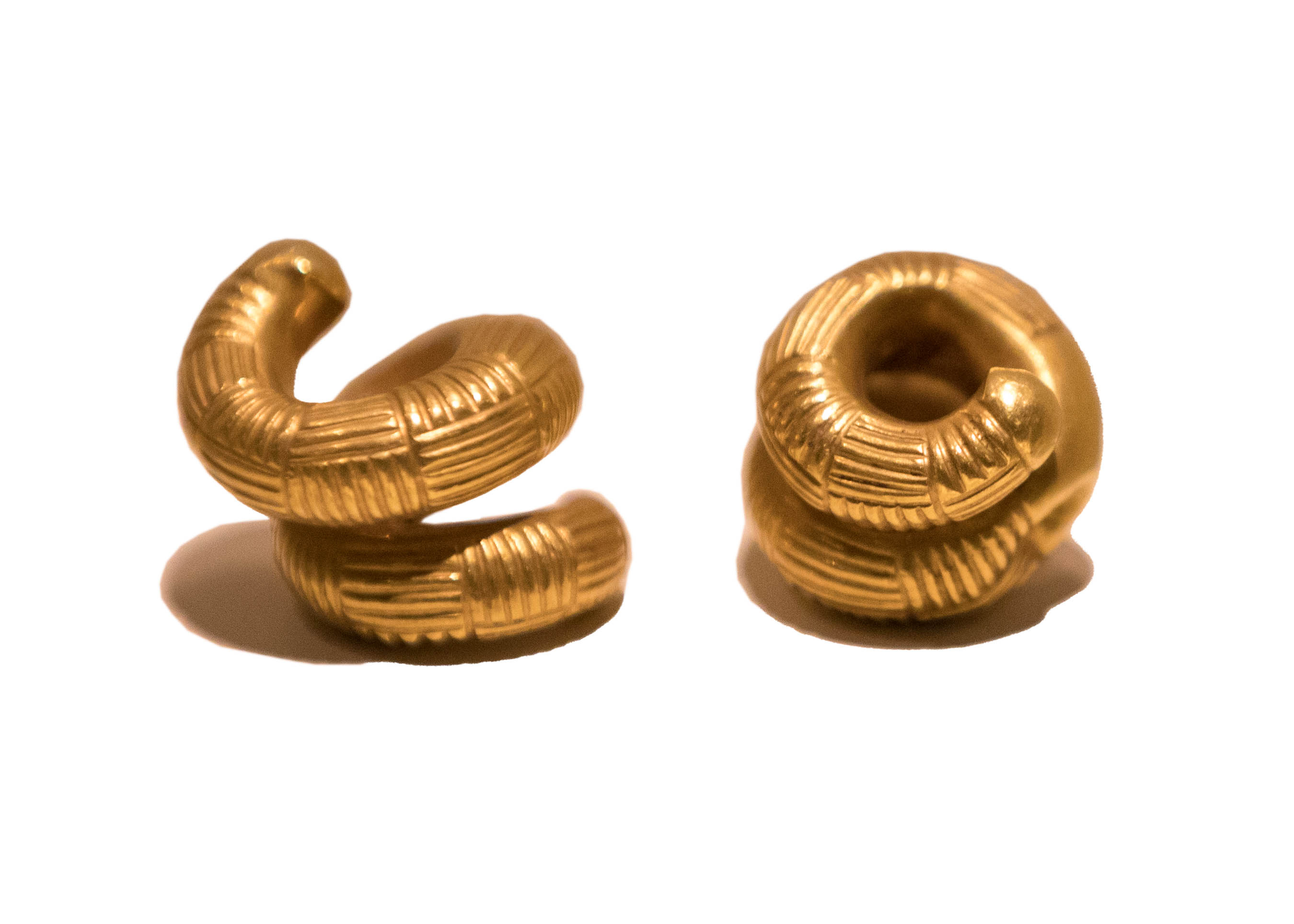
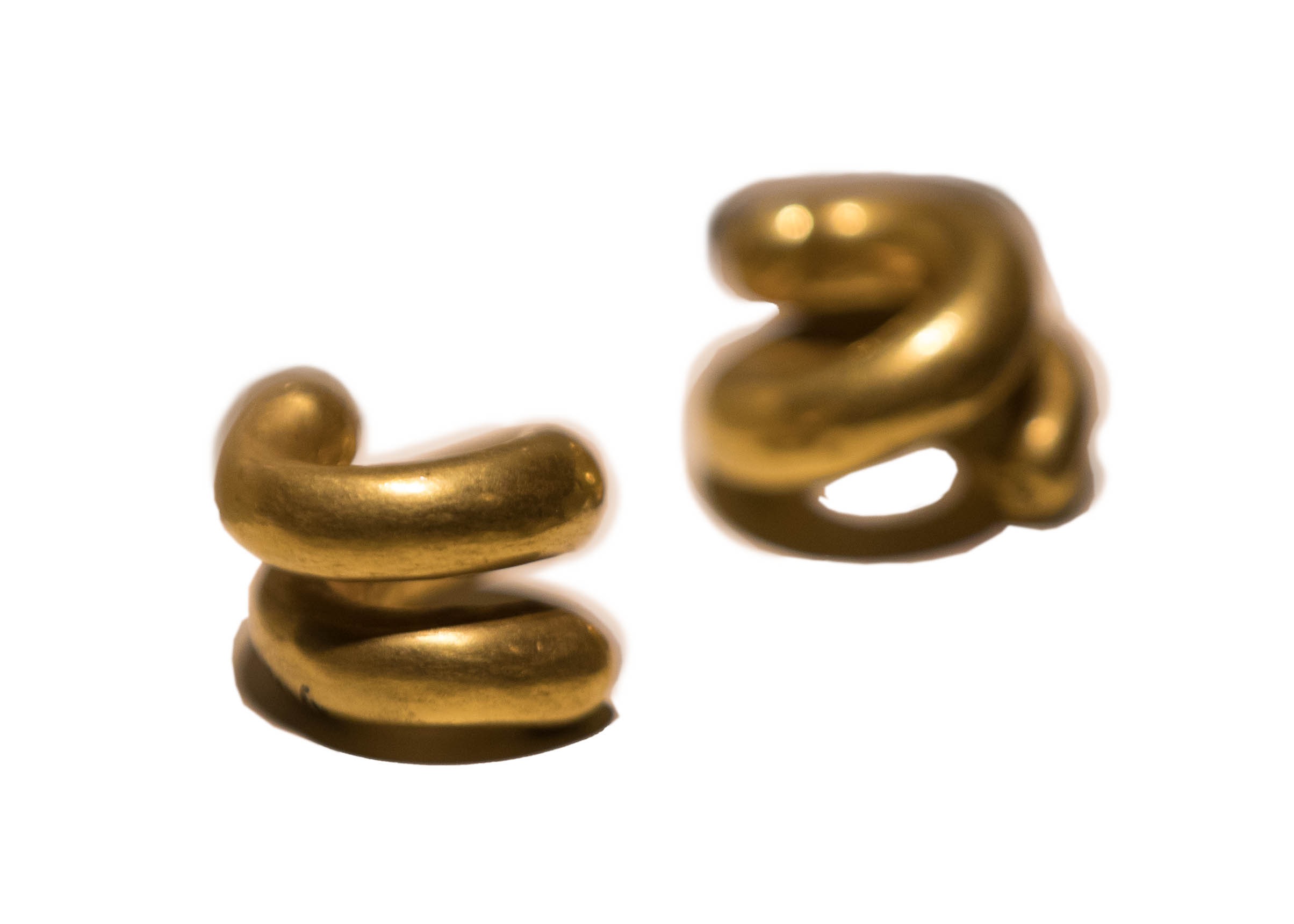
These spiral hair rings are identical to ones found at sites belonging to the Kura Araxes culture in the Caucasus.
Akurgal, Ekrem.
The Art of the Hittites.
New York: H.N. Abrams, 1962.
Akurgal, Ekrem.
The Hattian and Hittites Civilizations.
Ankara: Publication of the Republic of Turkey, 2001.
Bachhuber, Christoph.
“Negotiating Metal and the Metal Form in the Royal Tombs of Alacahöyük in North-Central Anatolia,” in Interweaving worlds : systemic interactions in Eurasia, 7th to 1st millennia BC, edited by Toby Wilkinson, , Susan Sherrat, John Bennet.
Oakville, CT: Oxbow Books., 2011. Link
Bryce, T.
The Kingdom of the Hittites.
Oxford, New York: Clarendon Press; Oxford University Press, 1998. Link
Whalen, Jess.
“Wagons and Wine in Early Bronze Age Central Anatolia,” in Broadening Horizons 4: Conference of Young Researchers Working in the Ancient Near East, Egypt and Central Asia, University of Torino, October 2011, edited by Giorgio Affanni, et al . BAR 2698 vols.
Oxford, England: Archaeopress, 2015. Link
Ünsal, Ünsal, H. Gönül Yalçın. “Metal Figurines of Alacahoyuk, Anatolia.” Near Eastern Archaeology 76, no. 1 (2013): 38-49. Link