

These deep bevel-shaped bowls were turned on a fast wheel. They first appear in Uruk period levels and continue in use through the Early Dynastic period. Left: From Khafajah below House XII (Jemdet Nasr period) Right: From Innana Temple IXA at Nippur (Early Dynastic)
In her discussion of Uruk period pottery recovered from Abu Salabikh in Iraq, Susan Pollok notes that no real distinction can be made between the pottery of the Early, Middle, and Late phases of the Uruk period. Thus she avoids using those terms. She also notes that Beveled-Rim Bowls (BRB’s) appear in every strata of the Uruk period. However, there was a different type of mass produced bowl which began to appear towards the end of the Uruk period. They are shaped like the BRB’s, but are turned on a potter’s wheel rather than formed over a mold. The German archaeologists who first encountered these vessels named them Grobe Blumentopfe (GBT’s), which translates into English as “rough flowerpots.”

The horizontal striations left from turning on a wheel is clearly visible on this plain, undecorated pottery. Left: From House 3 at Khafajah (Early Dynastic period). Right: From Inanna Temple XI at Nippur (Early Dynastic).
The flowerpots were made on a “fast wheel” as opposed to a “slow wheel” or “tournette” which lacked the ability to spin freely. Pottery made on a fast wheel is recognizable by the horizontal striations on the side of the vessel. Plant fiber was added to the clay to prevent the pot from cracking in the kiln. The flat base of flowerpots was created when the vessel was cut from the lump of clay with a string while it was still spinning on the wheel. Marks left by the string are often still visible on the bottom of the bowl. The earliest evidence for the use of the fast wheel comes from Sumer during the Uruk period.

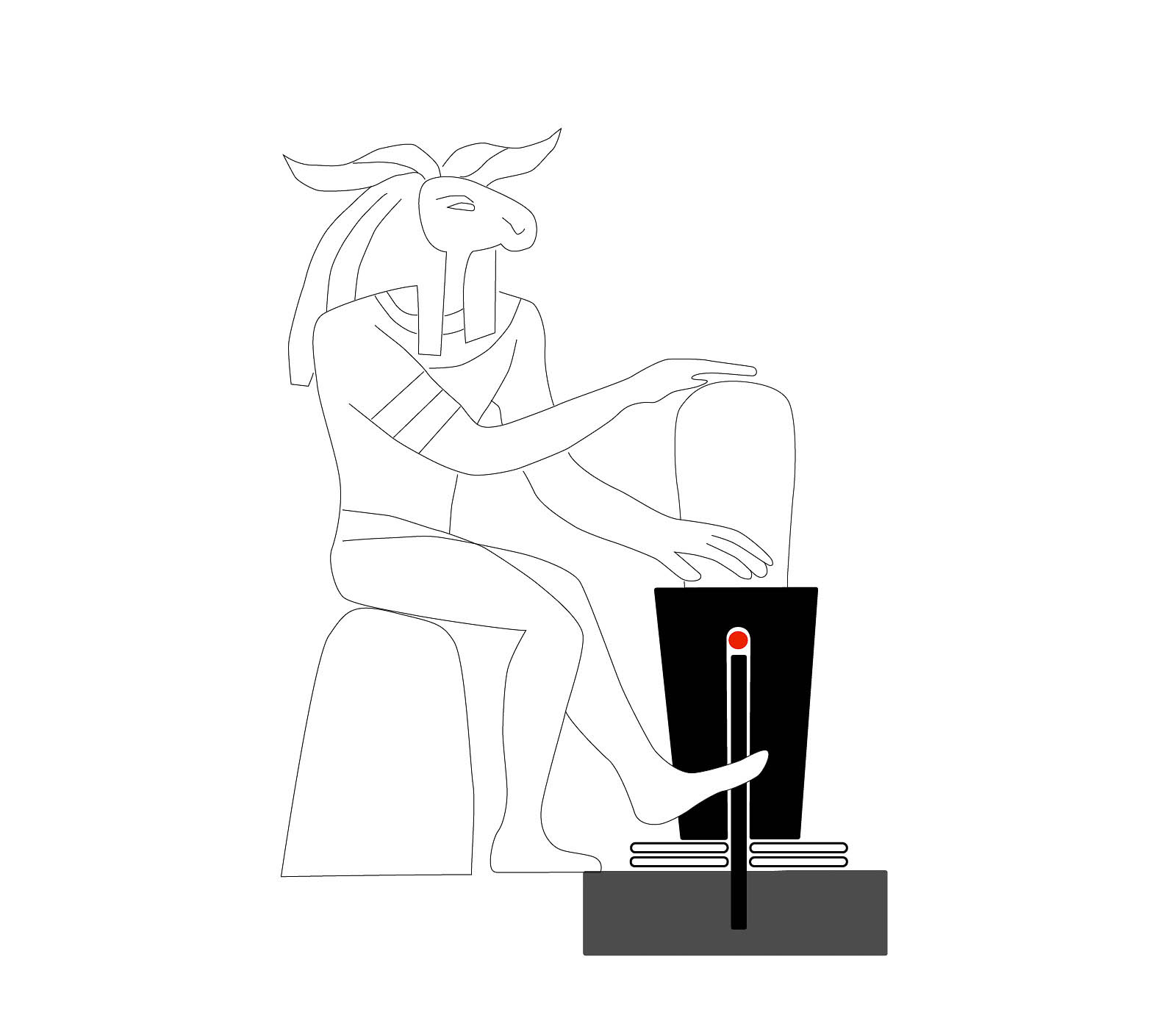
Left: The earliest version of the fast wheel was a stone or clay wheel fitted into a socket spun by hand. It was lubricated to help it spin. Right: Potters in later periods began to use a different wheel with a kickplate that gave them the use of both hands. Both types of wheels are illustrated on the walls of Egyptian tombs.

A potters wheel found at Erebuni, Armenia. Properly lubricated, the heavy turnstyle functioned as a free-spinning flywheel.
Pollock, Susan. “Abu Salabikh, the Uruk Mound 1985-86.” Iraq 49 (1987): 121–41. Link