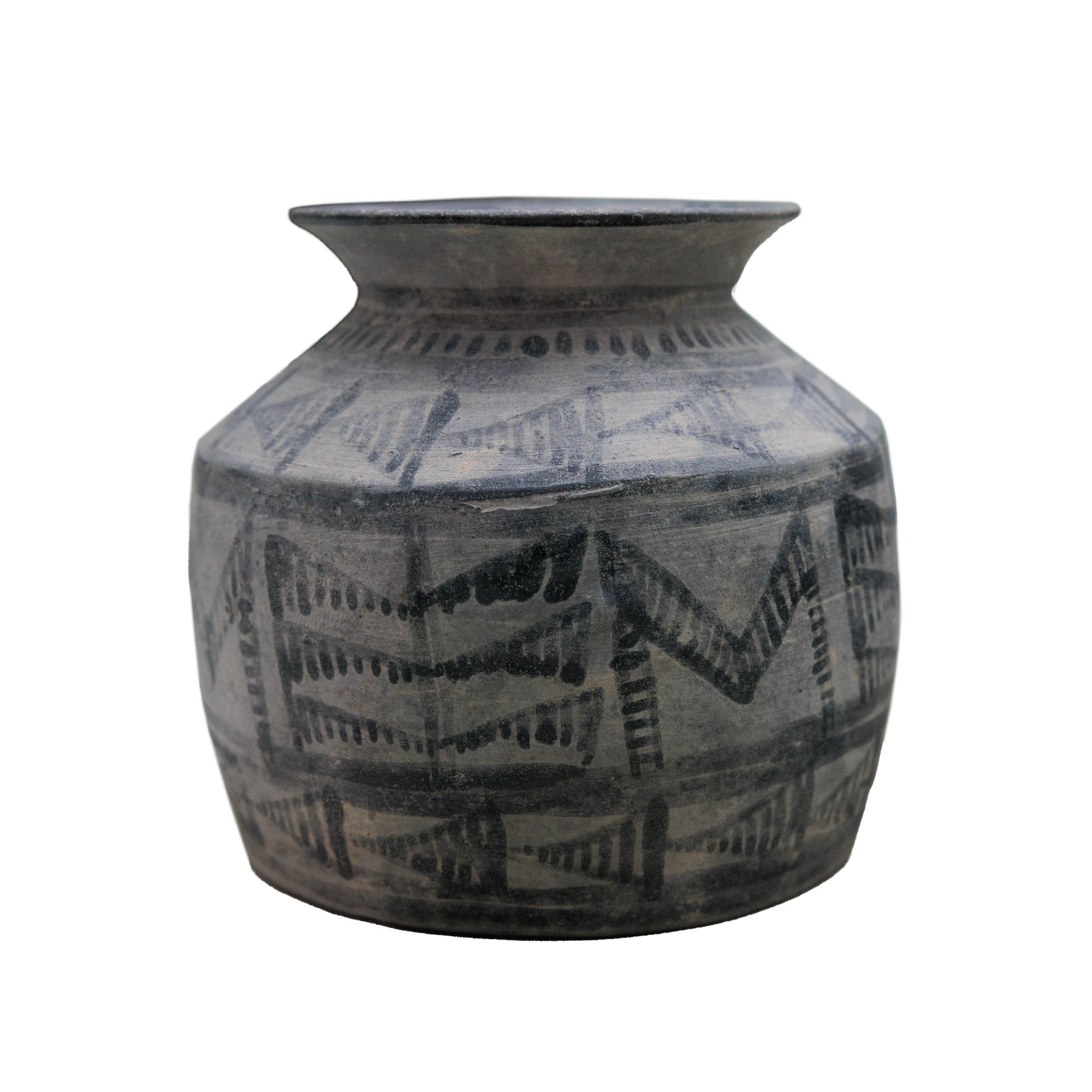
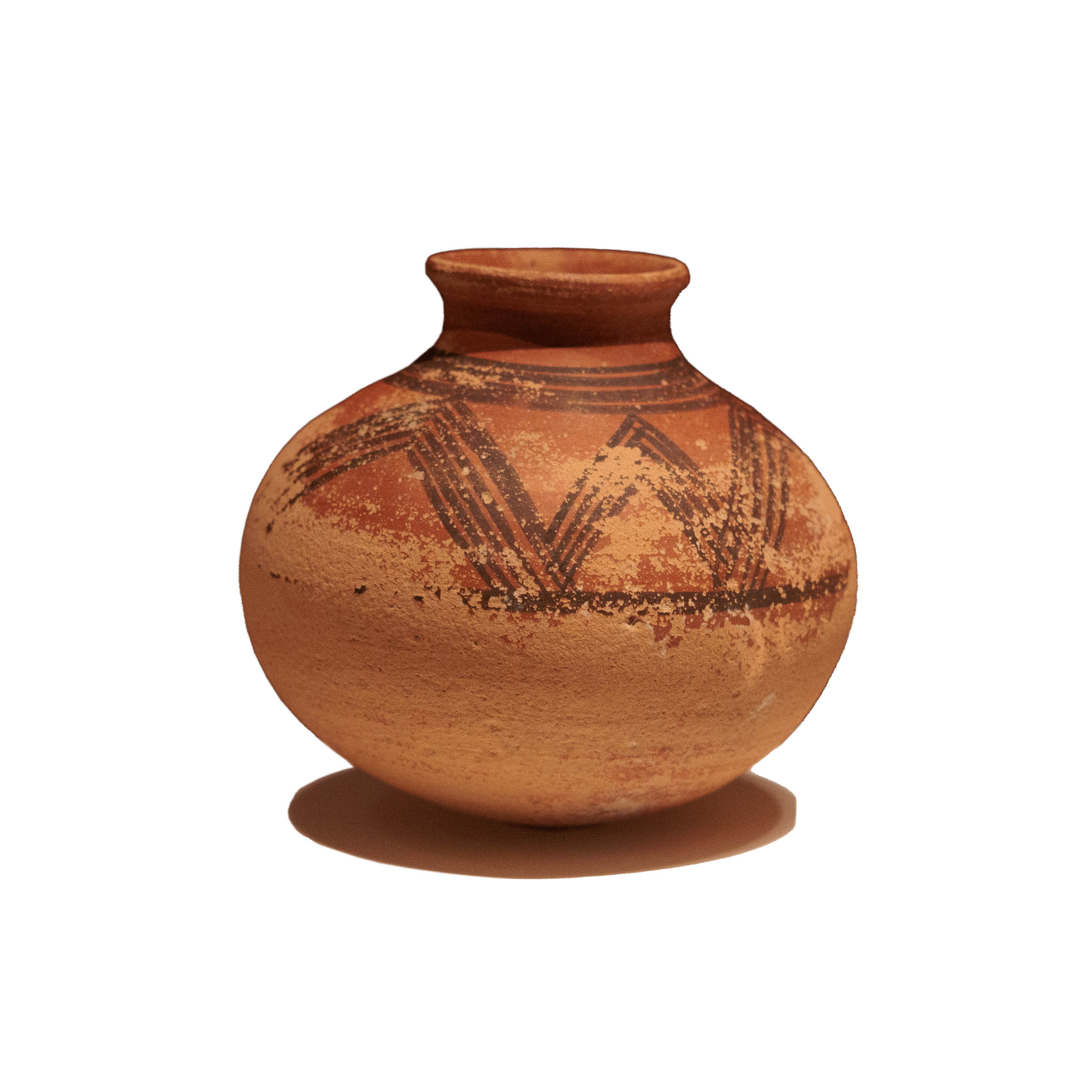
Fine Red and Grey Ware vessels such as these were found in burial cairns at Umm an-Nar and at Al-Ain (Hili), in the Emirate of Abu Dhabi.
Returning to Bahrain, remember how Bibby opened a large area in the northeastern part of Qala’at al-Bahrain. This is where he found the city gate and the Indus Valley cubic stone weights. These belonged to City II and therefore probably should be dated no earlier than the mid to late 3rd millennium BC. Below this level he found the distinctive Chain Ridge Ware pots of City I. What we failed to mention previously is that Bibby continued to dig in this area, all the way through the occupational levels of City I, until he reached what he thought was virgin soil. However, their brooms continued to pick up small sherds of pottery so Bibby decided to keep digging. Several feet further down, they encountered layers of farush, a type of conglomerate which forms at the edge of a reef that was (and still is) used as a building material, like limestone. Here is how Bibby describes what they found in the lowest strata of the tell:
We broke up this farush over an area of several square feet, and found sand below. And in this sand there were still potsherds. So we went on, and for over two feet more we found alternate layers of farush and sand, all containing quantities of sherds, until we reached a layer of sterile green clay, the very clay which the chain-ridge and Barbar people had used as mortar in their building; and below this came more sand, this time containing no potsherds.1Bibby 1984, 373
Bibby packed this pottery into boxes and placed it in storage, where it remained for several years, untouched. Bibby and Glob and their team would go on to dig at other sites, most especially the tombs and settlement at Umm an-Nar. Later, when it came time to publish the material and Bibby had an opportunity to look through the pottery recovered from the earliest levels of City I at Qal’at al-Bahrain, he was struck by how similar some of this pottery was to that which was being found at Umm an-Nar.2Bibby 1984, 377-378 In fact, there were sherds that were identical. Bibby concluded that the tombs at Umm an-Nar and City I at Qala’at al-Bahrain were likely contemporary. He thought that both should date to the first half of the 3rd millennium BC.
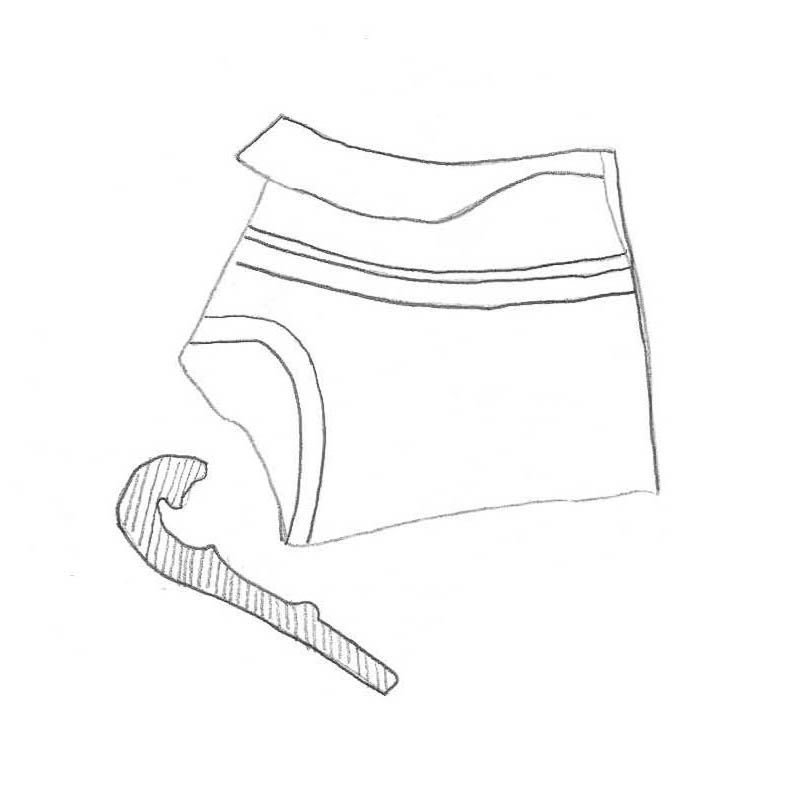
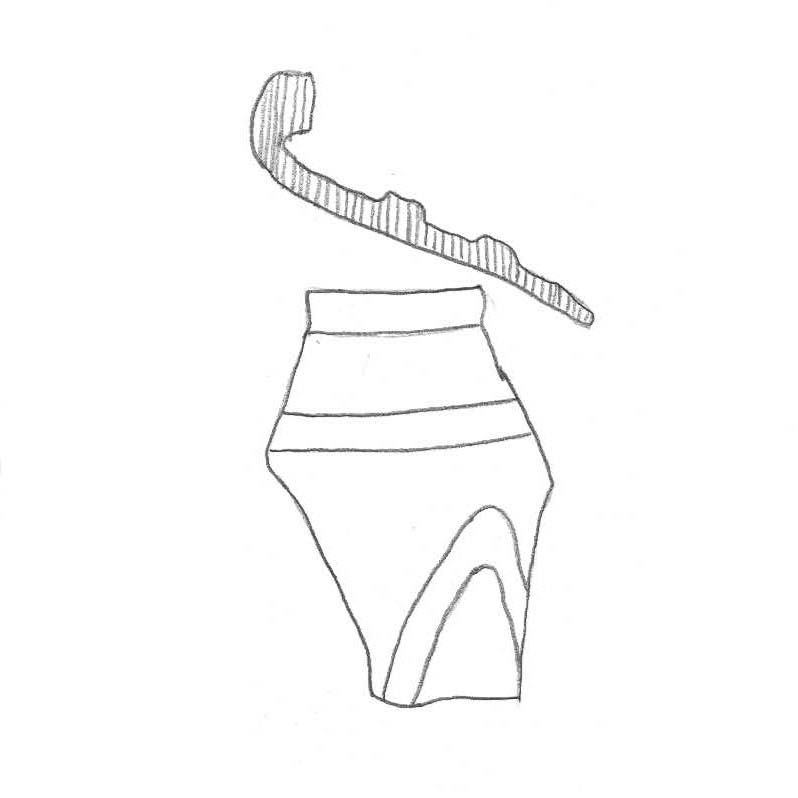
With regards to the these two sherds, Bibby writes, “There is no doubt of their virtual identity.”1Bibby 1984, 378
Fine Grey Oman Ware
A considerable number of complete pots were recovered from the tombs at Umm an-Nar and Buraimi (Hili). The most distinctive of these, known as Fine Grey Oman Ware, are barrel shaped. Their thin walls were produced on a fast wheel. As the name suggests, they were made with grey clay, well-levigated to remove impurities, and decorated with geometric shapes or rows of animals painted onto the surface with black paint. Pottery of this type has also been found in Baluchistan (the westernmost province of Pakistan) and in south-eastern Iran.


The barrel-shape is a well-known Jemdet Nasr form.
Fine Red Oman Ware
Another style of pot, native to Oman, took the form of a small globular vase, with flowing curves. The clay is of good quality, and well levigated, like the grey pottery described above, except the pots are fired red and decorated almost exclusively with geometric shapes in dark brown paint. Animals usually do not appear on this pottery, although Bibby points to one unique sherd he found which was decorated with a zebu, an Indian bull.
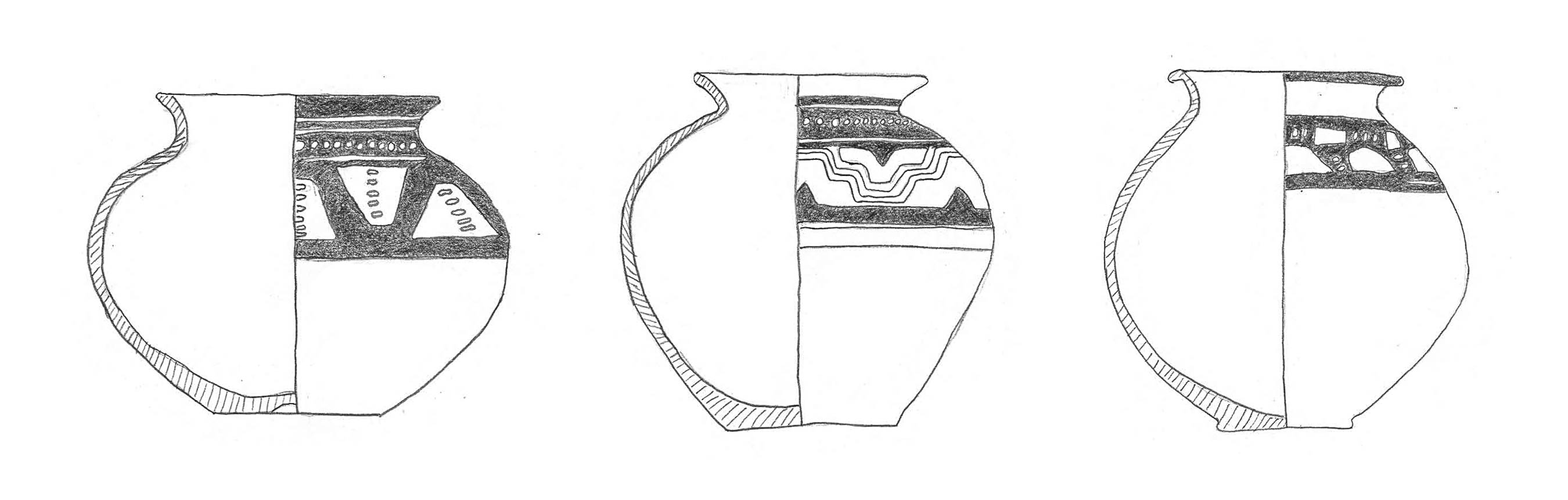
These small red jars painted with dark brown geometric designs, were a typical product of the Oman pottery industry.
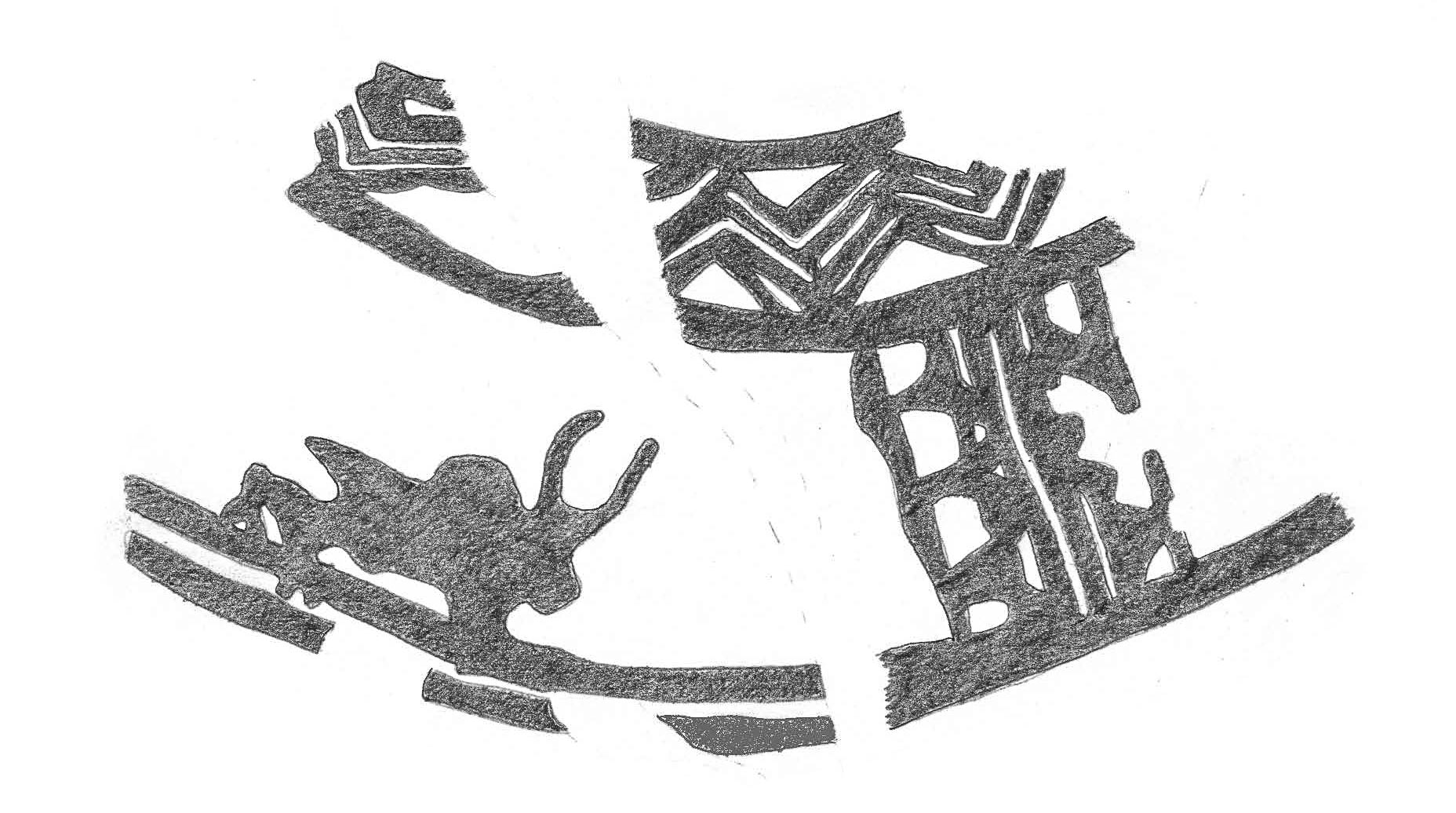
Sherd of red fine ware painted with a zebu and what is probably a gate. This sherd was found at Umm an-Nar.
Another pottery sherd discovered at Umm an-Nar impressed with a cylinder seal displays files of animals, a motif well known from seals of the Jemdet Nasr period but continuing into the Early Dynastic. In this case, the juxtaposition of animals, a rosette, eel, and rhomboid, are reminiscent of Intercultural-style chlorite vases. A similar seal displaying animals and rosettes was found in the Diyala which Collon dates to the latter half of the Early Dynastic period.3Seal #45 in Collon 1987, 22-23 These comparisons suggest a similar date for the pottery sherd from Umm an-Nar.
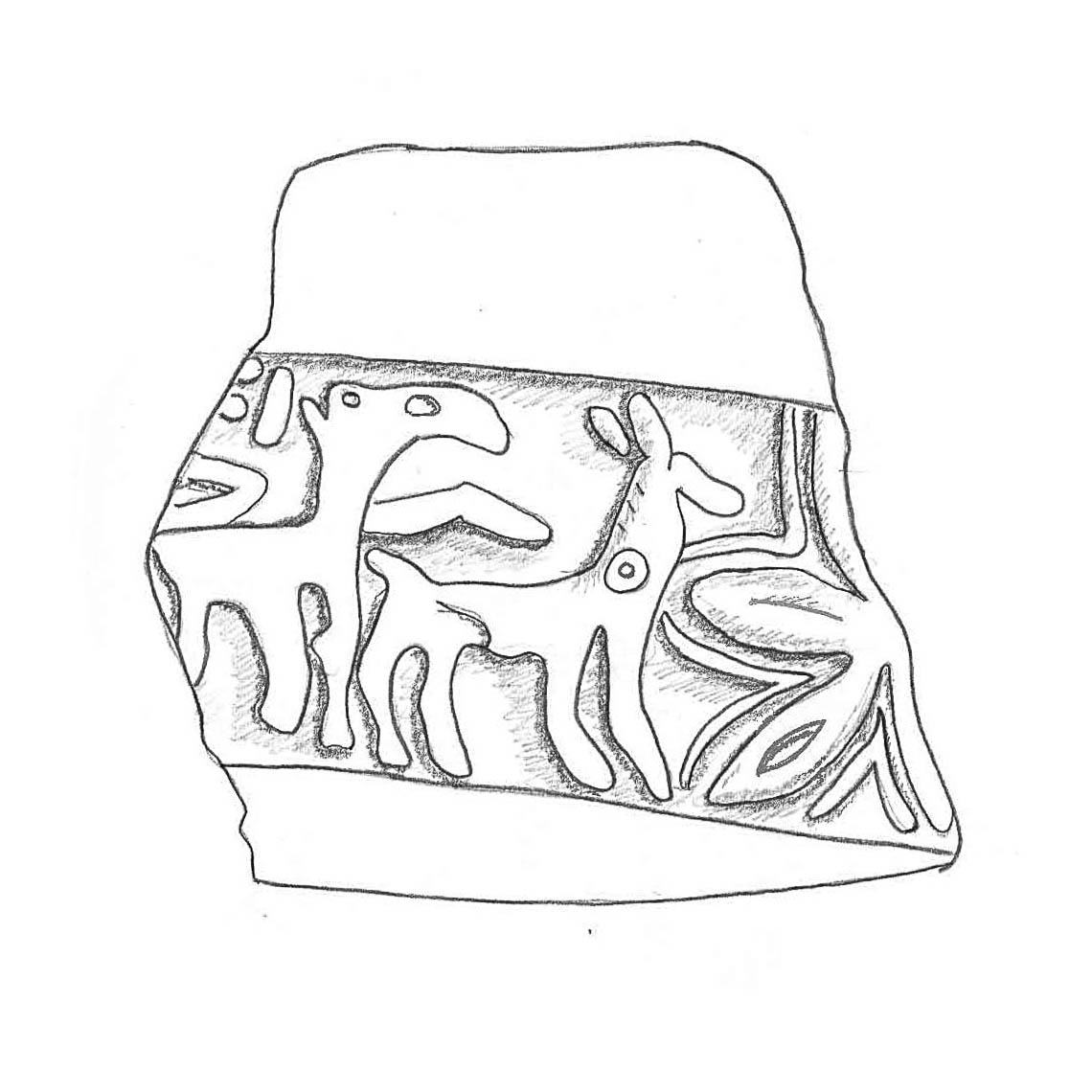
One of the animals appears to be a camel. The other symbols, such as the rosette, eel, and rhomboid, are reminiscent of Intercultural-style chlorite vases.
Collon, Dominique.
First Impressions : Cylinder Seals in the Ancient Near East.
Chicago, Illinois: University of Chicago Press, 1988.
Bibby, Geoffrey.
Looking for Dilmun.
Great Britain: Penguin, 1984.
Bortolini, Eugenio, Olivia Munoz .
“Life and Death in Prehistoric Oman: Insights from Late Neolithic and Early Bronze Age Funerary Practices (4th – 3rd mill. BC),” in The Archaeological Heritage of Oman: Unesco Paris September 7, 2012 Symposium .
: Ministry of Heritage & Culture Sultanate of Oman, 2015. Link
Cleuziou, Serge.
“Oman Peninsula in the Third Millennium,” in Frontiers of the Indus Civilization : Sir Mortimer Wheeler Commemoration Volume, edited by B. B Lal, S. P. Gupta.
New Delhi: Indian Archaeological Society, 1984.
Potts, T. F. “Foreign Stone Vessels of the Late Third Millennium B.C. from Southern Mesopotamia: Their Origins and Mechanisms of Exchange.” Iraq, no. 51 (1989): 123–64. Link
Knud, Thorvildsen. “Gravrøser på Umm en-Nar.” Kuml 12, no. 12 (1962): 191-219. Link