
The king of Uruk is carrying an animal to the temple followed by an unidentified person carrying sheaves of grain. Both are bare chested and wear net-like garments while the king also wears a distinctive cap.
The first cylinder seals appear in Eanna V of Uruk. Larger than average, they also tend to be cut from softer stones. Uruk period seals are remarkable for their naturalistic depictions of men, animals, and plants. A copper knob fashioned in the form of a crouching ram or bull was often attached to the top of the seal.
Characteristics
- large seals
- cut from soft stone
- naturalistic depictions of cattle, the cattle pen or “animal byre”, the ensi
- incorporates a knob or loop for hanging from a necklace

The king of Uruk is shown feeding cattle. The two reed ring-poles next to him denote a sacred shrine inside of which are two Warka-type vases.
Use of Seals
Although seals were often worn as jewelry or amulets, they also served a very practical function. Through the creative use of lumps of clay and string, just about anything that needed tamper-proofing could be secured, including the door of a storeroom, the lid of a jar, or the contents of a tablet.1Nissen 1984, 75-75 The advantage of a cylinder seal was that it produced a long string of unique “characters,” the ancient equivalent of a hash code!
The Ensi
Frequently depicted on Uruk period seals, the king of Uruk is shown bare-chested, wearing either a long net-like garment or a short kilt, and a cap with a rolled-up brim. There were two terms used in later periods to designate the king. The first was lugal, which literally means “big man” and the second was “en” (later “ensi”) which means “lord.” The latter term seems also to have referred to a sacred office. It has therefore been suggested that Sumer was originally a theocratic state ruled by a “priest king.” However, by this same criteria we would also have to say that Julius Caesar was a “priest king” since he was both pontifex maximus and dictator of Rome. But no one refers to Julius Caesar this way.
More convincing is the possibility that early Uruk was ruled by a “primitive democracy” of sorts.2Hallo 1998, 36 Thus we find references in Sumerian texts to a “leader of the council” who held one of the highest offices in the land.3Nissen 1984, 94 And in the short epic, Gilgamesh and Agga, Gilgamesh consulted a council of elders and a council of young warriors before embarking on a war with Agga, king of Kish. The elders advised Gilgamesh to make peace with Kish but the young men were eager for war. The story concludes with Agga’s defeat, thus bringing to an end Kish’s suzerainty over Sumer.4Kramer 1963, 187
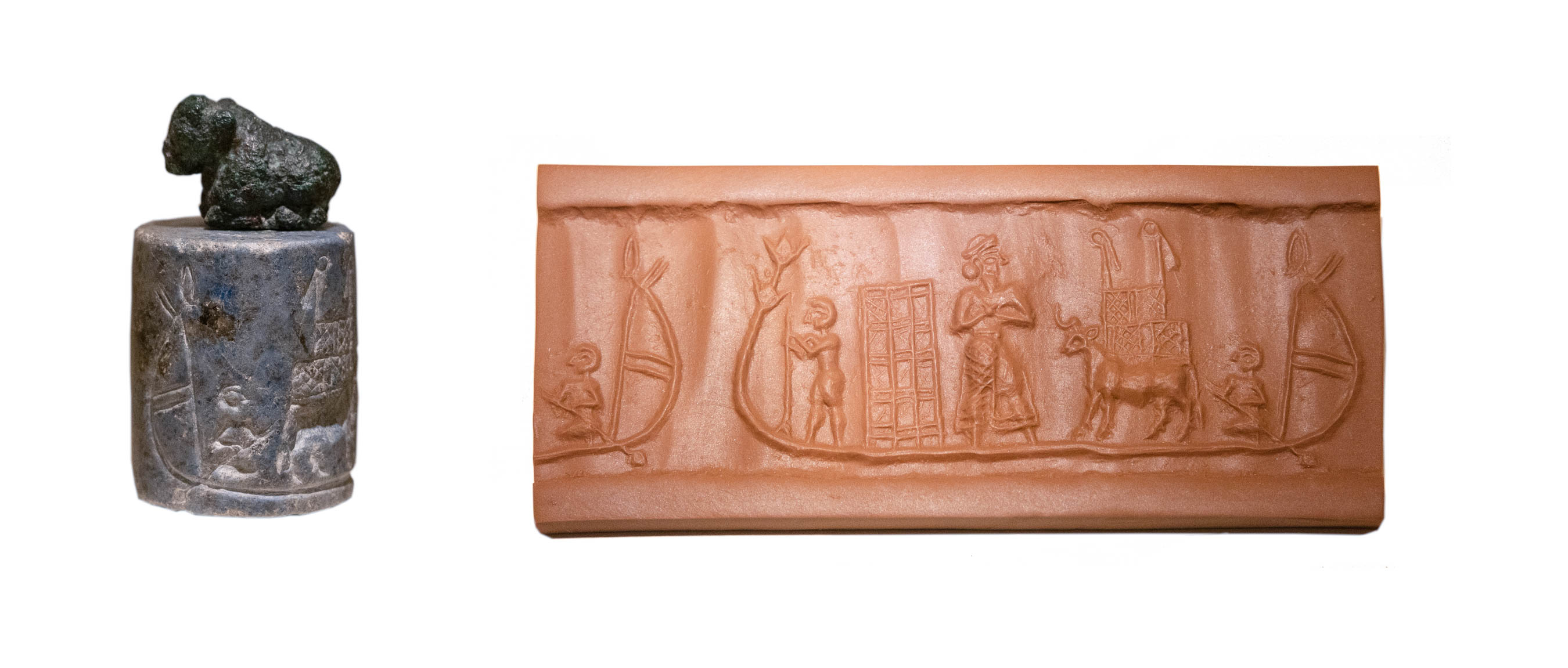
A seal from Uruk showing the ensi standing in a boat facing a bull with an altar or temple on its back.
Who is he?
It may be wondered if the early kings of Uruk whose names appear in Sumerian epic and verse are also depicted on Uruk period cylinder seals? If the heroic kings of Uruk do not predate the Early Dynastic II period, as is generally accepted, then they cannot be identified with the ensi depicted on Uruk period seals.5Frayne 2009, 29 However, since the standard chronology relies heavily on C14 dating, which is a flawed method in my opinion, and upon an overly dogmatic interpretation of the archaeology, it is worth considering what possibilities are presented by a shorter chronology. In this case, it may be possible to identify the ensi on Uruk period seals with a figure like Enmerkar, thus aligning the golden age of Uruk (Eanna V-IV) with her most famous king. But such identifications must remain tentative until further evidence can be brought to bear on the subject.


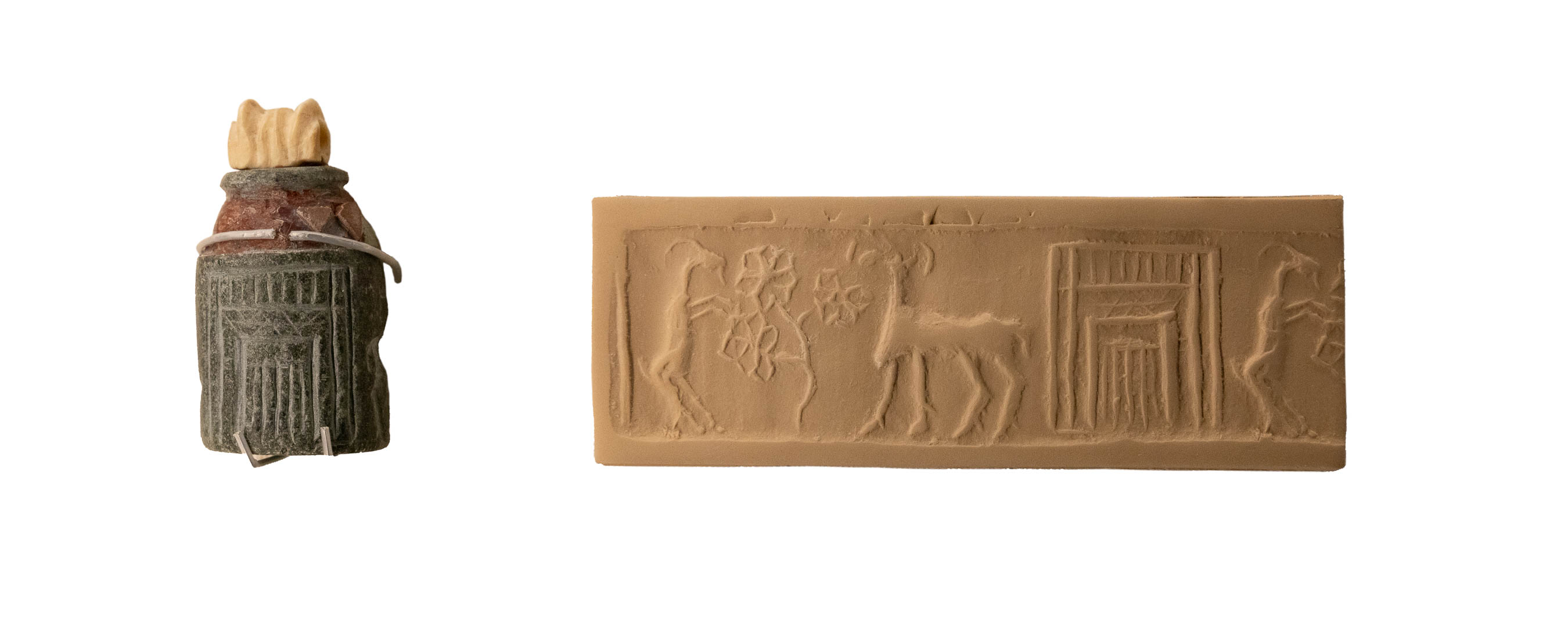
Note the frequent depictions of cattle and cattle pens.
Frayne, Douglas. “The Struggle for Hegemony in “Early Dynastic II” Sumer.” The Canadian Society for Mesopotamian Studies, no. 4 (Fall 2009): 37-76. Link
Hallo, William W, William K. Simpson.
The Ancient Near East: A History.
: Harcourt College Publishers, 1998.
Kramer, Samuel.
History begins at Sumer : thirty-nine firsts in man’s recorded history.
Philadelphia: University of Pennsylvania Press, 1981.
Nissen, H. J. R.
The Early History of the Ancient Near East, 9000-2000 B.C..
Chicago: University of Chicago Press, 1988. Link
Porada, E. “Why Cylinder Seals? Engraved Cylindrical Seal Stones of the Ancient Near East, Fourth to First Millennium B.C..” The Art Bulletin 75, no. 4 (1993): 563-582. Link