
The king is wearing a kilt, nemes headdress, false beard, and an expression of supreme confidence.
The statue of Khafre is one of the finest from ancient Egypt. It is made from diorite, an extremely hard, fine-grained, stone quarried in the southernmost reaches of the eastern desert. Prized by both Mesopotamian and Egyptian sculptors for the production of royal statuary, the stone takes a very fine polish.
Khafre is seated on a throne flanked by lions which are incorporated into its design. The falcon perched on his back is a visual reminder that the king is the living manifestation of Horus. The sema tawy symbol engraved in low relief on the sides of the throne represents the king’s authority over Upper and Lower Egypt.


The sculptor managed to carve a falcon despite the limited amount of stone available to him. The sema tawy symbol can be seen engraved on the sides of the throne, beneath the body of the lions, whose paws form the legs of the throne.
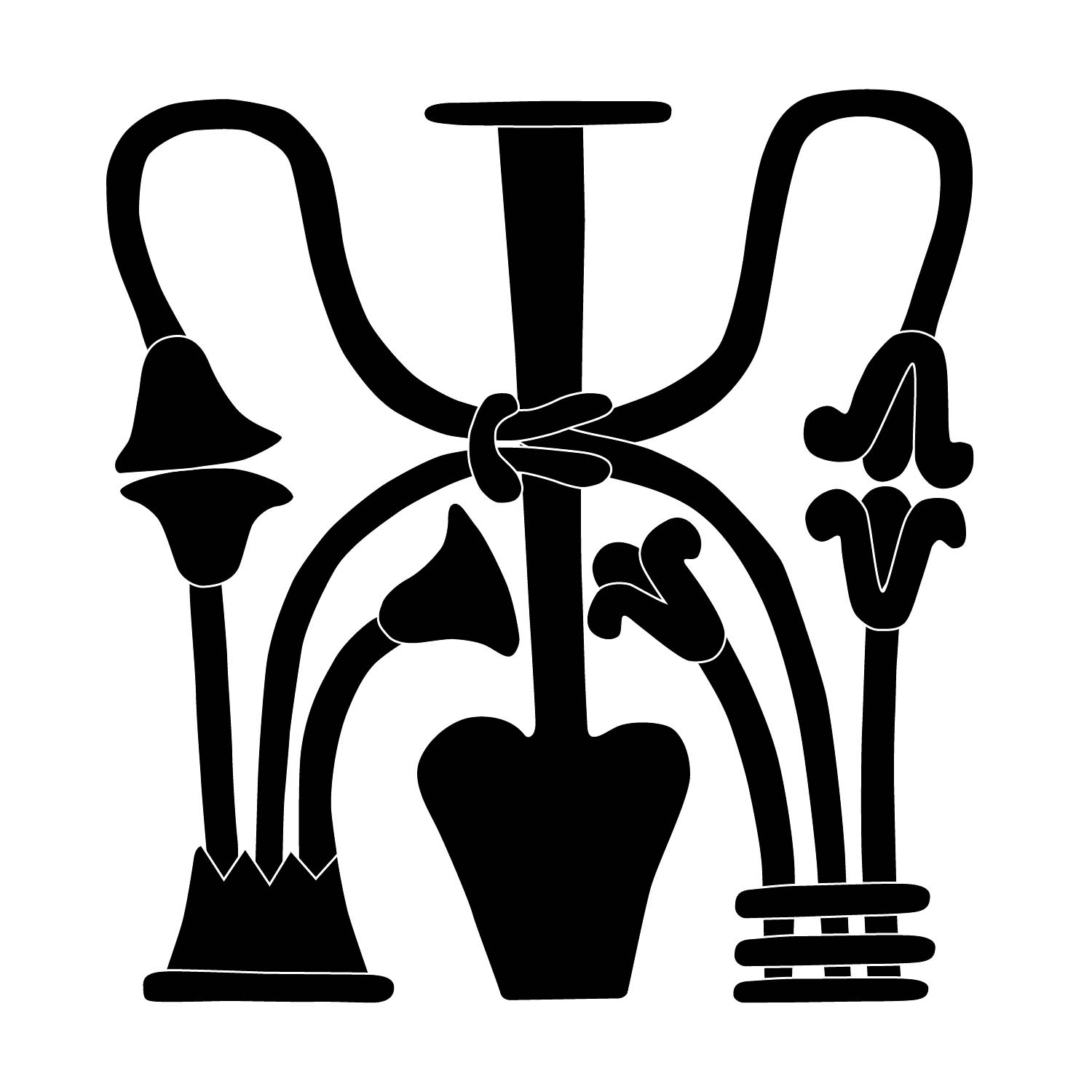
The symbol is comprised of the interlocking stems of a papyrus and lotus plant, symbols of Lower and Upper Egypt respectively. The stems are wrapped around a windpipe and pair of lungs, the Egyptian hieroglyph for “union”. The symbol reads “the union of the two lands.”
Redford, D.B.
The Oxford Encyclopedia of Ancient Egypt.
Oxford, New York: Oxford University Press, 2001. Link