
An elegant chalice which belongs to the “calciform culture” of northern Syria.
Known as Simple Ware, this beautiful, thin-walled pottery was well fired at temperatures greater than 1800°F (1000°C), giving it a metallic ring when struck. The preponderance of “chalice” forms (goblets) discovered at Ebla gave rise to the term “caliciform culture” to refer to the material culture of northern Syria during the Early Bronze period. Decoration was initially limited to simple grooves or “corrugations” made on the fast wheel. Later examples were often painted with simple designs. Freehand painting is not very common on this pottery and when it does appear, it is not very good.
Characteristics1Matthiae 1981, 95; Braidwood and Braidwood 1960
- thin walled and wheel made
- well fired, metallic feel
- “whitish, yellowish, greenish” color
- corrugated
- early examples are unpainted
- painted decorations include wavy line between two horizontal lines, horizontal lines, diamond lattice, and hanging “pendants”
- spouted teapot or juglet with trefoil spout
- elaborate “rilled” rims
- very fine grits
- base is flat or ringed


These thin-walled vessels are made on a fast wheel. (Note: vessels not shown to scale.)
ARC/Oriental Institute Museum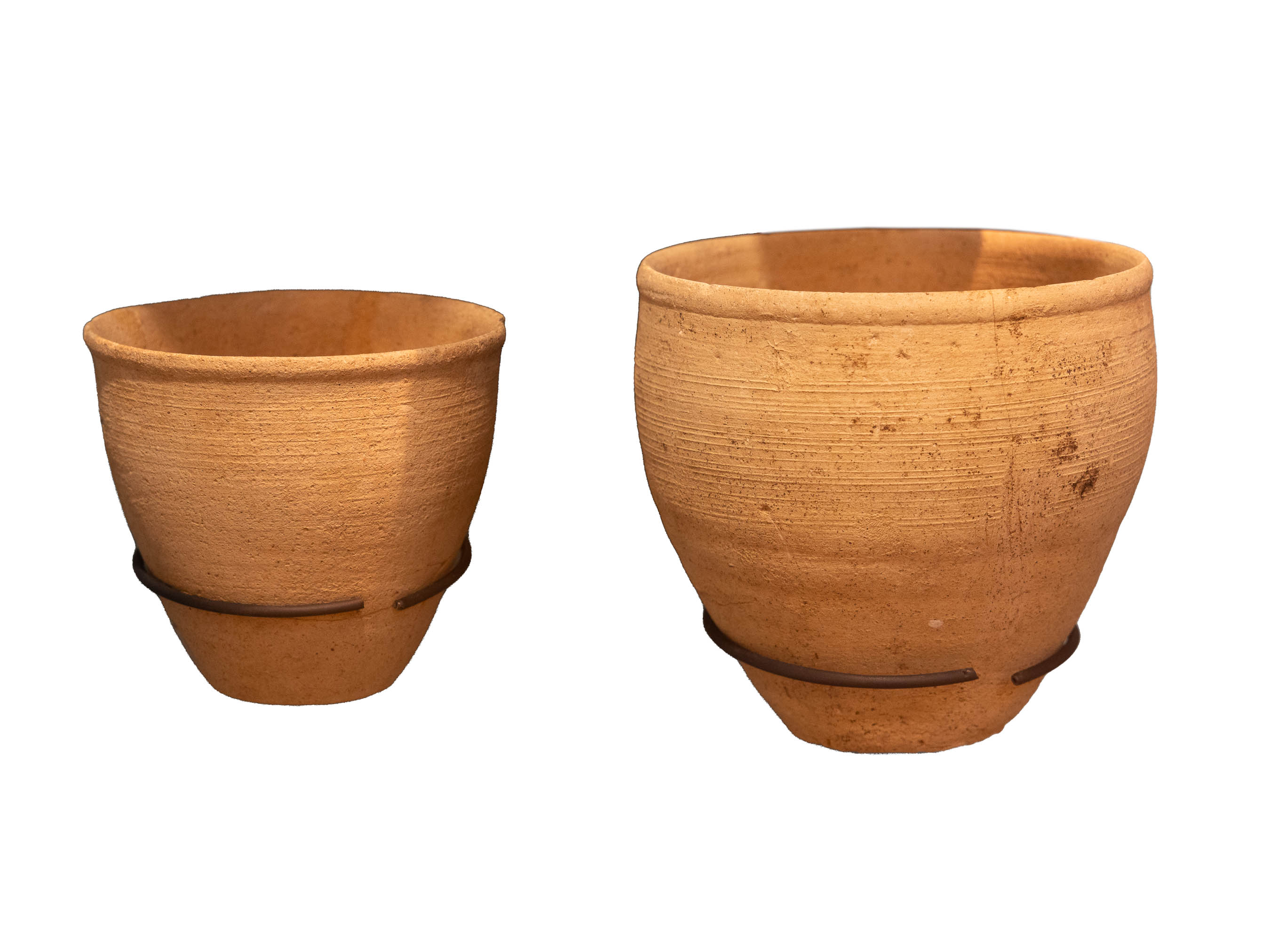

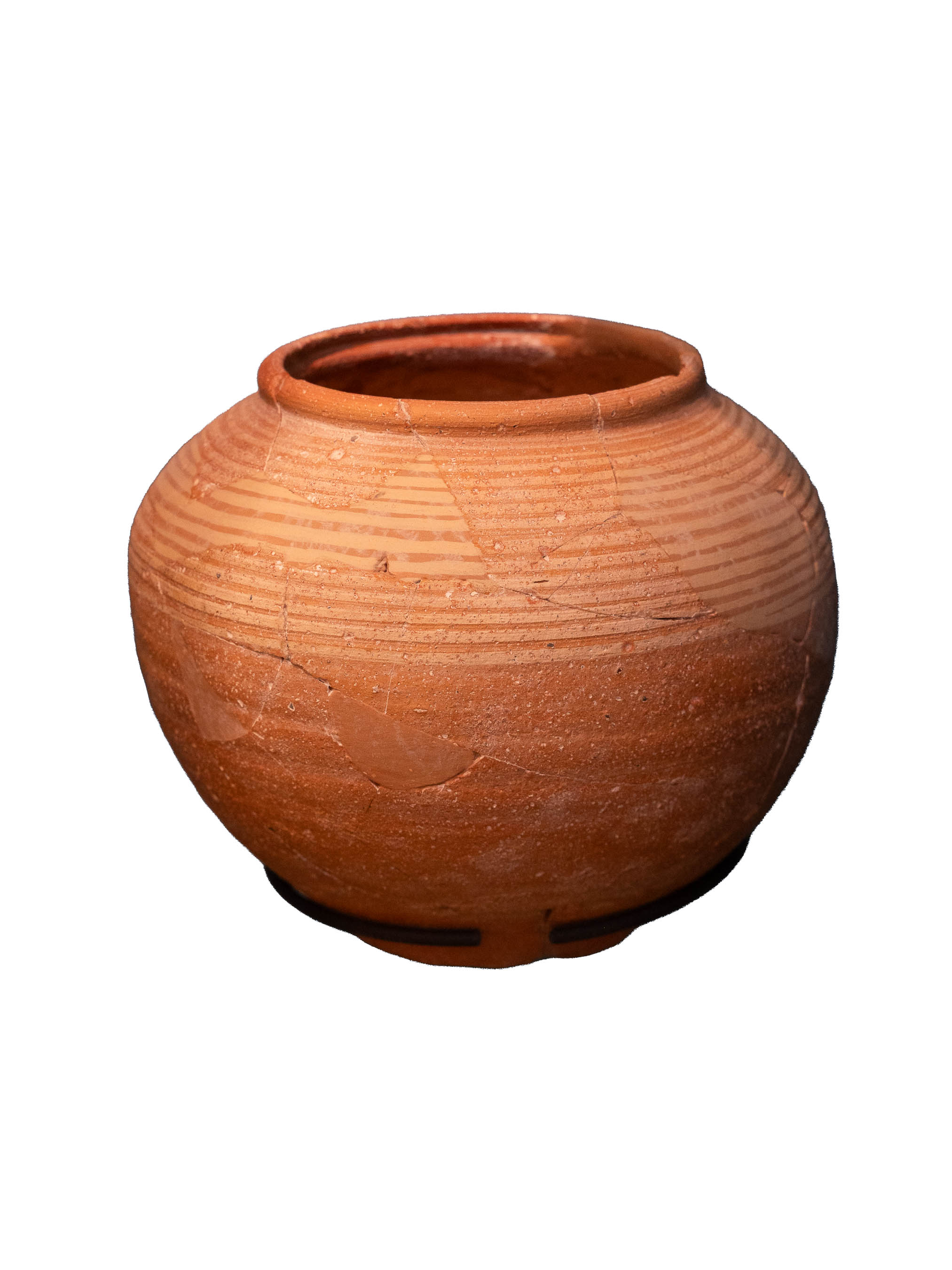
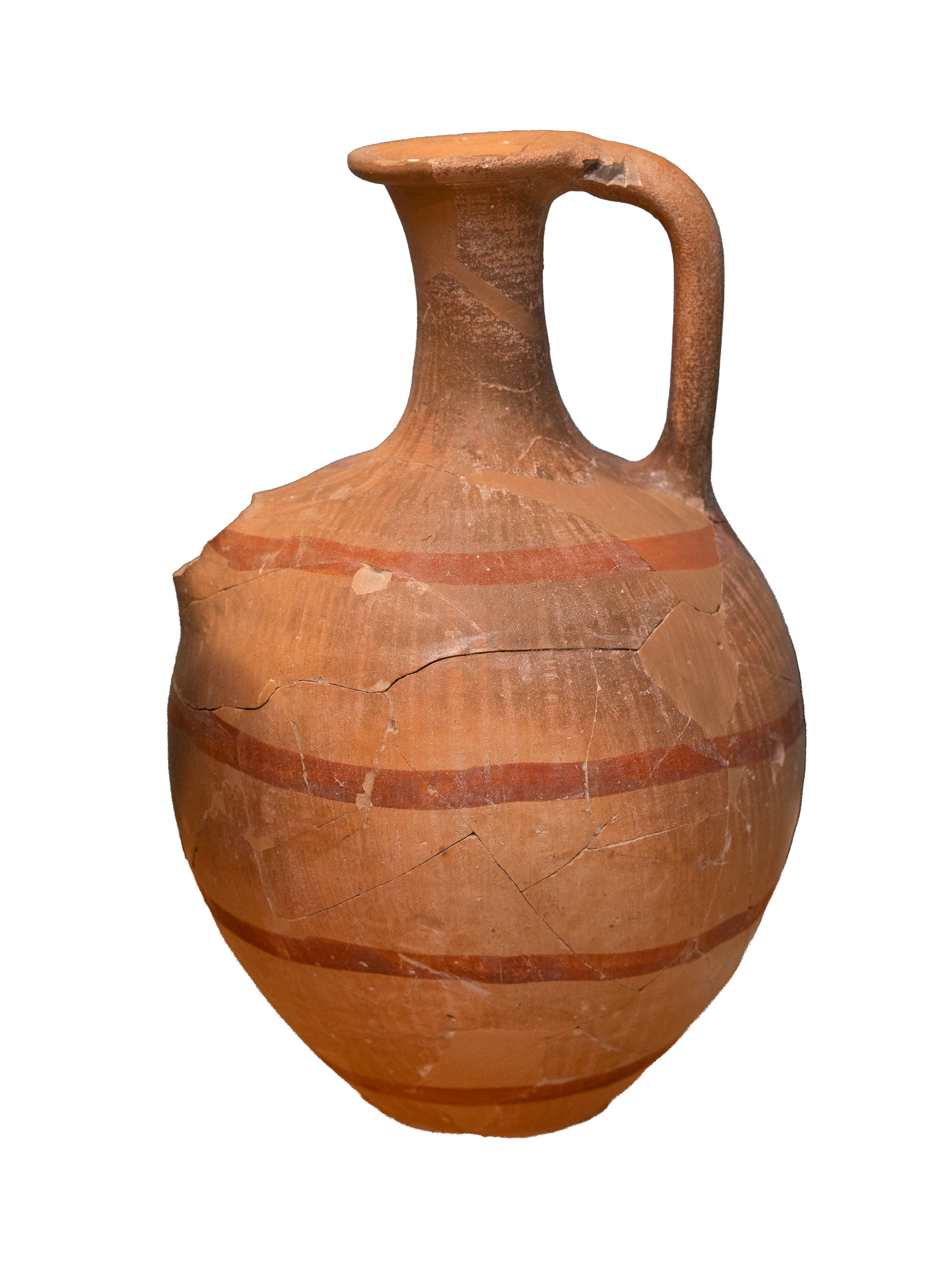
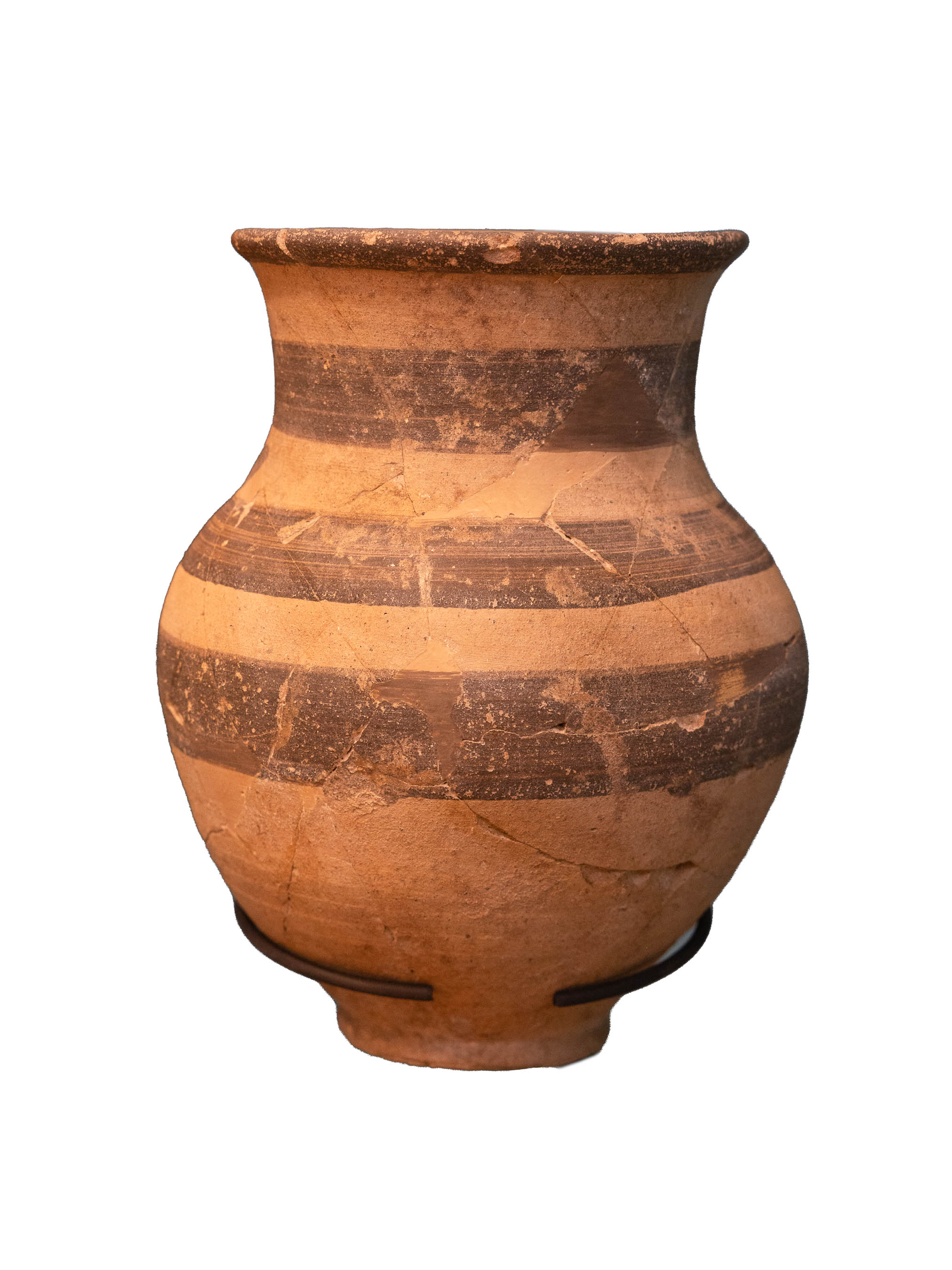
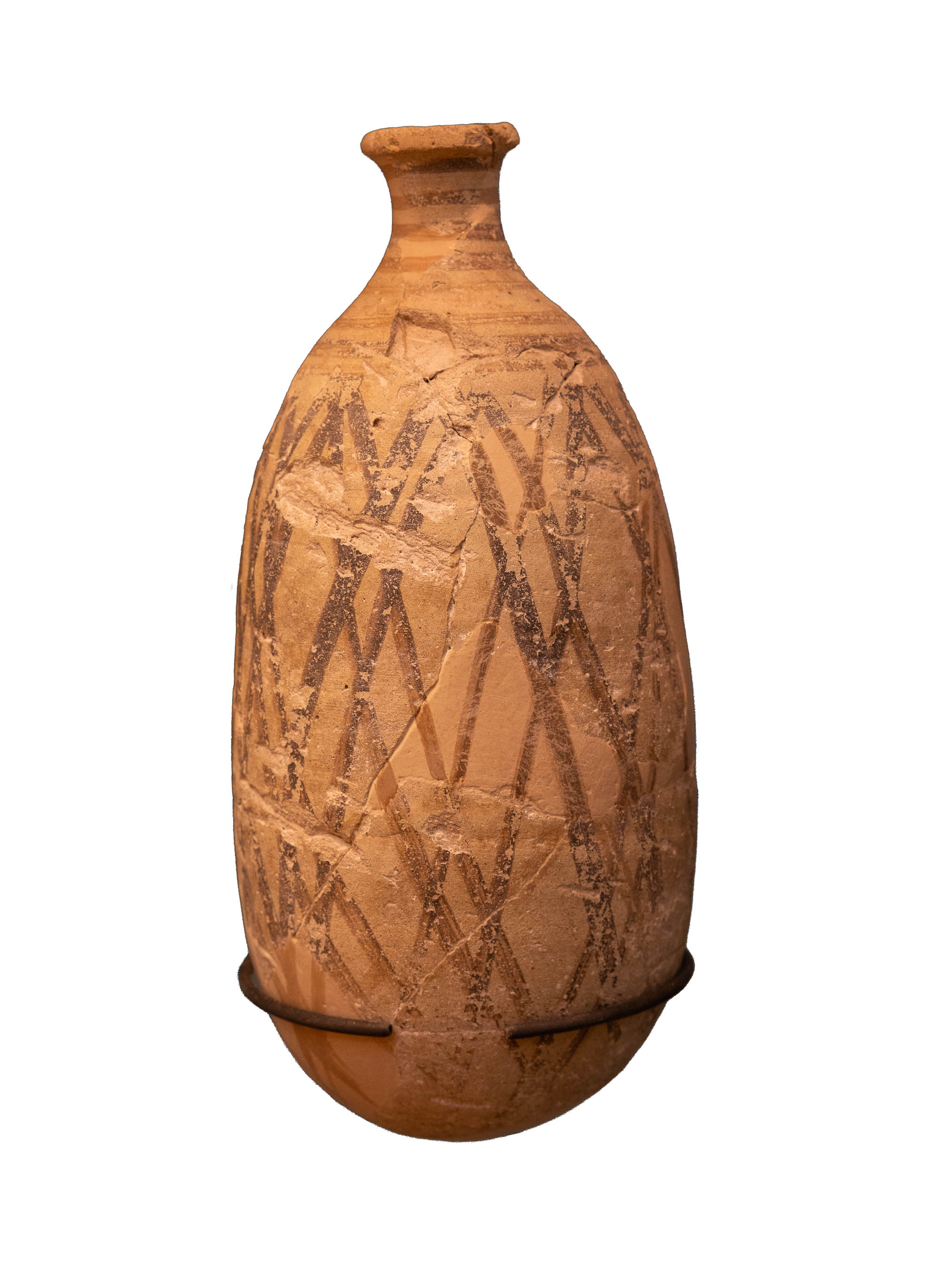
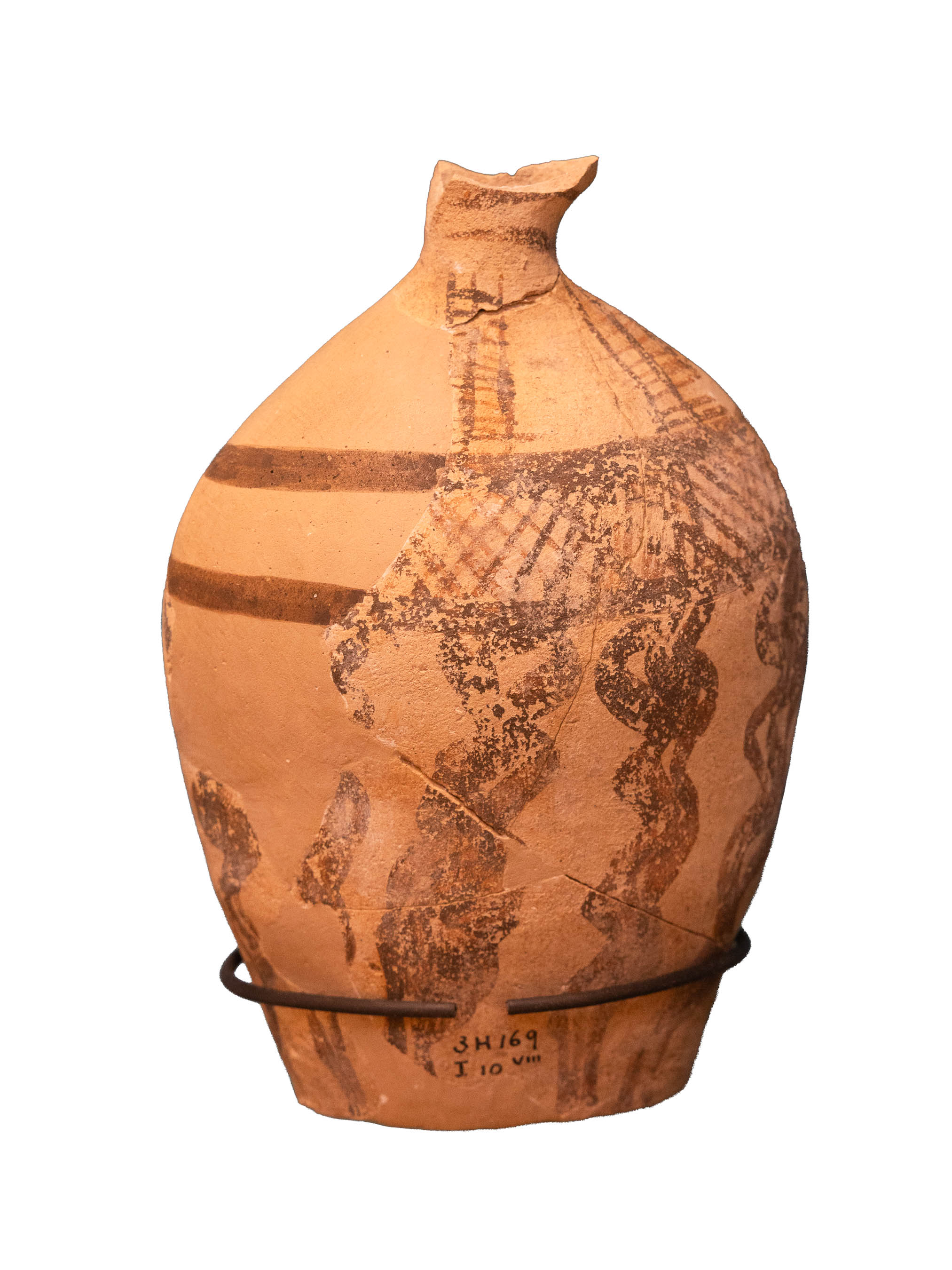
Corrugated and painted jugs and jars typical for Simple Ware. Note the diamond lattice and hanging pendants of the bottom right jar. These examples come from the Amuq Valley of Syria.
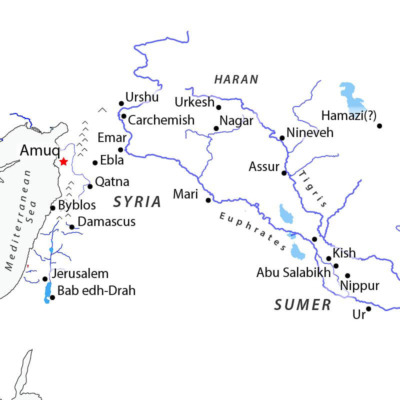
ARC/National Museum of DenmarkExcavations in the Amuq valley, west of Ebla, produced considerable quantities of Simple Ware, in phases designated “I” and “J.” These phases correspond to the Early Dynastic III, Akkadian and Ur III periods in Mesopotamia.2Braidwood and Braidwood 1960, 522-523 Red and Black Burnished pottery, which, as you may recall, originated with the Kura Araxes culture of the southern Caucasus, began to appear in the Amuq valley in phases “H” and “I.” Thus it appear in the Amuq at a slightly earlier date than Simple Ware but with some overlap in phase “I.”

A sherd of Red and Black Burnished found at Hama in the Amuq Valley of Syria.
The appearance of Red and Black Burnished Ware outside of the Caucasus, in eastern Anatolia and the Amuq valley, is generally explained by the migration of peoples from the Caucasus southwards. As we will see, this pottery has been found as far south as Jericho and becomes very common in the Galilee towards the end of Early Bronze period (See: Khirbet Kerak Ware). Curiously, no Red and Black Burnished Ware was found at Ebla. This is probably because the Caucasus people kept to the coastal mountains of Syria and avoided the interior plains. The appearance of Red and Black Burnished Ware and Simple Ware together in the Amuq Valley suggests that this migration partially overlaps with the period of Ebla’s flourishing (Mardikh IIB1).
Rilled-Rim Bowls
One final type of vessel which was discovered in the ruins of Palace G at Ebla and should be mentioned here is a particular type of jar or open bowl with a “rilled-rim”—the rim is thickened on the outside and decorated with two or three “beads” or “rills.” This style of rim was made possible by the fast wheel. The technique used to produce the rills is identical to that used to produce the “corrugated” beakers discussed above. As with Simple Ware, the fabric is a light color and well fired, giving it a metallic feel.
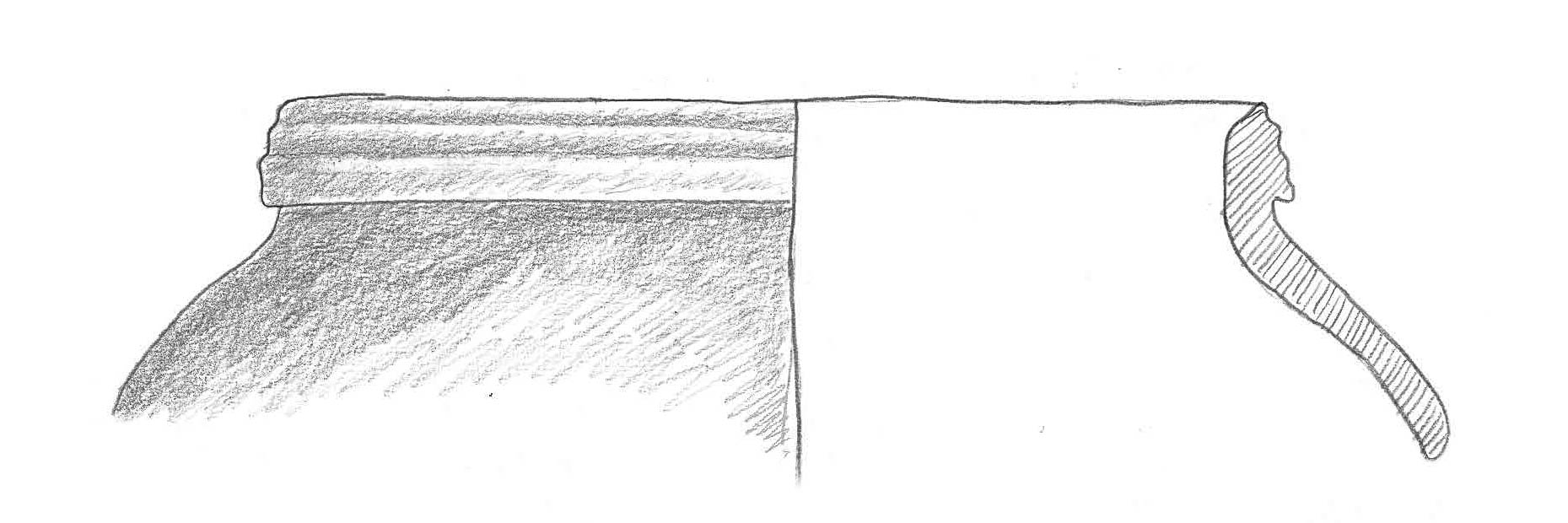
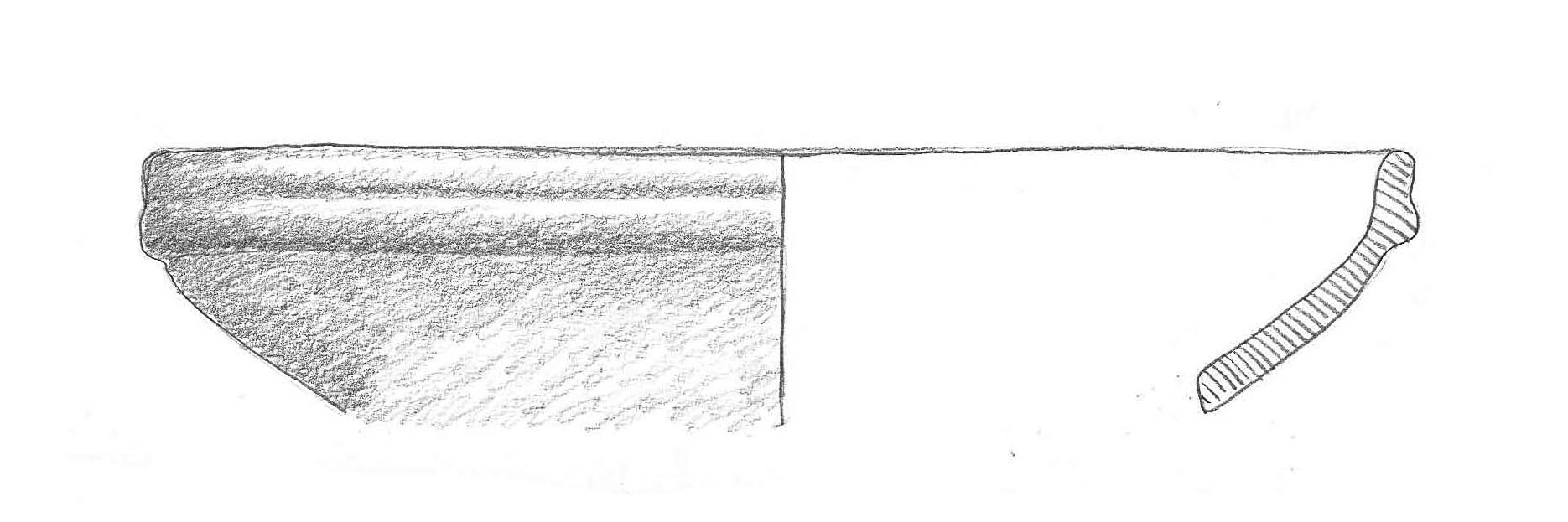
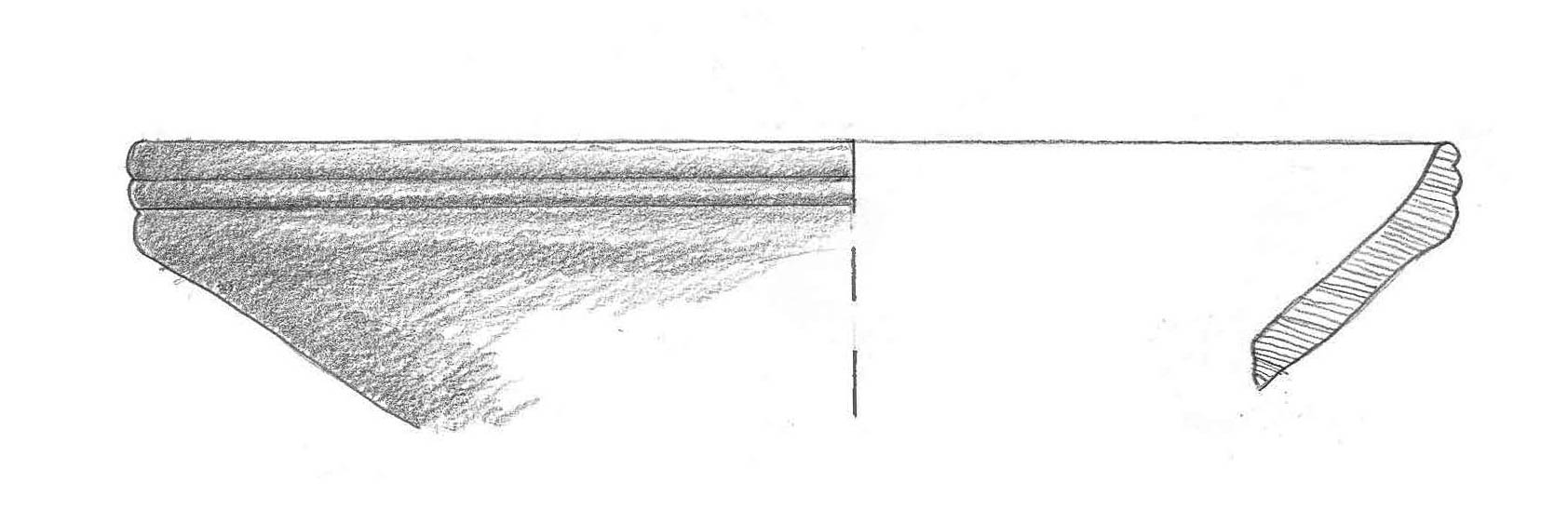
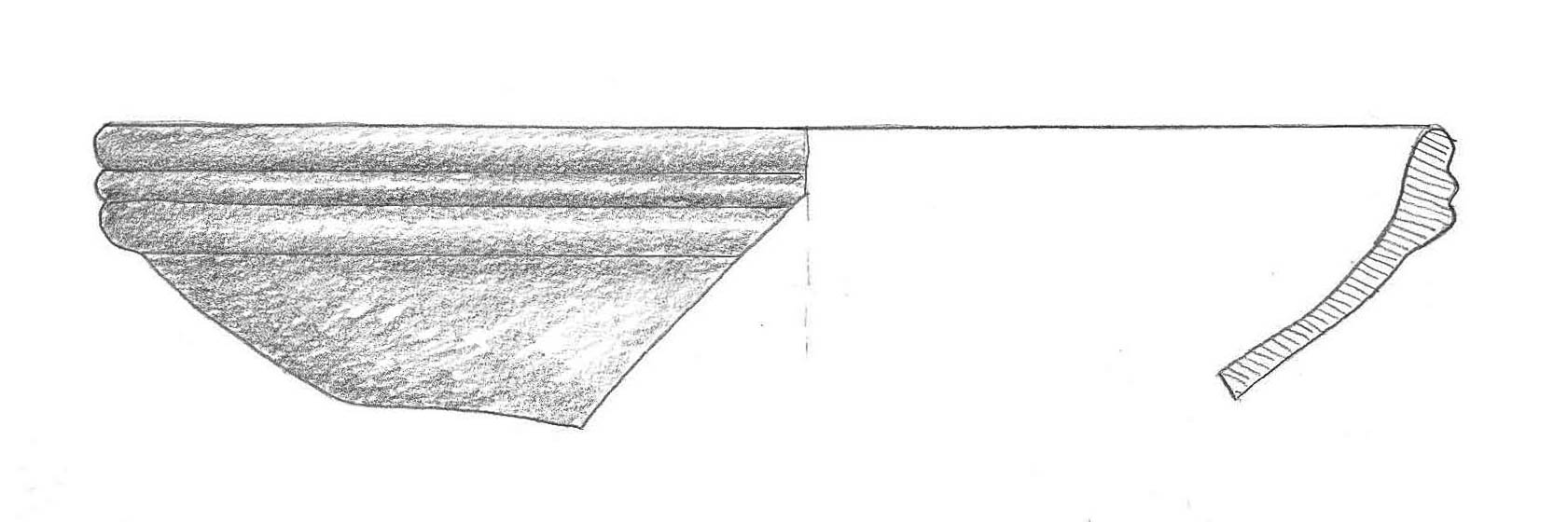
These shallow bowls display a distinctive “rilled” rim produced on a fast wheel.
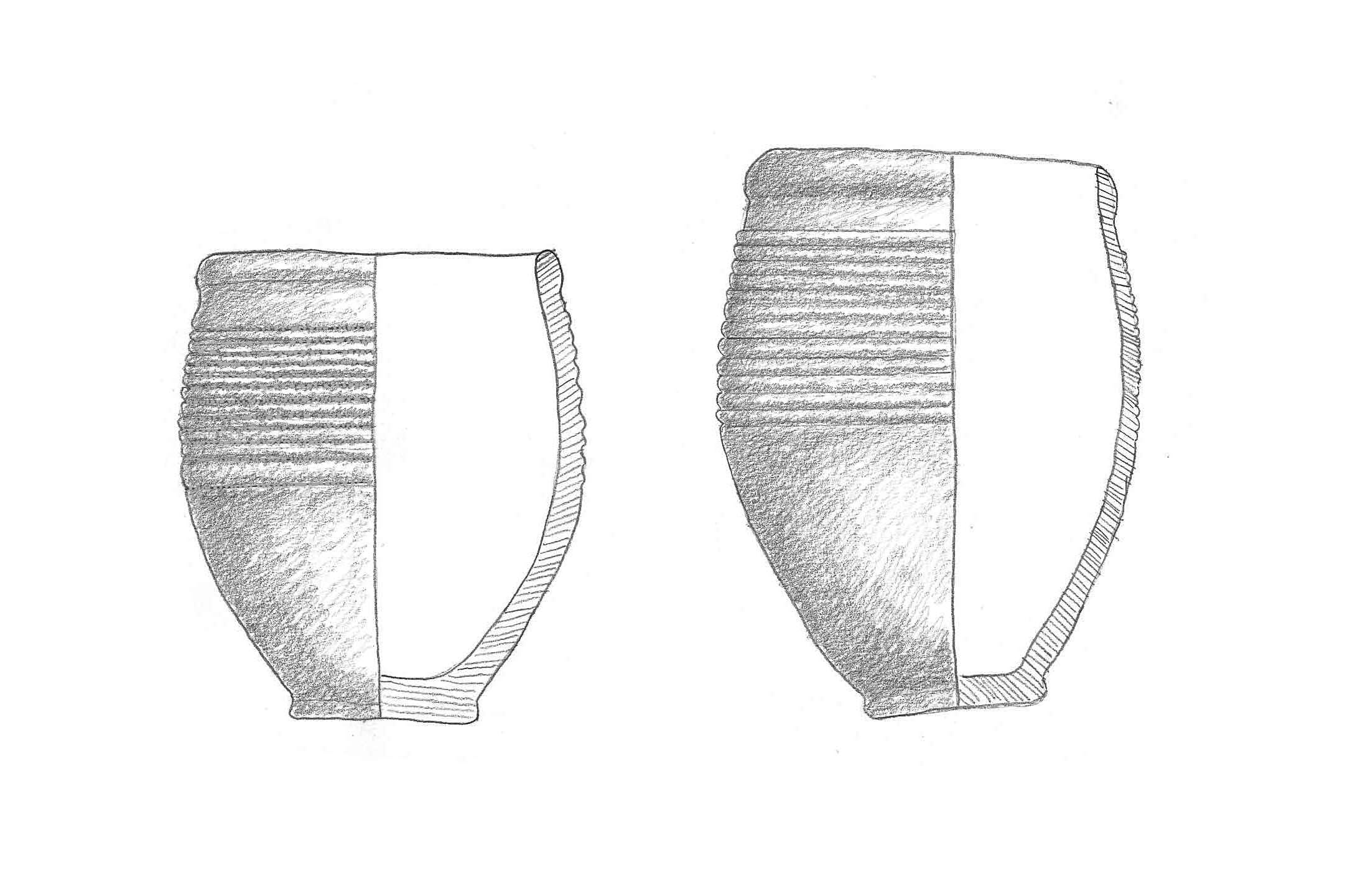
These beakers display a thickened rim and “corrugated” sides which appear to be linear but are actually a continuous spiral.