
Approximately 150 tablets were discovered during excavations in the administrative building at Jemdet Nasr.
The American Assyriologist, Stephen Langdon, excavated approximately one hundred and fifty writing tablets during the 1926 dig season at Jemdet Nasr. The tablets are similar to the Uruk IV tablets, but they represent a more advanced stage of writing. Scribes are no longer tracing the outlines of symbols with a pointed stylus but have adopted a triangular stylus instead which they used to make wedge-shaped impressions in the soft clay. This marks the genesis of the cuneiform script. The name comes from the Latin term cuneus which means “wedge.” The success of this script may be judged by the fact that it continued to be used in one form or another until the 1st century AD.
The Evolution of Cuneiform



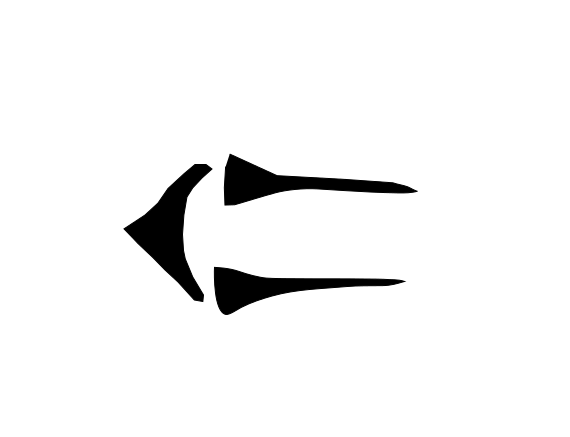
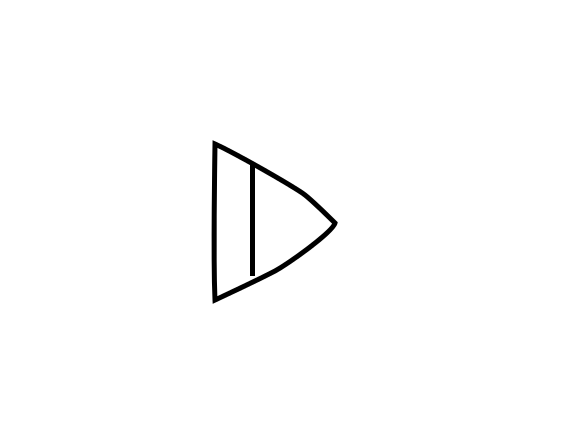


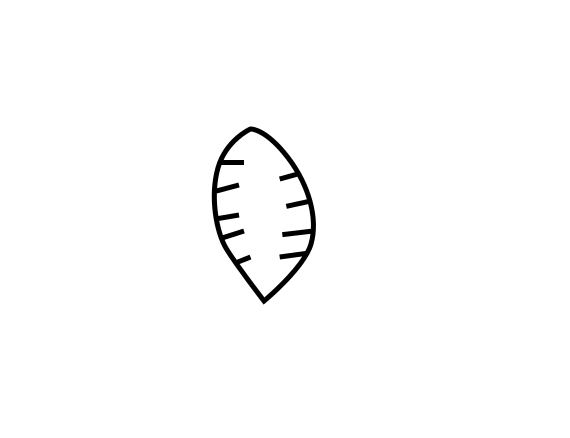
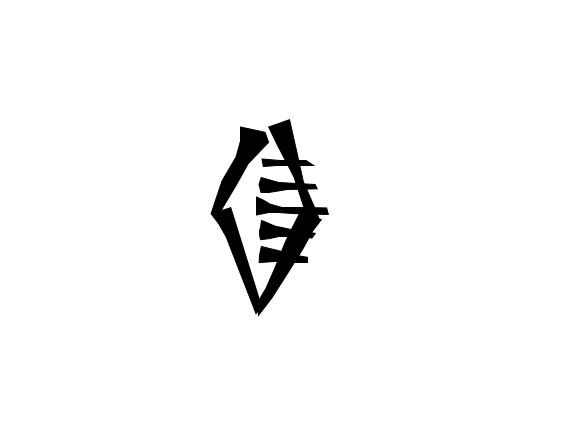
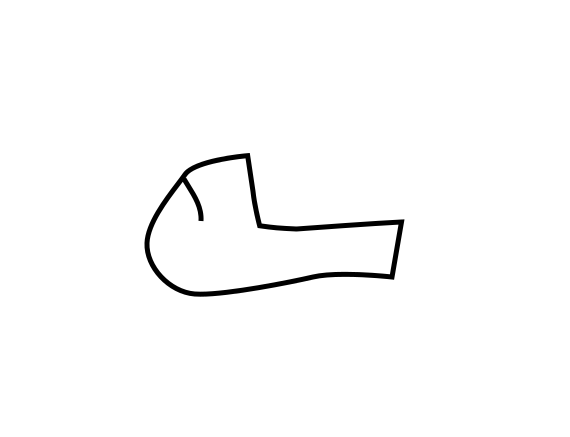
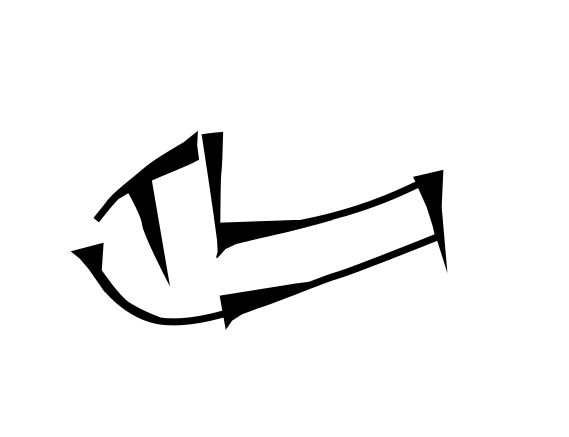
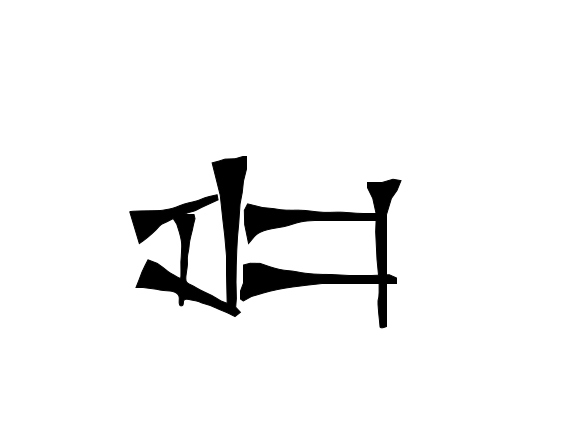
The script utilized during the Jemdet Nasr period is shown in the second column. Notice how the symbols grow increasingly abstract and disconnected from the object they once represented.
Matthews, R. J. “Defining the Style of the Period: Jemdet Nasr 1926-28.” Iraq 26, no. 54 (1992): 1–34. Link
Nissen, H. J.
Archaic Bookkeeping : Early Writing and Techniques of Economic Administration in the Ancient Near East.
Chicago, Ill.: University of Chicago Press, 1993.
Nissen, H. J. R.
The Early History of the Ancient Near East, 9000-2000 B.C..
Chicago: University of Chicago Press, 1988. Link