
The famous trench which exposed the earliest levels of the city, looking east towards Bet Shean.
It was the summer of 1919. After four years of world war, the guns of Europe finally lay silent. Egyptologist and professor at the University of Chicago, James Henry Breasted, decided to take a break from his teaching duties and embarked on a year long tour of the Middle East, looking for places to excavate. One of the places he visited was the great mound of Megiddo . The site made such an impression on him that upon returning to the United States, Breasted secured fifty thousand dollars from the wealthy industrialist, John D. Rockefeller Jr., and another fifty thousand from the University of Chicago, and used the money to organize an expedition to Megiddo under the auspices of the newly formed Oriental Institute. The first season of excavations at Megiddo would commence in 1925.
The expedition got off to a rocky start when several key members of the dig threatened to resign due to personality conflicts with Clarence Fisher, who had been appointed director of the Megiddo expedition by Breasted. Although Fisher was a seasoned archaeologists, he seems to have suffered some kind of breakdown on the dig and therefore had to resign after two years. The situation did not improve much with his replacement, P. L. O. Guy, who was so disliked by the senior members of the expedition that they failed to acknowledge him in their book on Megiddo pottery—a glaring absence since anyone else even remotely connected to the dig was named!1Cline 2020The dig proceeded on firmer ground under the directorship of Gordon Loud, who replaced Guy in 1935.
Sadly, Breasted died of a bacterial lung infection that same year on a return voyage from Egypt. His place at the head of the Oriental Institute was taken by John Wilson. The timing for this transition could not have been worse. The world was then in the midst of an economic depression and hard times had come for everyone, including the Rockefellers, who notified Wilson that they would be cutting their funding of the institute by half. This put the Megiddo expedition in serious jeopardy. It didn’t help matters that the dig itself had proven to be a great disappointment. After ten years of digging and the removal of mountains of earth, the team had relatively little to show for their efforts. It was nevertheless a dark day when Gordon Loud received the following cryptic telegram from Wilson, notifying him that the dig had been terminated.
regret another megiddo season impossible expedition terminating now stop
can you remain to liquidate house and equipment…
[please] advise antiquities department of termination2Cline via the ASOR Blog
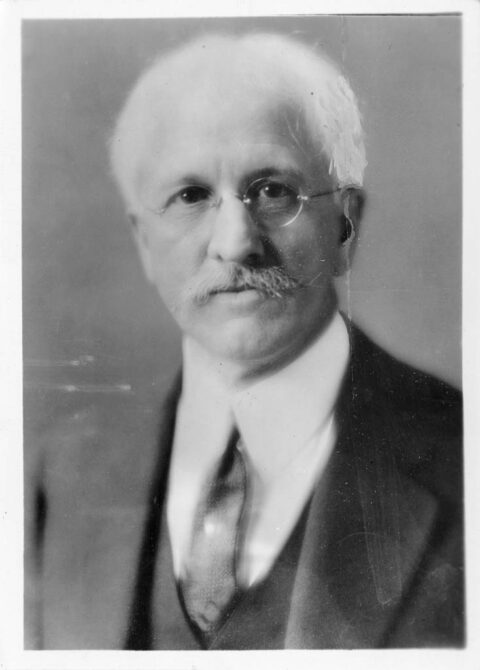

Professor of Egyptology and Oriental History at the University of Chicago.
By all accounts, the Megiddo excavation looked like it was done for good, but in the months that followed, Wilson managed to scrape together another 28,000 dollars, enough to fund the dig for one final season. It so happened that that year the expedition made, not one, but several epic discoveries, including a richly furnished burial and a large cache of finely carved ivories. (We will look at these items in more detail in a future entry.) These discoveries generated a great deal of excitement, and sufficient funding to continue digging at Megiddo for another four years, until World War II finally brought the expedition to a close. It was during these final years at Megiddo (1935-1939) that Gordon Loud and his team cut a deep trench in Area BB with the goal of exposing the earliest levels of the mound.
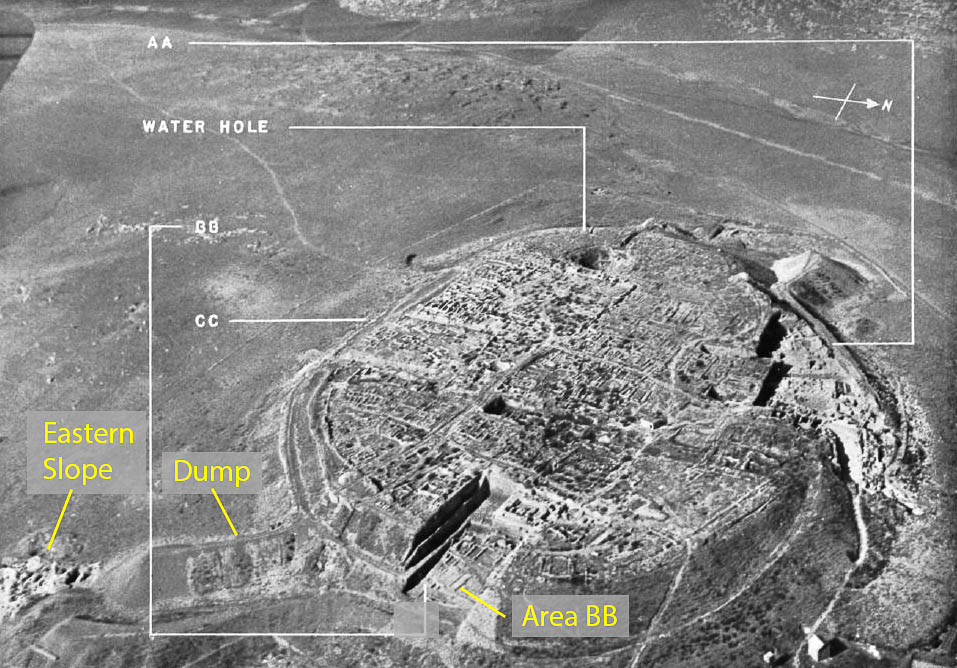
The lowest levels of the the tell were excavated in Area BB.

The location of the broadroom temple of Stratum XIX (red) is visible at left. The inscribed pavement is at center. Not all of Stratum XX is visible in this image but the visible portions are colored yellow.
Temple 4050
At the bottom of the trench, in Stratum XIX, Loud and his team discovered a “broadroom” temple—the inner chamber was long and narrow with its entrance on the long wall. The temple seems to have originally had two chambers, separated by what may be interpreted as a small storeroom, but only one of the chambers is preserved well enough to get a sense of its layout. It had a low podium or altar, positioned against its long wall, directly opposite its entrance. Loud designated the chamber “4050,” a number which is now generally applied to the temple as a whole.

The three basic elements of the temple are visible here: courtyard, temple chambers, and altar.

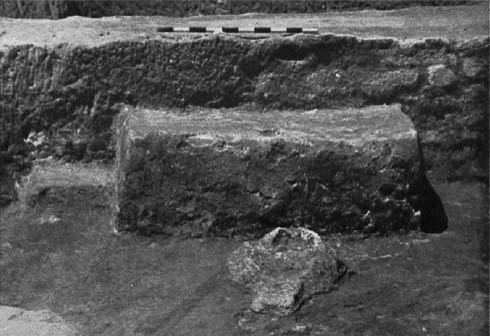
The altar was a low platform which was enlarged at some point. The earliest altar is shown at right.
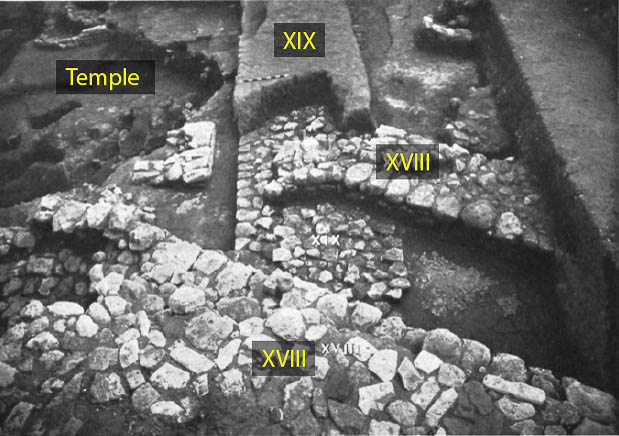
This crossection shows the mudbrick wall of Temple XIX resting on a stone foundation. Walls of Stratum XVIII overlay the temple of Stratum XIX.
The temple is quite similar to the “Chalcolithic” temple discovered at En Gedi which we looked at briefly in a previous entry. Both temples were of the same “broadroom” type with a low podium or altar situated directly across from their entrances. And both incorporated courtyards surrounded by a wall.
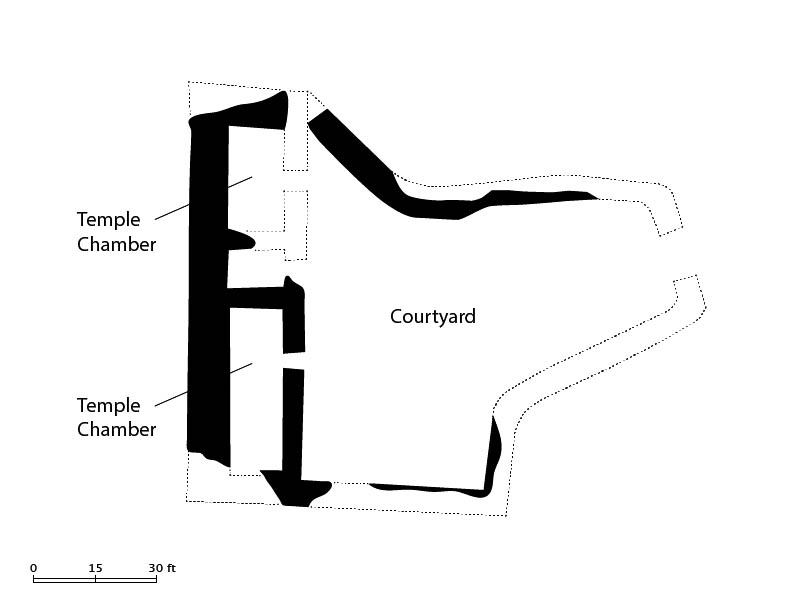
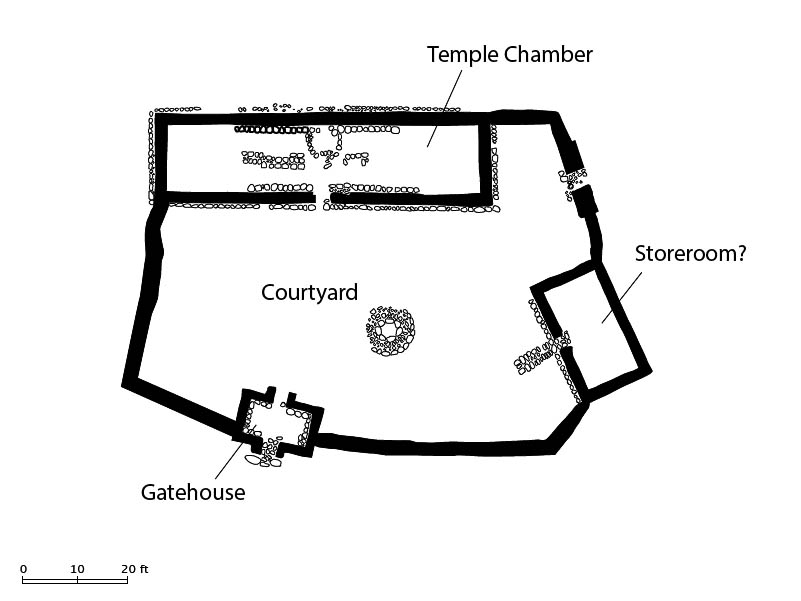
Left: Temple 4050 excavated at Megiddo. Right: The Ghassulian temple discovered at Ein Gedi. Both feature a broadroom temple and an irregular courtyard.
Pavement
Looking down at Temple 4050 today, it is hard to believe that the temple at the bottom of the trench once crowned a hill. Megiddo at the time was probably just a village situated next to a spring known today as Ain el-Kubbi. Only the temple and its courtyard appears to have been surrounded by a wall. The courtyard and road leading to the temple was paved with flag stones, some of which were inscribed with images of animals and people. These afford a small glimpse of life in Megiddo at the dawn of the Early Bronze Age.

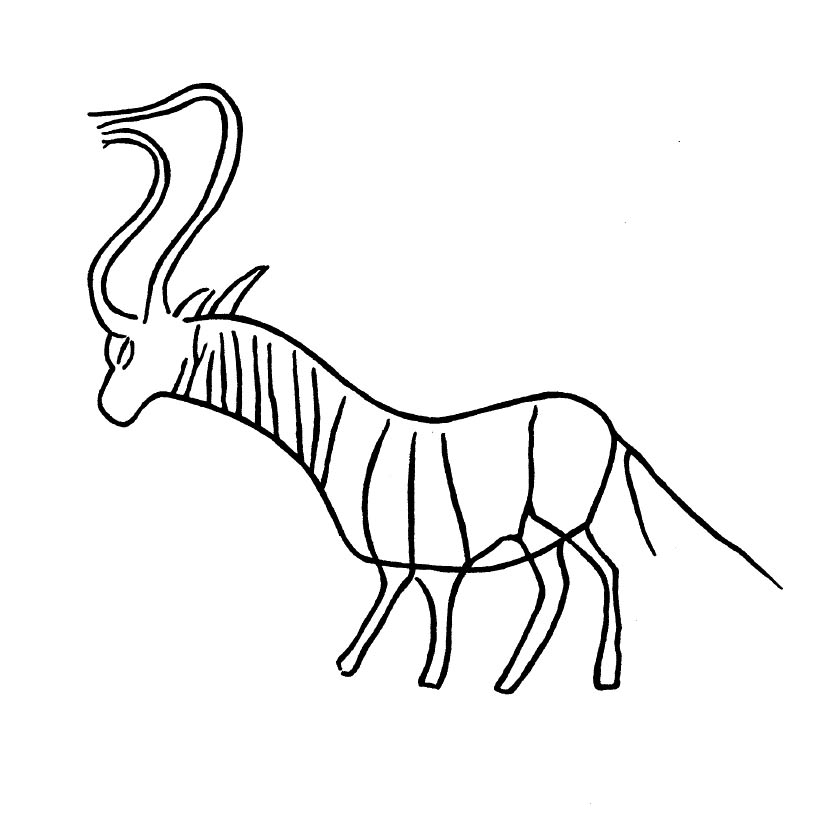

Among the animals inscribed on the pavement are a giraffe and a hippo(?) and what appears to be a type of striped African antelope known as a Kudu (left). It is curious to find these African animals depicted on flagstones from Megiddo.
Who was there first?
Everything we have discussed so far was found in Stratum XIX on the tell. But as you will probably have noticed, there is also a Stratum XX which represents the earliest settlement at the site. The only architectural features that can be attributed to this stratum are the remnants of living quarters inside a cave (Cave 4067) and the foundations of several circular buildings immediately adjacent to it. These were found directly beneath the inscribed stone pavement of Stratum XIX.

The location of the broadroom temple (Temple 4050) of Stratum XIX in relation to Stratum XX and Cave 4067. Note the position of the inscribed pavement directly above the cave.

A cave and the remnants of a few walls and pits are all that remains of the earliest settlement at Megiddo.
Although bone and stone artifacts were found inside the cave, no pottery was recovered from it. Loud interpreted the curious lack of pottery as evidence of a “pre-pottery” civilization which was the first to settle at Megiddo. The absence of pottery suggested to him that the early settlers of Megiddo still derived most of their sustenance from hunting and gathering, activities for which leather vessels were better suited than pottery. However, they seem to have taken up agriculture relatively quickly since pits were found next to the cave which Loud interpreted as basins used for pressing oil or wine.3Loud 1948, 60

These large basins cut from the rock are connected at the bottom. They probably served as presses for making oil or wine.
Loud and his team also found the remnants of several circular houses directly beneath the inscribed stone pavement of Stratum XIX. The accumulation of debris was not very thick in this area. It is doubtful, therefore, that much time passed between Stratum XX and XIX.
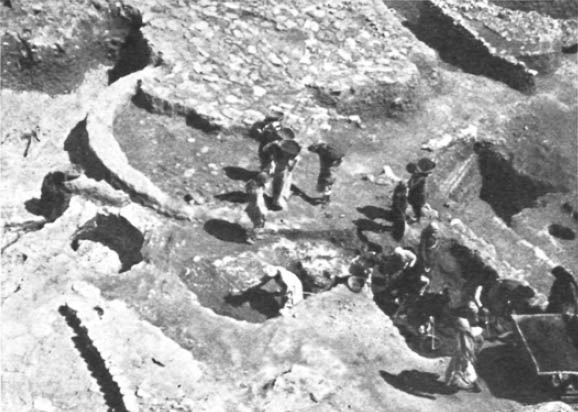
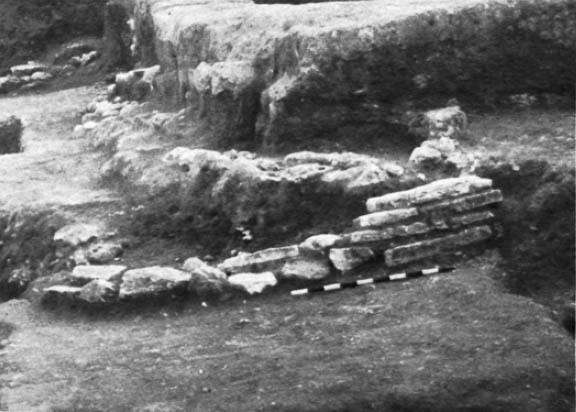
Partial walls of several building with a circular footprint were found in Stratum XX beneath the inscribed pavement of Stratum XIX. Thus it seems that the earliest dwellers at Megiddo lived in round houses made of mud brick set on stone foundations.
Cline, E. H.
Digging up Armageddon : the search for the Lost City of Solomon.
: Princeton University Press, 2020.
Loud, Gordon.
Megiddo II: Seasons of 1935-39, Plates.
Chicago, Illinois: University of Chicago Press, 1948. Link
Loud, Gordon.
Megiddo II: Seasons of 1935-39, Text.
Chicago, Illinois: University of Chicago Press, 1948. Link