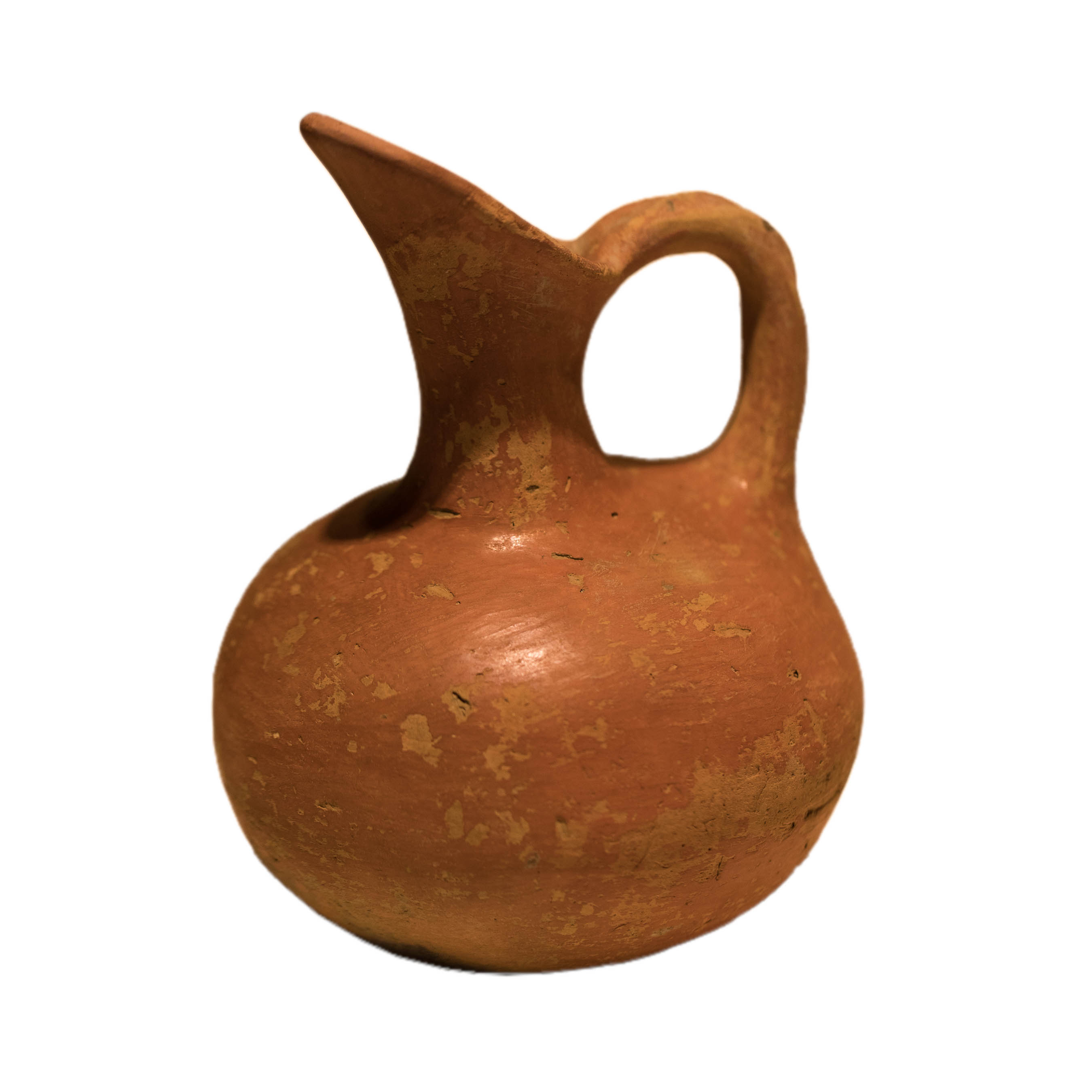
This spouted pitcher from Karatas-Semayouk in south central Anatolia is typical of the spouted pitchers produced in Anatolia during the Early Bronze Age.
The pitcher was a favorite form of Anatolian potters, who made the modelling of its spout into an artform. The burnished finish imitated metal counterparts. The pitchers were sometimes decorated with knobs or inscribed with simple geometric patterns. The tripod base and knobby, wing-like protuberances, is a feature particularly characteristic of vessels from western Anatolia. Many examples were found in Troy II.


Black-burnished vessels decorated with knobs. The tripod base was commonly found in Troy II assemblages.


Although sharing a globular body and vertical beaked spout, there is considerable variation in the method of firing and surface decoration.

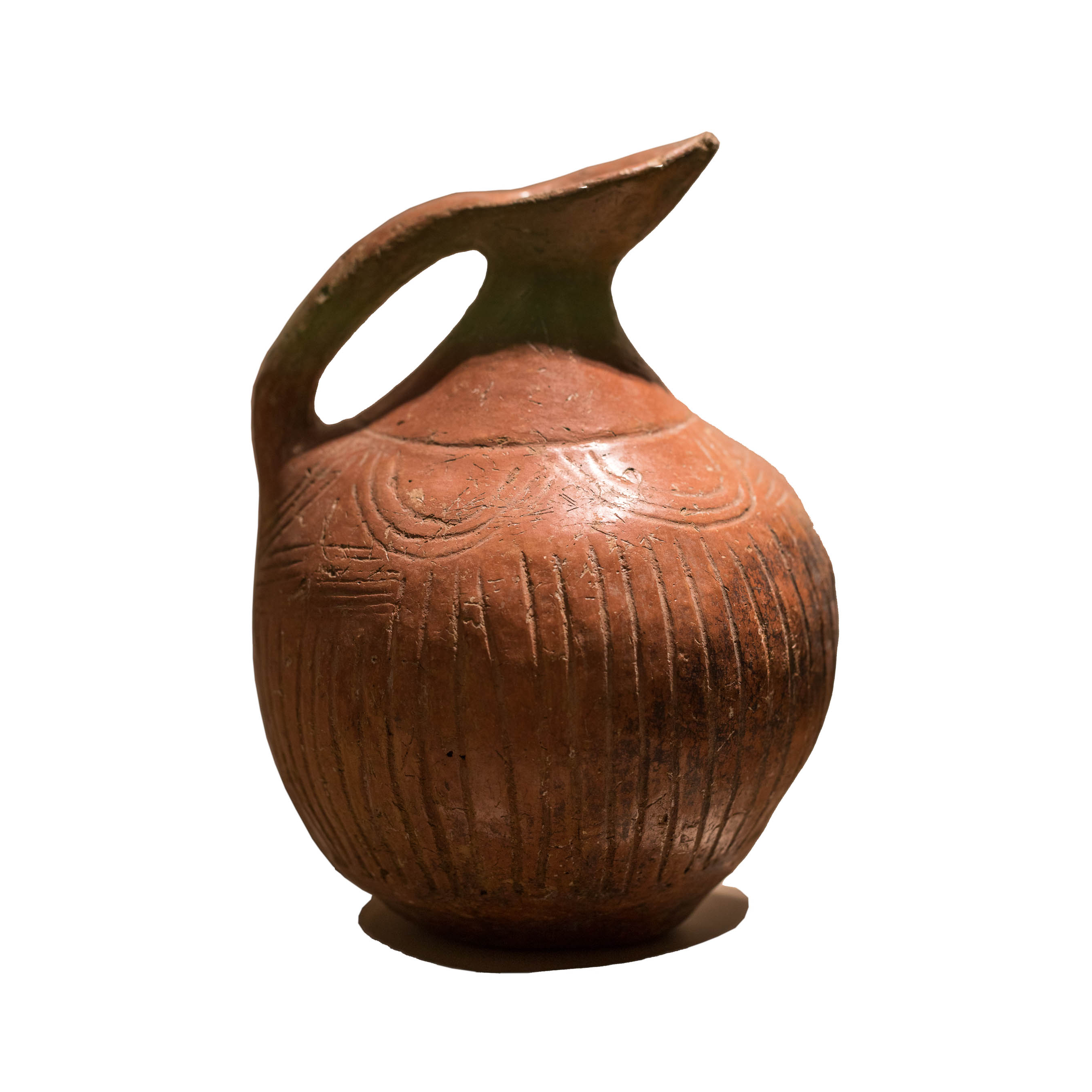
These red-burnished vessels have flaring spouts instead of vertical.


Known as Cappadocian Ware, these painted examples are considered a transitional style that appears towards the end of the Early Bronze period.1Ozguc 1947, 320
Özgüç, Tahsin. “Typical Pottery of the Middle Anatolian ‘Copper’ and ‘Bronze’ Ages.” Artibus Asiae 10, no. 4 (1947): 312–23. Link