The most common type of pottery found at Ghassulian sites was V-Shaped Bowls. Their name comes from their straight, sloping sidewalls, typical for the EB I. Horizontal striations on the sides of the bowl are evidence for the use of the potters wheel, as were the string marks on the base of the bowls left behind when the potter cut the bowls from the clay with a string. These bowls are quite similar to string-cut “flowerpots” which began to appear in Mesopotamia during the Late Uruk and Jemdet Nasr periods.1Pollock 1987


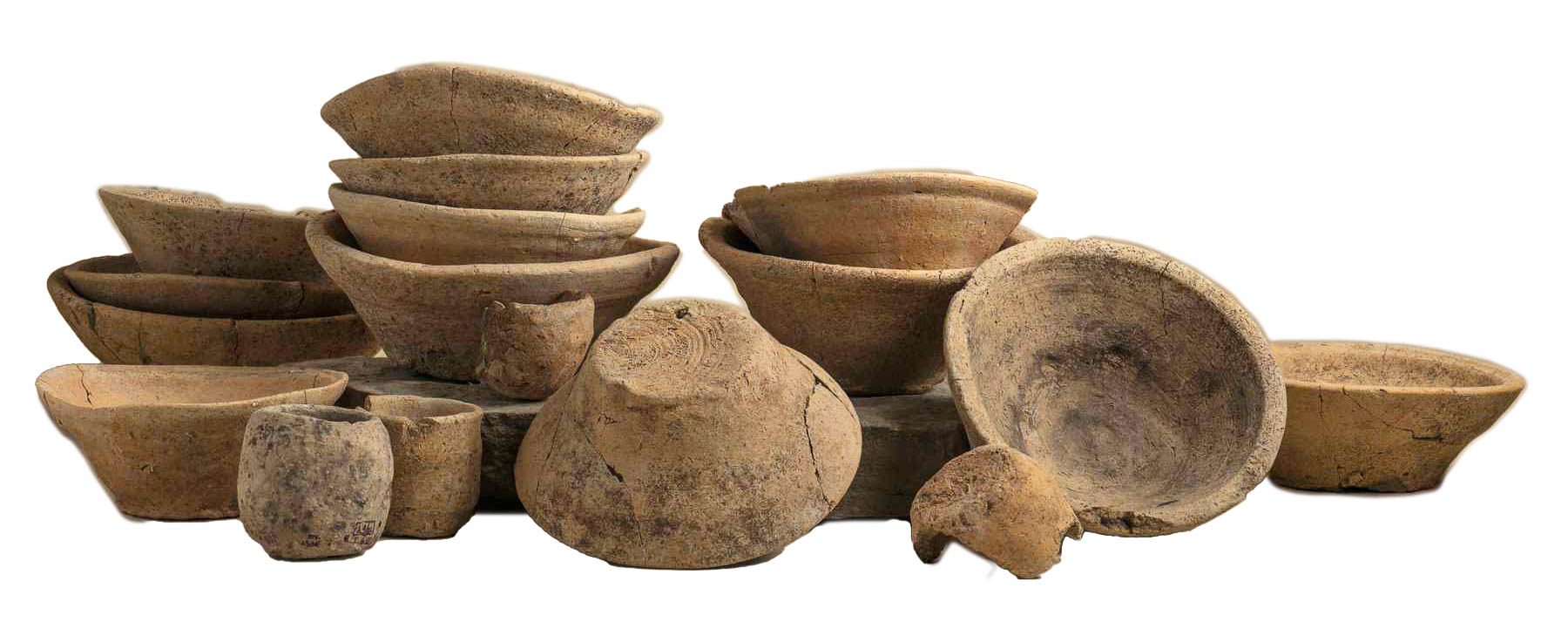
A comparison of “Flowerpots” from Nippur and Arslantepe next to V-shaped bowls discovered in a Ghassulian context.
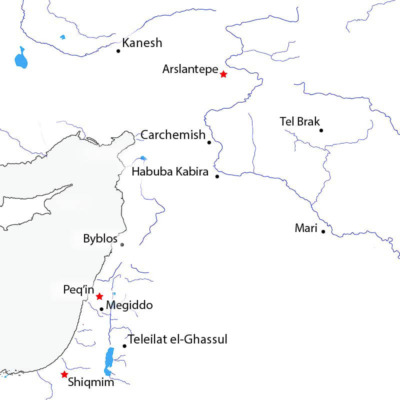
The Ghassulian bowls from Shiqmim in the Negev are generally dated to the end of the 5th and early 4th millennium BC whereas the Mesopotamian “flowerpots” date approximately a millennium later. This may be like a day in the sight of God, but it is a lot of time in human years. Considering the similarities between the bowls, and the use of the fast wheel in their construction, it is doubtful so much time separates them. Lowering the chronology of the Ghassulian culture by a millennium, so that it is contemporary with the Late Uruk period, resolves this anomaly and a host of others too, as we will see in our next entry.
Brink, E.C.M. van den, Y.M. Rowan, E. Braun. “Pedestalled Basalt Bowls of the Chalcolithic: New Variations.” Israel Exploration Journal 49, no. , no. 3/4 ( 1999): 161–83. Link
Frangipane , Marcella.
“The Late Chalcolithic IEB I sequence at Arslantepe. Chronological and cultural remarks from a frontier site,” in From the Euphrates to the Caucasus: Chronologies for the 4th-3rd millennium B.C. Varia Anatolica, 11 vols.
Actes du Colloque d’Istanbul: Institut Français d’Études Anatoliennes-Georges Dumézil, 2000. Link
Pollock, Susan. “Abu Salabikh, the Uruk Mound 1985-86.” Iraq 49 (1987): 121–41. Link
Rowan, Yorke, Jonathan Golden. “The Chalcolithic Period of the Southern Levant: A Synthetic Review.” Journal of World Prehistory 22 (2009): 1-92. Link