
Short, fat cylinder seals such as this one are typical for the Jemdet Nasr period, as is the line of long-horned goats. Interposed between them is a ladder-shaped streamer. The seal comes from Khafajah in Northern Mesopotamia.
If the large and finely cut Uruk period cylinder seals were characterized by uncluttered realism, then cylinder seals of the Jemdet Nasr period are characterized by repetitive shapes and horror vacui (“the fear of emptiness”). The latter typically employ simple geometric patterns, rows of animals, or fish. Seal-cutters made extensive use of the drill and cutting wheel to speed up the carving process.1Collon 1987, 15 ff. The tooling marks left behind by the cutting tool are often still visible on the seal.
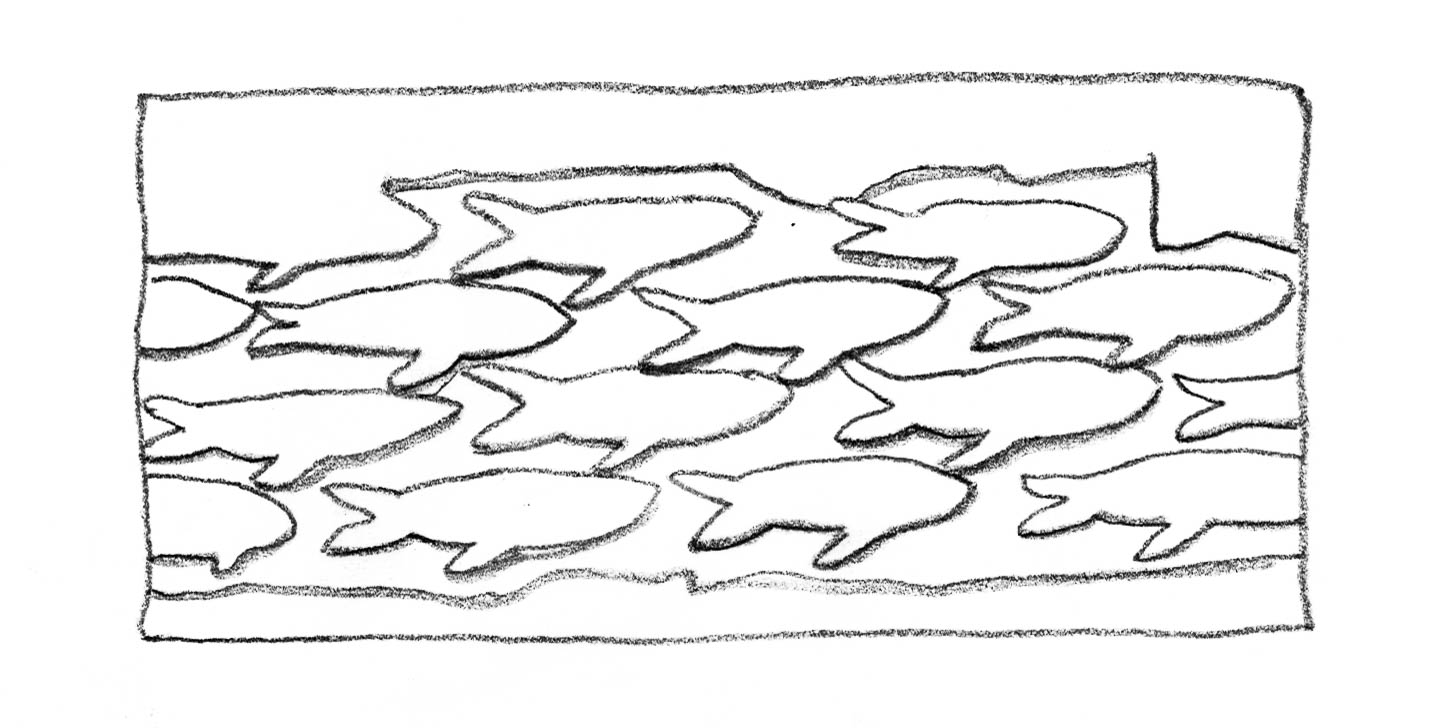

Repetitive patterns of fish or animals are common on seals of the Jemdet Nasr period.
Characteristics
- short, fat shape
- cut from soft stone
- horror vacui
- abstract geometric patterns and repetitive shapes
- files of animals are common
- use of the drill and cutting wheel with tooling marks still visible
- stamp seals and cylinder seals are both common
- pig-tailed women engaged in various tasks
The “Pigtail” Women
The most curious type of Jemdet Nasr seal are those which display “pigtailed” women. The seals are cut almost exclusively with a drill. As a result, the figures tend to be highly stylized and oftentimes difficult to interpret. As their name suggests, the women wear distinctive “pig-tails” and are engaged in various activities, especially weaving and churning butter.
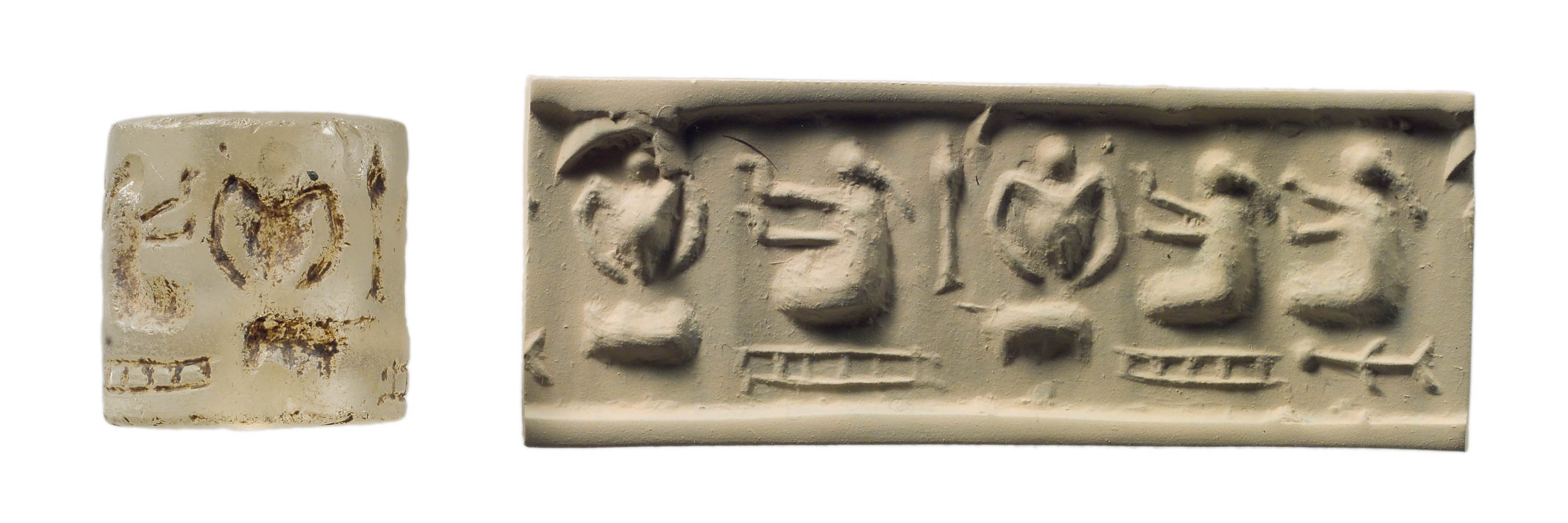
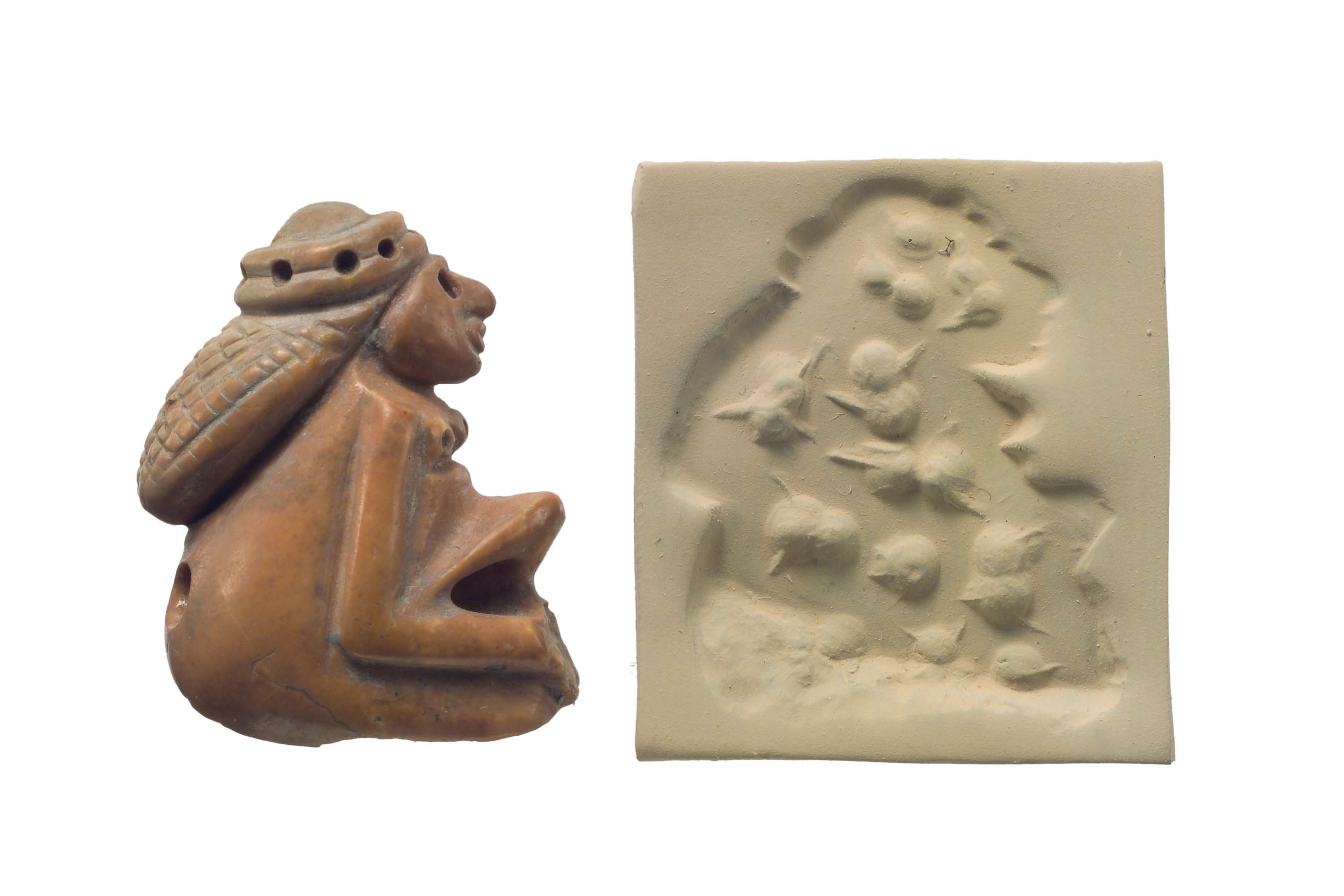
Left: These seals are often difficult to interpret since the depictions tend to be quite abstract. The woman appears to be rocking a two handled jar in order to make butter. The women are always shown with a “pig-tail.” Right: This stamp seal provides a closeup look at one of the “pig-tailed” ladies. The pattern cut into its obverse defies interpretation. Clearly its only purpose was to provide a distinctive pattern, like an ancient QR code.
Two Periods or Two Styles?
The Jemdet Nasr seals were once thought to postdate the Uruk period but they are now generally thought to be at least partially contemporary with Uruk period seals. Instead of representing different periods, they are the product of different workshops with a different clientele.2Matthews 1992, 19; see also Strommenger 1980, 481 The larger, more elaborate, Uruk period seals, which depict the ensi engaged in various tasks, must have been royal seals whereas the smaller, less skillfully cut “Jemdet Nasr” seals probably belonged to people of lesser status. The “pig-tail woman” variety may have belonged to workshops engaged in the production of cloth, dairy products, etc.
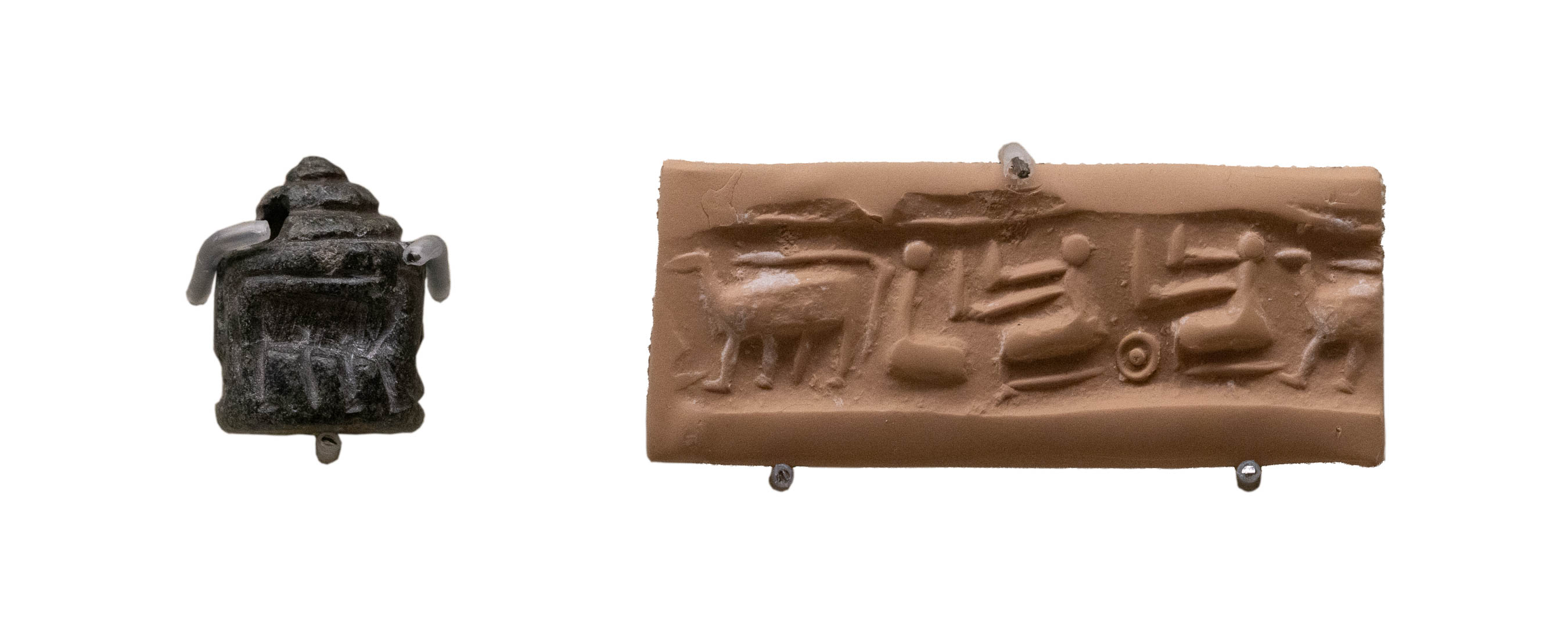
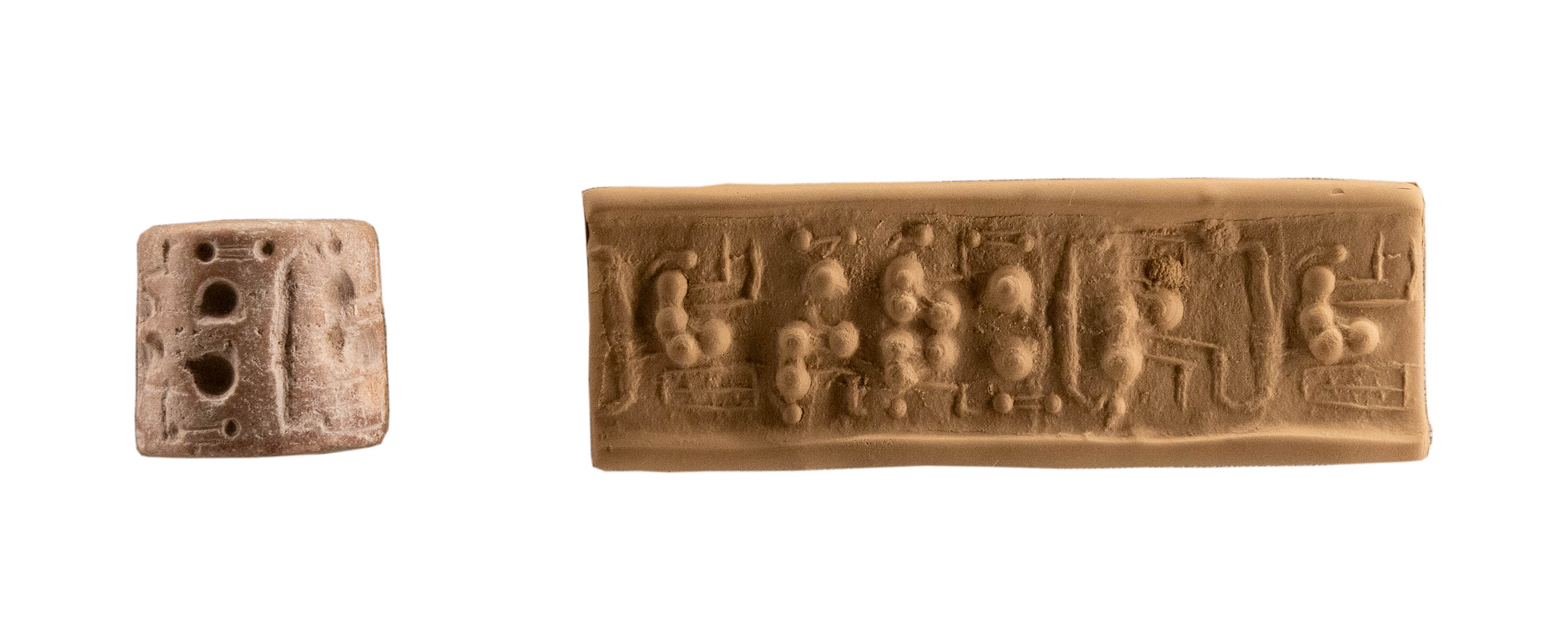
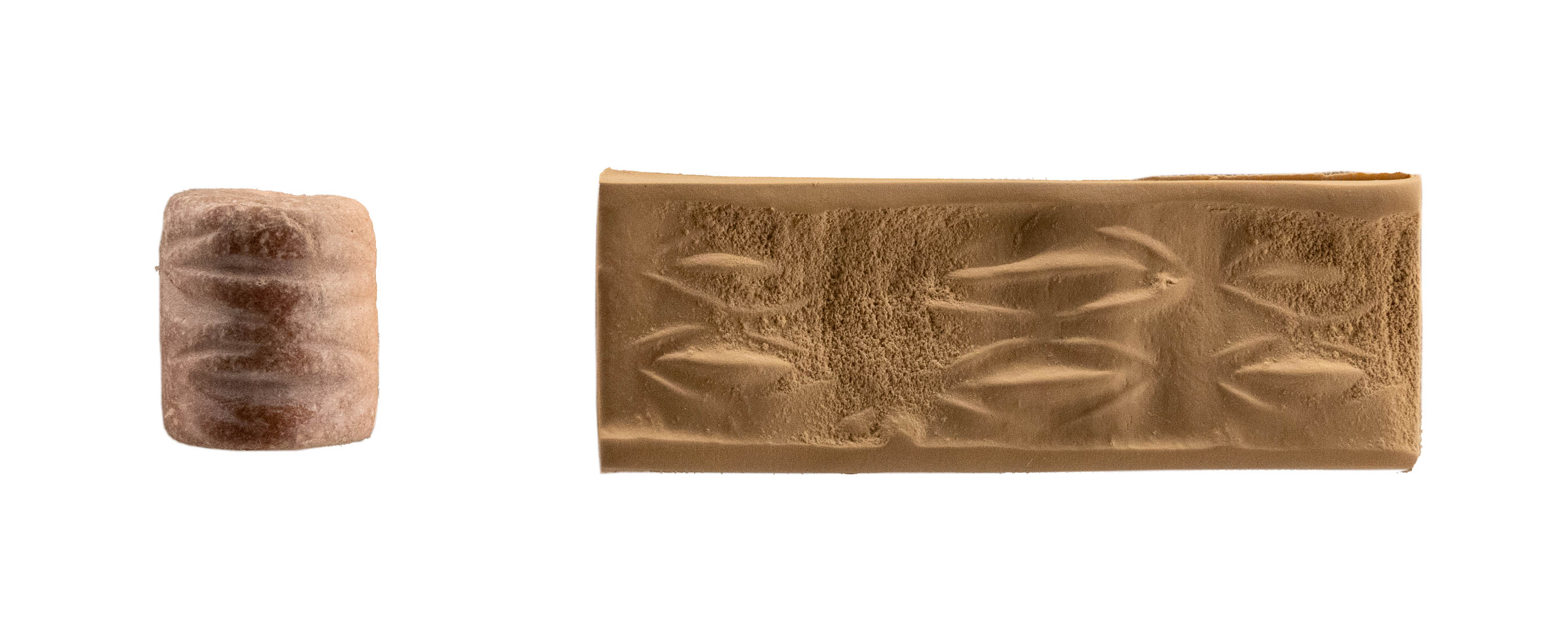
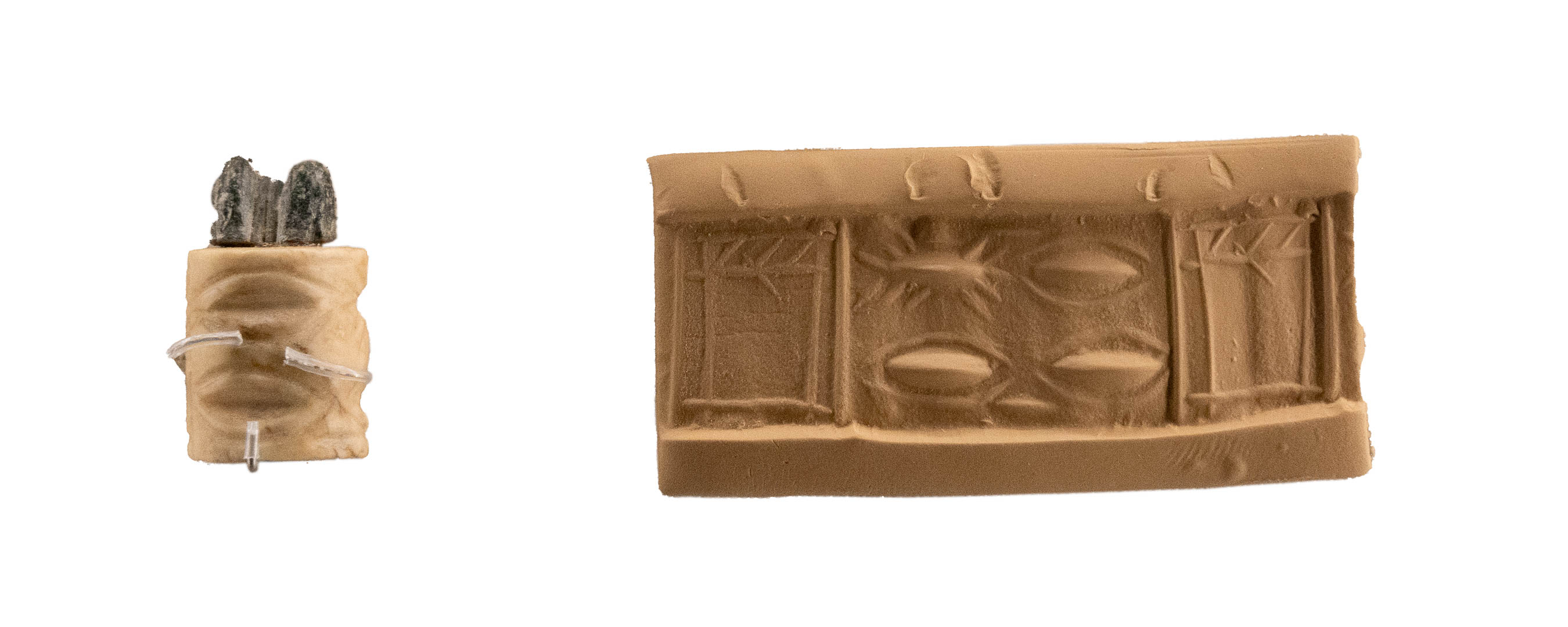
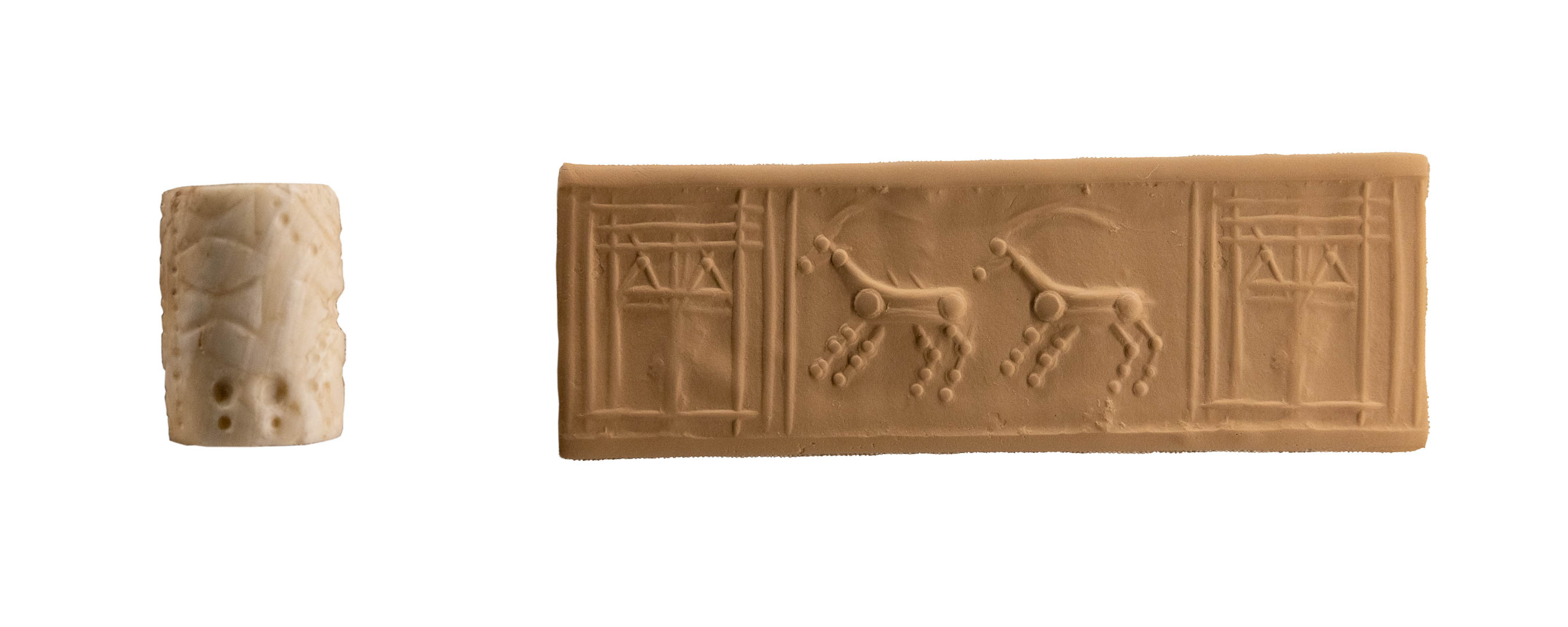
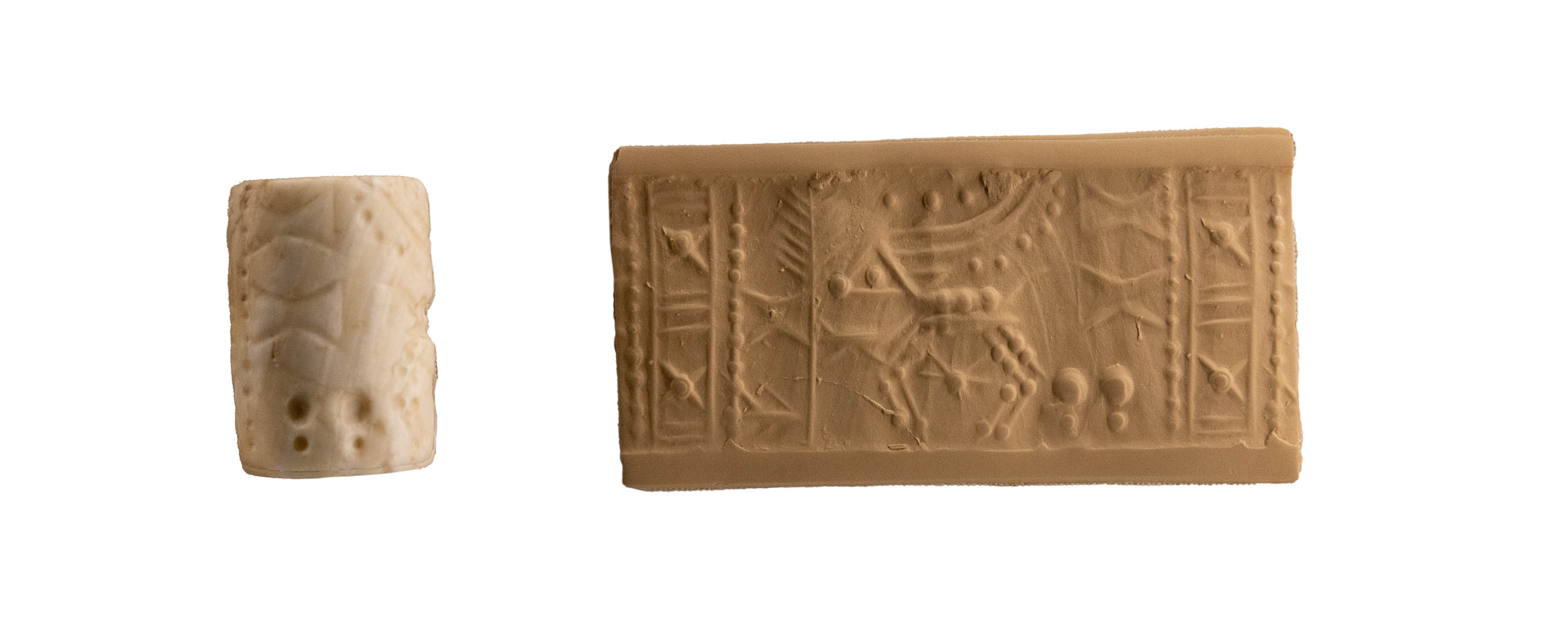
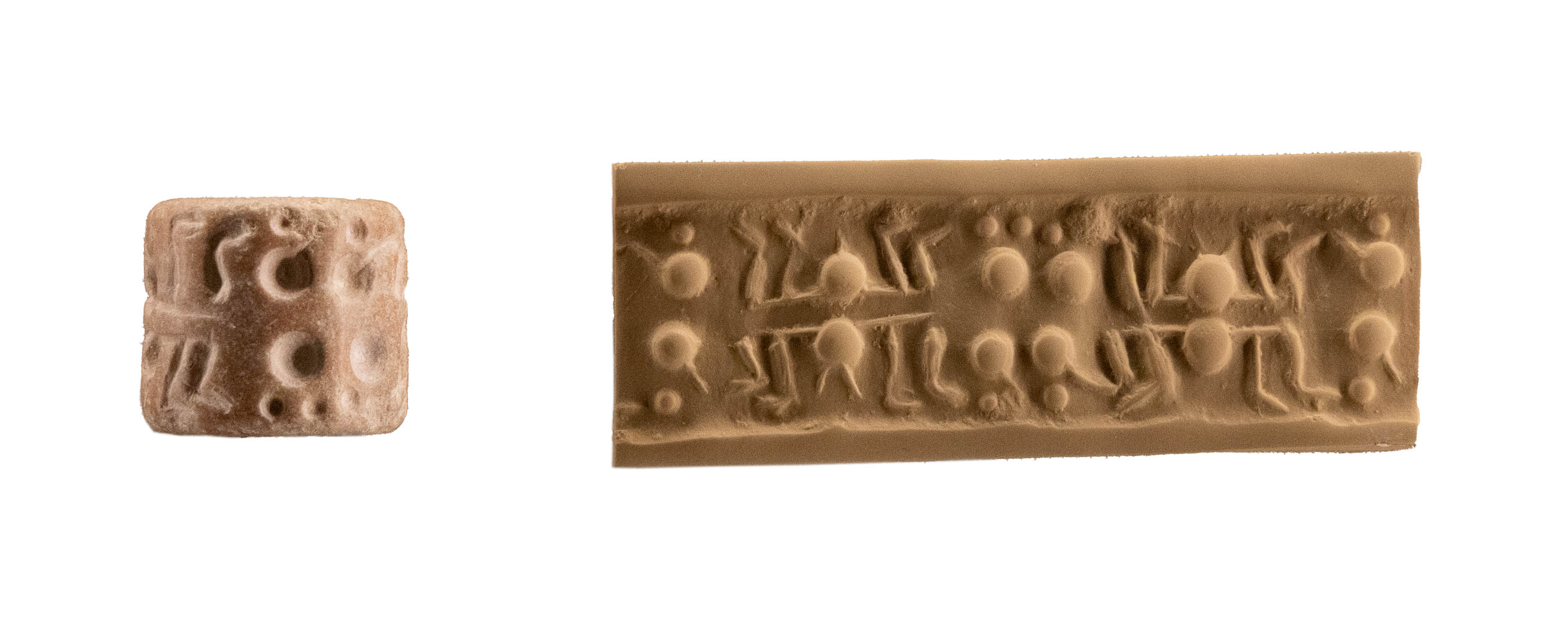
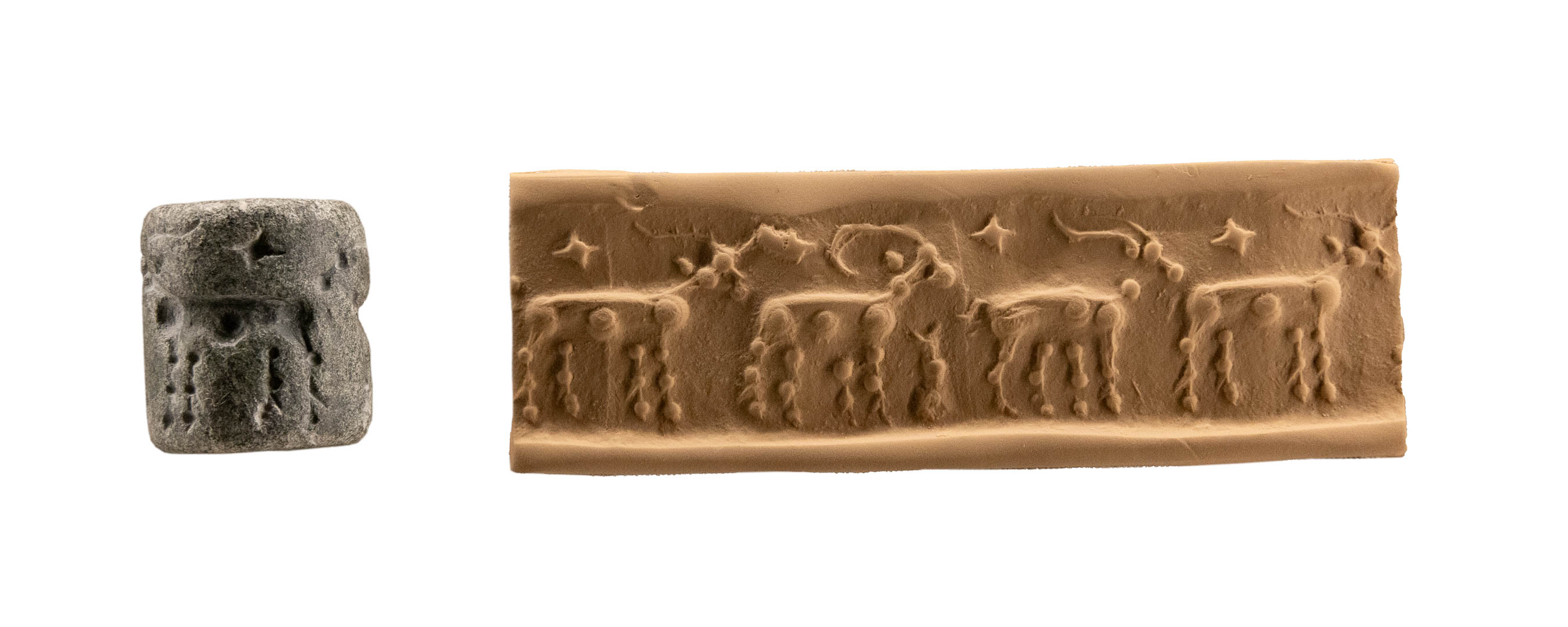
The seals are simple and roughly cut compared to Uruk seals.
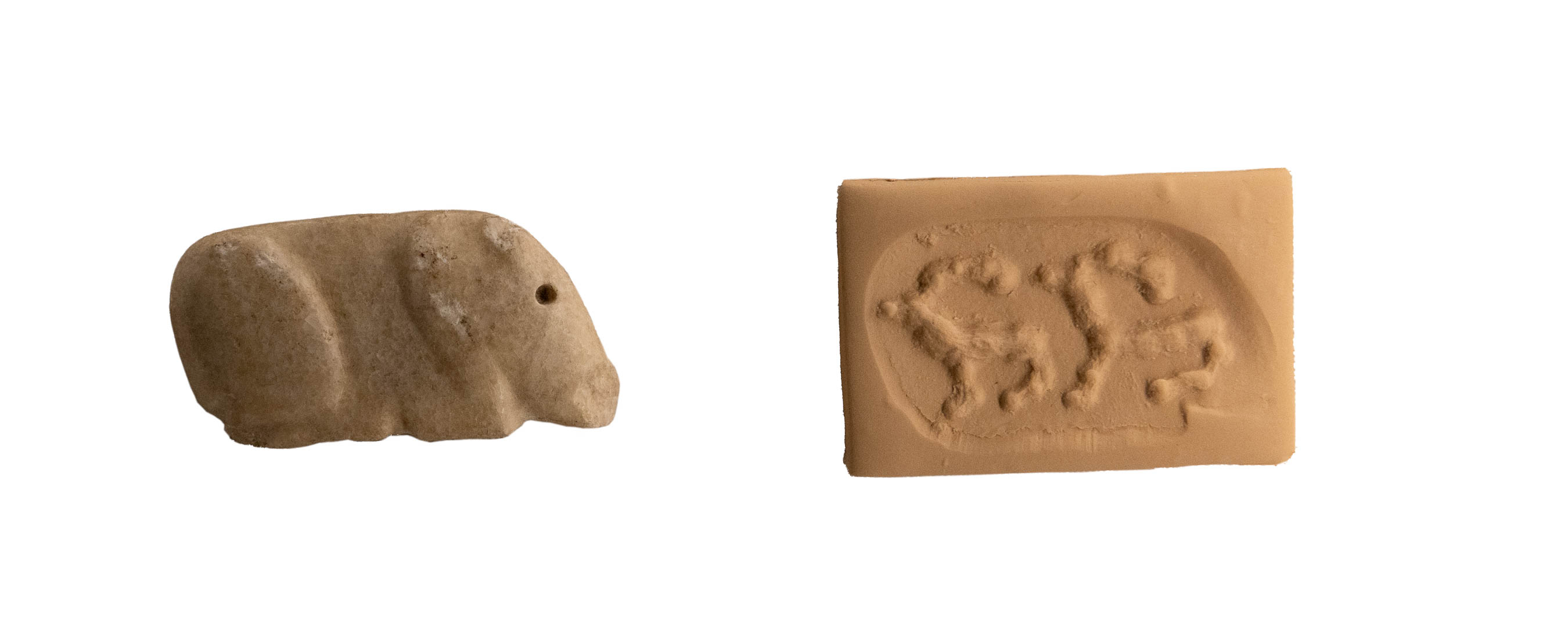
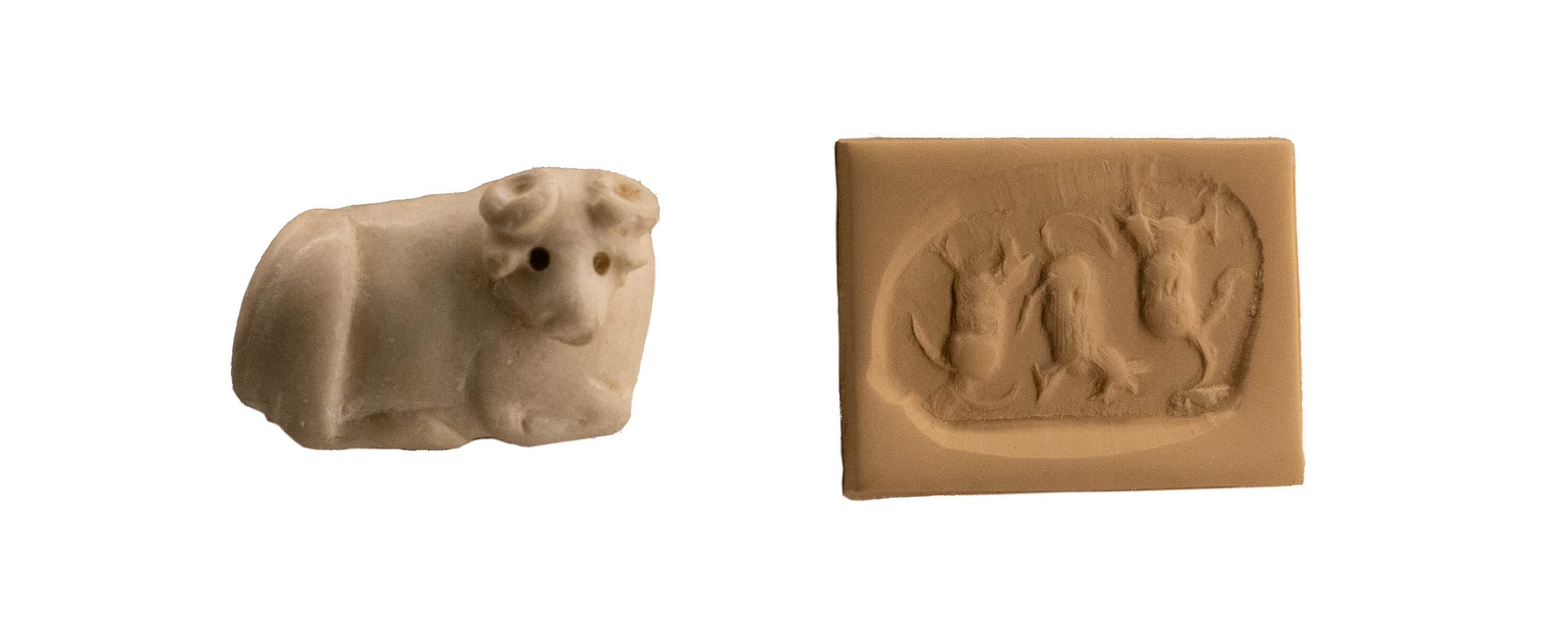
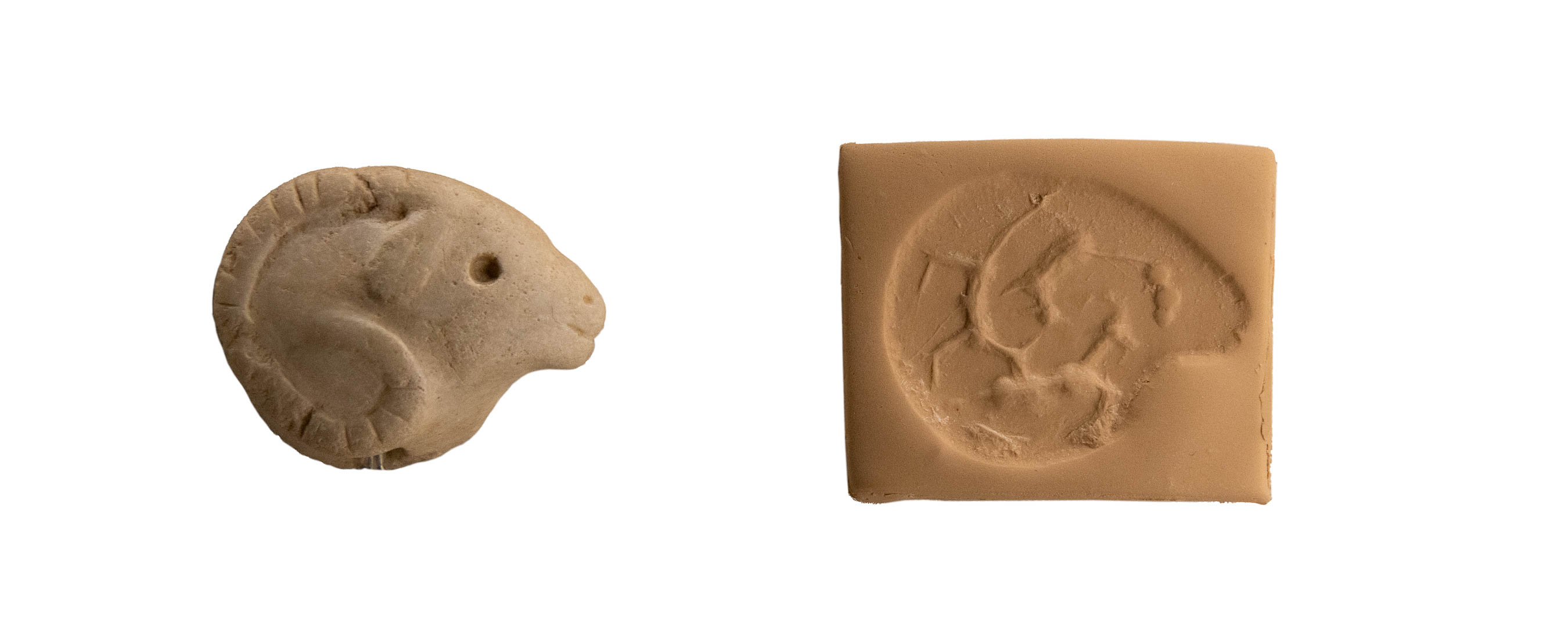
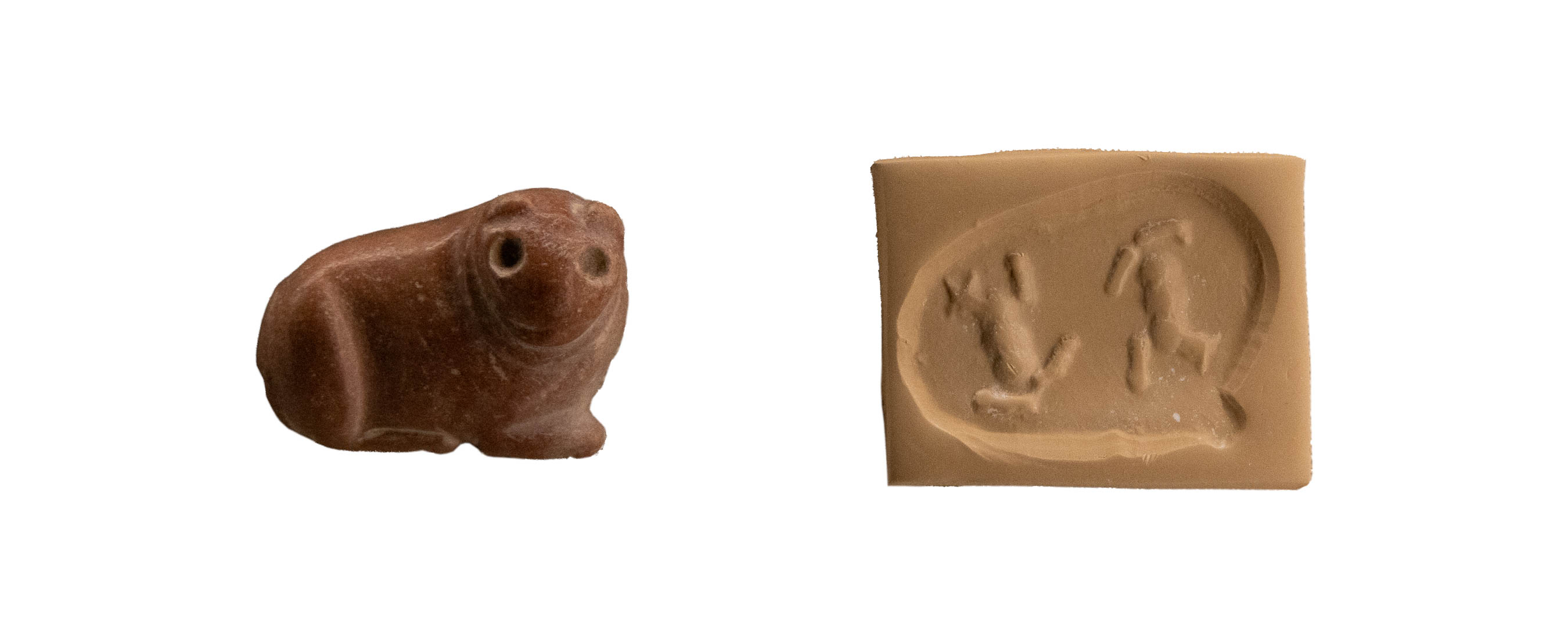
The designs on the obverse side of these seals is often difficult to interpret. The purpose seems to have been simply to produce a unique design.
Collon, Dominique.
First Impressions : Cylinder Seals in the Ancient Near East.
Chicago, Illinois: University of Chicago Press, 1988.
Matthews, R. J. “Defining the Style of the Period: Jemdet Nasr 1926-28.” Iraq 26, no. 54 (1992): 1–34. Link
Nissen, Hans. “Aspects of the Development of Early Cylinder Seals.” Bibliotheca Mesopotamica 6 (1977): 15-23. Link
Strommenger, Eva. “The Chronological Division of the Archaic Levels of Uruk-Eanna VI to III/II: Past and Present.” American Journal of Archaeology 84, no. 4 (1980): 479–87. Link