
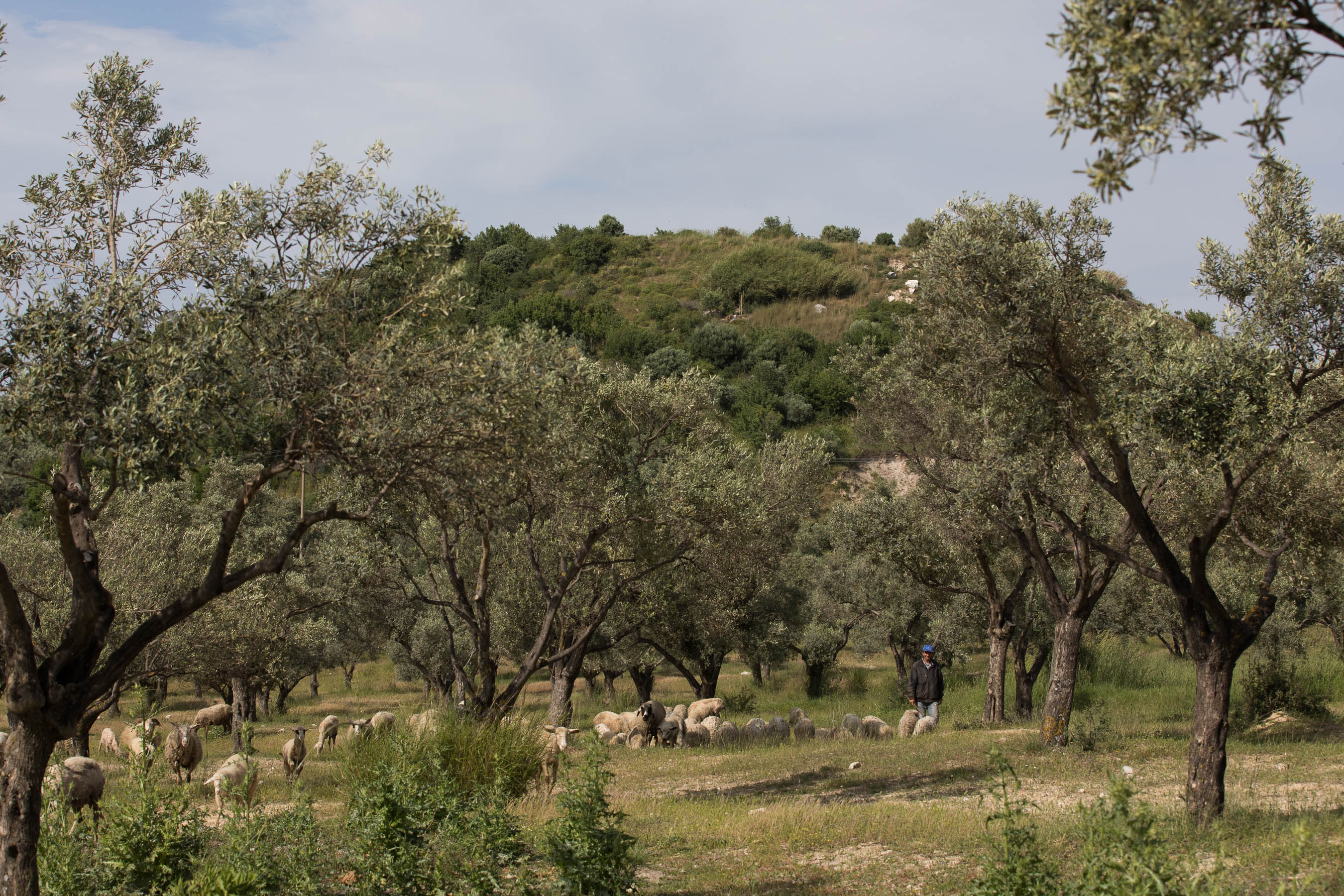
Formerly known as Kiryat Arba, the tell is located in the middle of modern day Hebron. The traditional burial site of the patriarchs is located nearby, at Machpelah. This photo was taken from the direction of Mamre, several miles north of Tell Rumeida.
Hebron is one of just a handful of cities mentioned in Genesis in connection with Abraham. Two names are given for the city: Kiriath-arba—the name of the city in Abraham’s day, and Hebron—the name it assumed in later periods. The book of Joshua states parenthetically that the city was founded by Arba (Hebrew Kiriath-Arba, “city of Arba), and that he was the “father of the Anakim” (Josh. 14:14, 15:13, 21:11). The inhabitants of the city are otherwise identified as Hittites (Gen. 23:7). A closer inspection of this constellation of names reveals some surprising possible connections between them.
Arba and the Anakim
According to Greek legend, the nymph Dione bore a son to Apollo in Crete named Miletus. This Miletus roamed at the head of a band of Cretan warriors until he reached the land of Caria on west coast of Asia Minor. There he founded the city named after him. According to the Greek geographer, Pausanias (110-180 AD), land of Caria where Miletus founded his city was known in former times as Anactoria. Pausanius also states that region was at that time ruled by Asterius, the son of Anax.
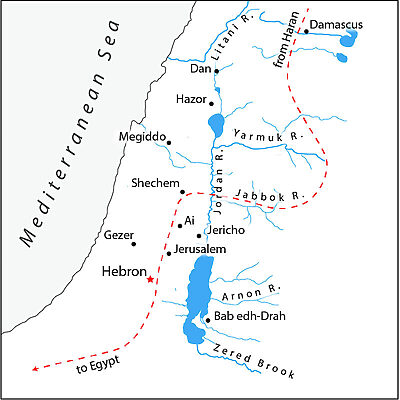
Pausanias records the following curious detail about the early inhabitants of Anactoria.
Before the city of the Milesians is an island called Lade, and from it certain islets are detached. One of these they call the islet of Asterius, and say that Asterius was buried in it, and that Asterius was the son of Anax, and Anax the son of Earth. Now the corpse is not less than ten cubits. (Pausanias, Description of Greece)
In addition to being the name of a Greek ancestor, the father of Asterius, anax is the oldest Greek word for king. It appears in Late Bronze Mycenaean Linear B texts as wanax. Its plural form, anake, could be used to refer to underworld spirits. Thus we have a curious intersection between underworld spirits, giants, and heroes.

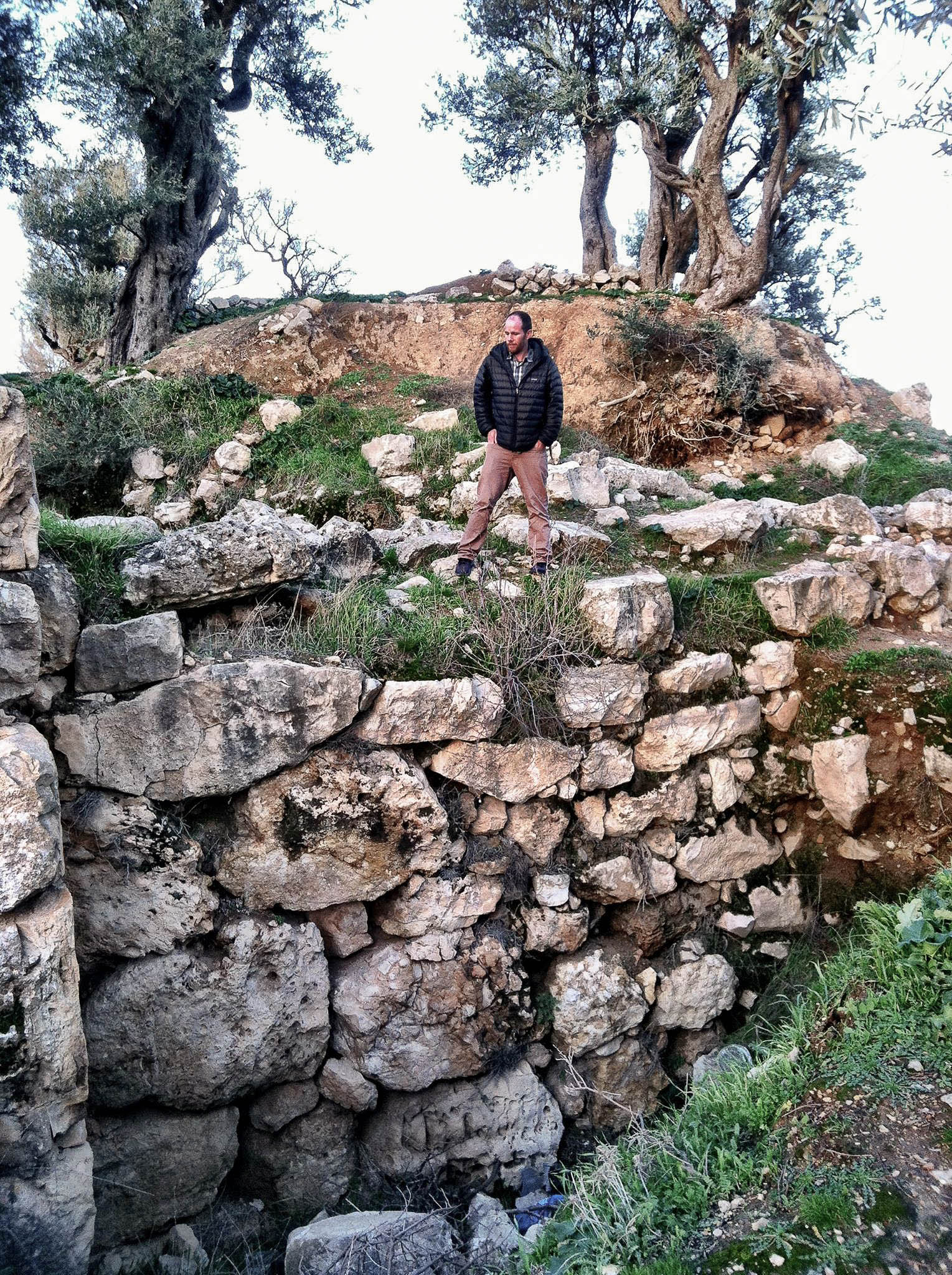
The bronze age mound is located near the classical city of Miletus, on the southwestern coast of Turkey. Miletus is the most famous Carian city. Although not extensively excavated, portions of a defensive wall are visible, probably dating to the Archaic period (8th-6th centuries BC).
The Hebrew terms rephaim and anakim carry much the same meaning as the Greek term anax. Indeed, anakim looks like a loan word from the Greek related to anax. Like in Greek, the terms may be used interchangeably to refer to spirits of the underworld and also to a group of people of unusual stature who lived in Canaan. The height of Goliath, the most famous of the “sons of Anak,” is said to have been “six cubits and a span (9 feet)” or “four cubits and span (6 1/2 feet)” depending on the textual tradition.1The high number appears in most translations of the Bible while the lower number is preserved in a number of important ancient sources, including the Greek translation of the Old Testament, Josephus, and a copy of Samuel found in the Dead Sea Scrolls. Apart from his size, Goliath is best known for his heavy armor, described in the Bible in terms reminiscent of Homer’s Greek and Trojan warriors. Variations of Goliath’s name (AWLT and WLT) have been found inscribed on pottery recovered from his home city of Gath. The name is probably related to other known Indo-European names such as Alyattes, a Lydian monarch in the 7th-6th centuries BC, whose name means “lion.” It is noteworthy therefore that the Hebrew word for a heavily armed warrior, hacari (“the Carians”), is named after the region of southwestern Anatolia named Caria, where the giant Asterius once ruled, and where the Cretan warrior Miletus founded a city!
Bringing the conversation back to Kiriath-Arba, Othniel Margalith points to a number of cities on Crete which bore names such as Arbion and Arbis, and notes also that there was a temple to Zeus Arbios built on Mount Arbion.2Margalith 1994, 47; see also Kitchell 1983 It is possible, therefore, that the name Arba is an Indo-European name, and that the Hittites living in Kirath-Arba originated in the Aegean world, like Goliath of a later era. This should not be too surprising since it is often difficult to separate the Aegean and Anatolian worlds linguistically and culturally, especially for the early periods. This could explain the presence of “the Philistines” in southern Canaan in Abraham’s day inasmuch as the Philistines of one era could be the Hittites of another.
Tell Rumeida
Tell Rumeida is located in the middle of Hebron, the second largest city in the West Bank. This narrow piece of contested territory on the west bank of the Jordan River was part of the Ottoman Empire until it was captured by British forces under Edward Allenby during World War I. Sporadic conflict between Jews and Palestinians living there flared into a full scale war after the British withdrew in 1948. The war ended with the Hashemite Kingdom of Jordan in control of what then became known as the West Bank. The territory was captured by Israeli forces in 1967 during the Six Day War and is now divided into Israeli and Palestinian jurisdictions, controlled by Israel. Most of the population of Hebron are Palestinian with just a small Jewish enclave living on Tell Rumeida, in the middle of the city.
Due to the tense political situation, only limited archaeological investigations have been conducted on the tell, and only on the periphery of the tell. However, enough of the ancient city has been revealed to show that it was already a strongly fortified city in the Early Bronze period.
Two wall lines were found at Tell Rumeidah, running parallel to each other. One of the walls dates to the Early Bronze period and the other to the Middle Bronze. The wall pictured above is the Middle Bronze wall. The giant stones used in its construction are typical “cyclopean walls” of the period, so named by the Greeks because their construction was attributed to giants.
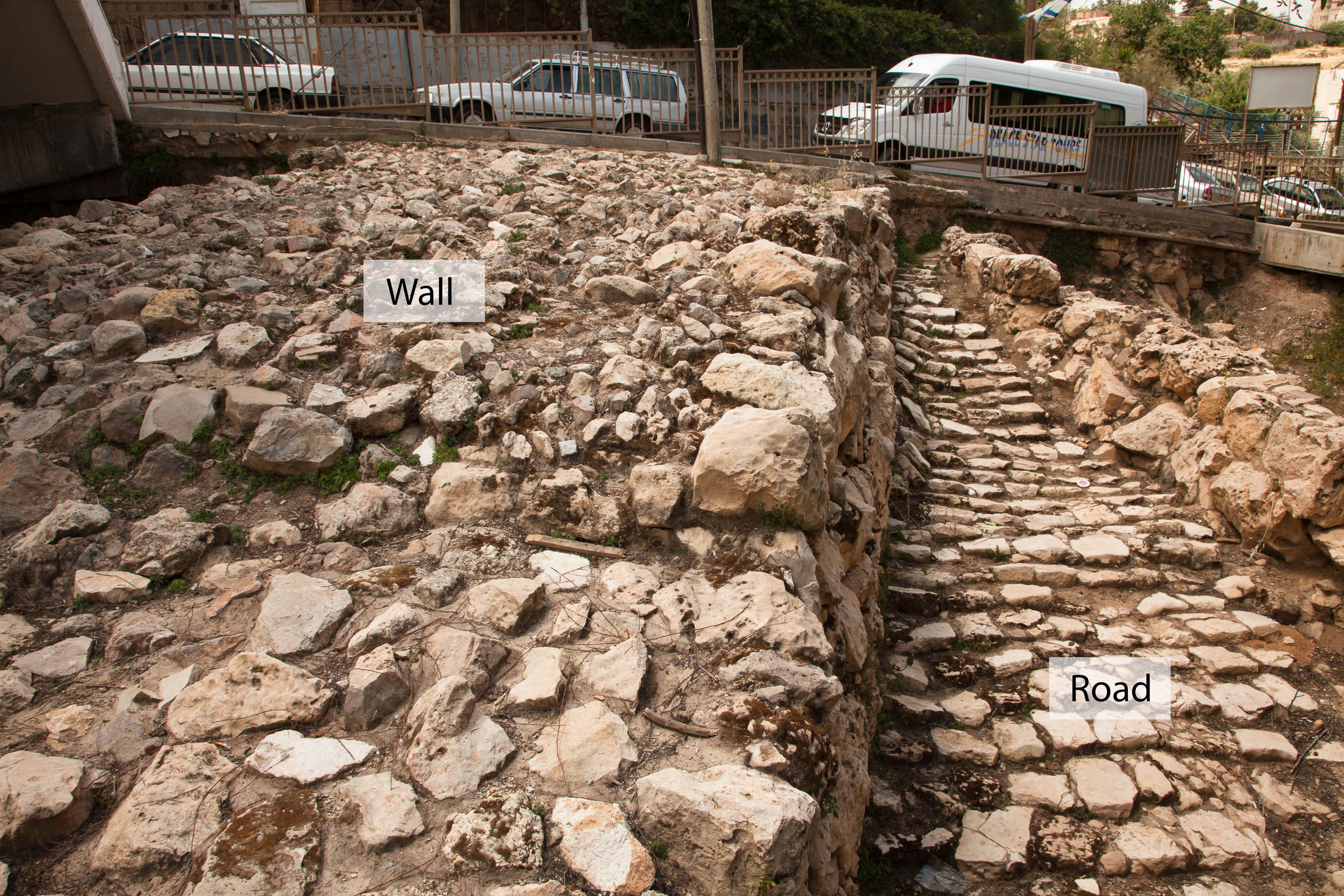
Two wall lines run parallel here. The Early Bronze wall is more than 20 feet wide. Its construction is generally dated to EB III but remained a part of Hebron’s defenses throughout the Iron Age.
Alt, Albrecht.
Essays on Old Testament History and Religion.
Oxford: Blackwell, 1966.
“Hebron with Jeff Chadwick.” Onscript Podcast. Blackwell. October 21, 2024. Link
Kaufmann, Yehezkel, Moshe Greenberg.
The Religion of Israel, translated by Moshe Greenberg.
Chicago: University of Chicago Press, 1960.
Kitchell, Kenneth F. “New Evidence for the Cretan APIAIOI Coinage.” American Journal of Archaeology 87, no. 2 (1983): 216–20. Link
Lipiński, Edward.
The Aramaeans : Their Ancient History, Culture, Religion.
Leuven; Sterling, Virginia: Peeters, 2000.
Margalith, Othniel.
.
Wiesbaden: Harrassowitz, 1994.
Wenham, Gordon J.
“Genesis 1-15,” in Word Bible Commentary, edited by Bruce M. Metzer, David A. Hubbard, Glenn W. Barker, John D. W. Watts.
Dallas, Texas: Word Books, 1987.