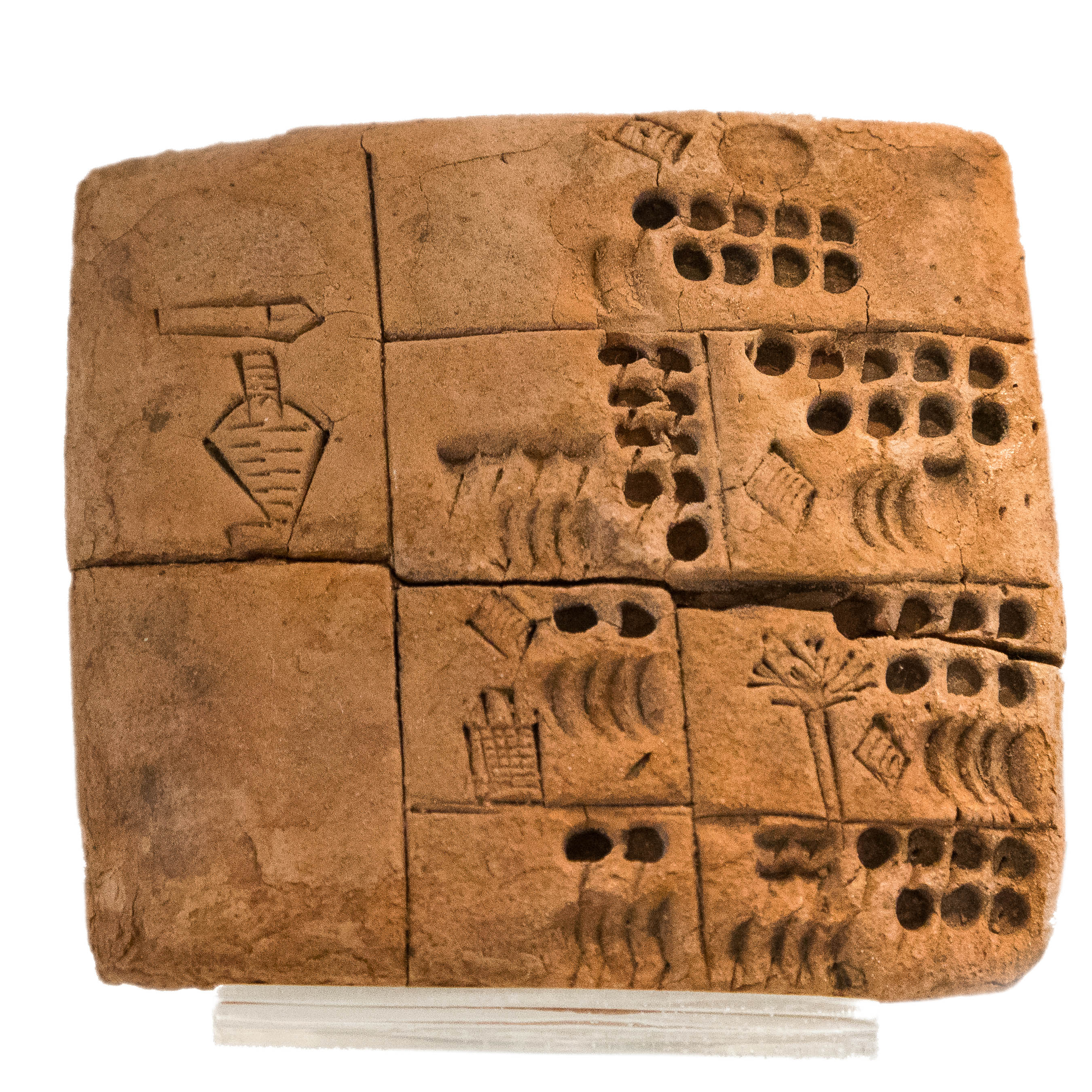
One of 15 tablet signed by “Kushim,” always for large quantities of barley.
The Kushim Tablet does not narrate a story or promulgate a law; it is a humble receipt for the sale of barley. The tablet nevertheless represents a milestone in the history of writing and literature. Not only does it represent an early attempt at recording information in written form, it also preserves the first recorded name in history—Kushim. Eighteen tablets have so far been discovered with Kushim’s name on them, all of them having to do with the disbursement of different types of cereal products used for making beer. The tablets deal with impressive quantities of grain and display a sophisticated knowledge of brewing. One tablet, for instance, lists 30,000 gallons (3800 bushels) of barley purchased by Kushim. Another lists the cereal products required to make eight different types of beer.1Nissen 1993, 36
The Magical Number Sixty
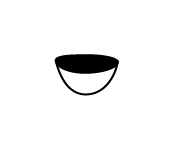
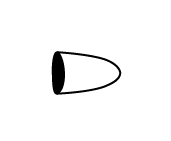
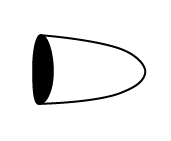
Information was recorded on clay tablet with a round stylus sharpened on one end. Many different types of symbols could be impressed into the clay using the two ends of this instrument. Each symbol had either a numeric value or was used as a logogram—to represent some thing. (Note: A script which utilizes logograms is known as ‘pictographic’.)
| Symbol | Number | Measurement |
|---|---|---|
 | 1/2 or 1/10 | 4.8 litres |
 | 1 | 24 litres |
 | 10 | 144 litres |
 | 1,440 litres | |
 | 60 | 4,320 litres |
 | 600 | 43,200 litres |
A round stylus was used to form numeric symbols. The value is based on a system of 10 and 60.
The Sumerians utilized a “sexagismal” numbering system based on units divisible into 60 or multiples of 60. This was an eminently good choice for a numbering system since 60 is a highly divisible number that can be used to form many useful fractions: 1/2, 1/3, 1/4, 1/5, 1/6, 1/10, 1/12, 1/15, 1/20 and 1/30, and 1/60. The number 60 also forms useful multiples such as 120, 180, 270 and 360. You will probably recognize the degrees of a compass in these numbers, and the minutes in an hour, the hours in a day, inches in a foot, etc.
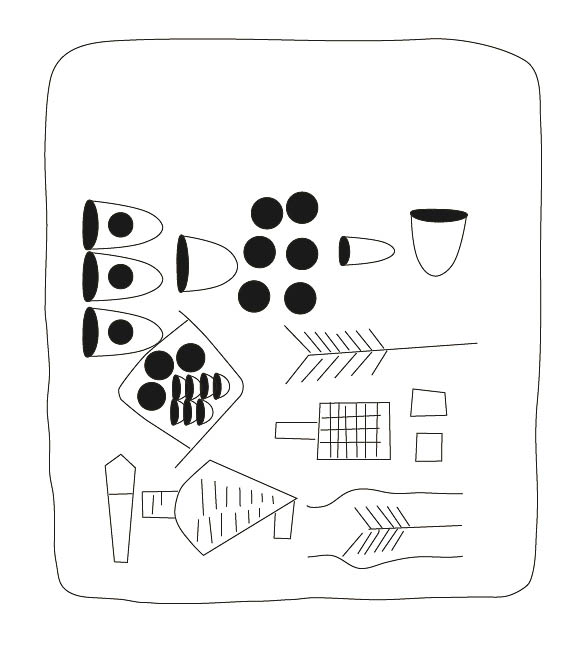
Logograms and numeric symbols were used to record the sale of 30,000 gallons of barley to a certain “Kushim.”
| Symbol | Value | Meaning |
|---|---|---|
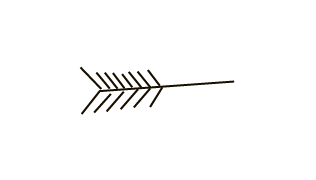 | Item | Barley |
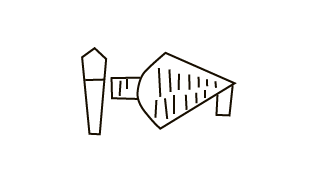 | Name of Official or Institution? | Kushim |
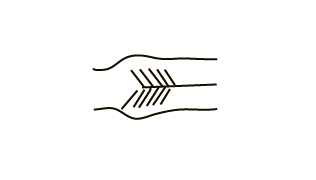 | The use for the barley? | Storage facitility? Processing? |
 | Calendar Date | 37 months |
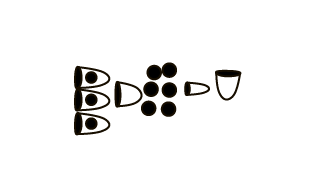 | Measurement | 135,000 litres |
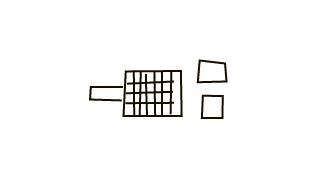 | Status of the Receipt? | Paid? Completed? |
The basic elements of a proto-cuneiform document from Uruk.
Kushim
The tablet utilizes the rebus principle to spell the name Kushim. Using the same principle we could use + + to write “I believe.” The symbols themselves have nothing to do with what we are trying to say. They are used solely for their sound or “syllabic” value. Over the course of the next century or so scribes would adopt the rebus principle to develop a “logosyllabic” script that uses symbols to represent sounds or words.

Sumerian
Surprisingly, no accounting tablets were found in or around the White Temple in the Kulaba district of Uruk. However, a great archaic tablets many were found in the Eanna district. Unfortunately, they were not found in a stratified context but in the layers of fill between the large buildings constructed there. The tablets are nevertheless usually assigned to Eanna IV (=Uruk IV) and thus probably date to the late fourth or early third millennium BC depending on which chronology you use. Since these tablets are primarily pictographic, the language of the tablets cannot definitely be identified. However, it is generally agreed that the writing on the tablets is Sumerian since the Uruk IV tablets are a direct precursor to the Uruk III tablets which date to the Jemdet Nasr period and are definitely Sumerian.
Sumerian cannot be placed in any of the major language families. It is, therefore, classified as an “isolate.”2Samuel Kramer makes a possible connection between Sumerian and Ural-Altaic languages which are also “agglutinative,” which means they use prefixes or suffixes without changes to the word stem to express ‘person’ or ‘time’. See: Kramer 1963, 41-42
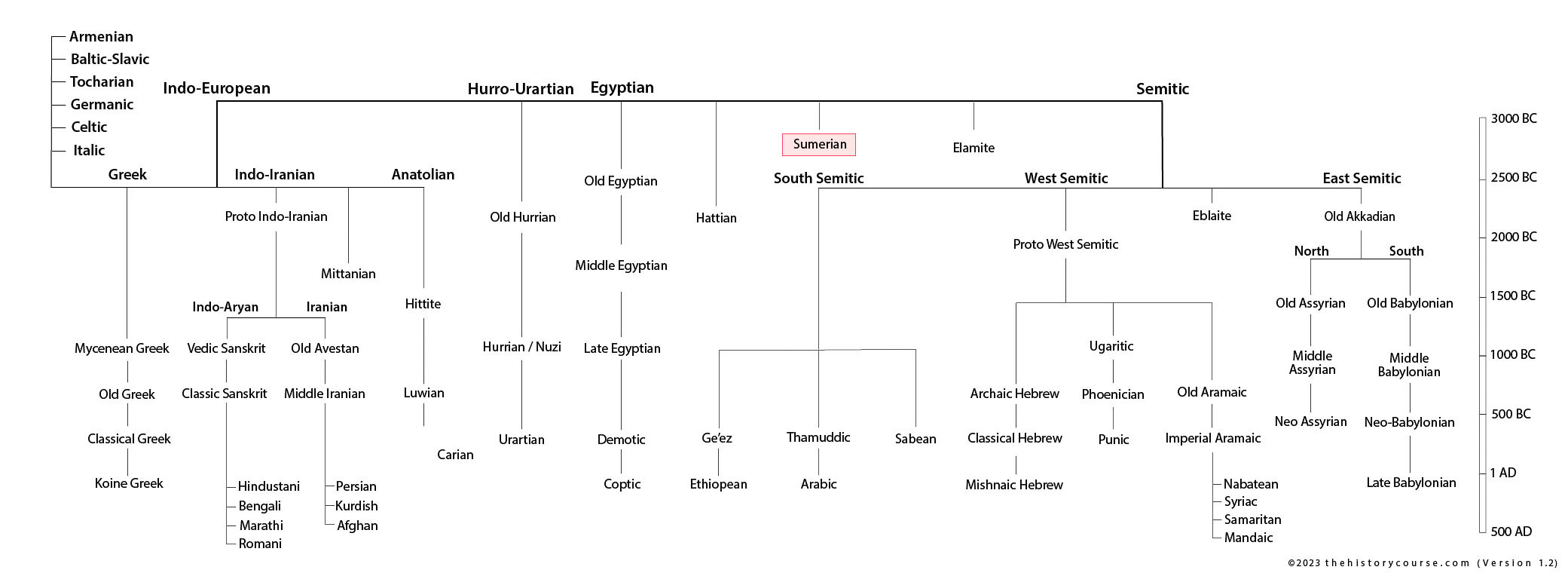
Sumerian (highlighted in red) is an isolate, which means it does not belong to any of the major language families.
Hooker, C. B. F.
“Cuneiform,” in Reading the Past: Ancient Writing from Cuneiform to the Alphabet.
New York: Barnes and Noble, 1990.
Kramer, S. N.
The Sumerians: Their History, Culture, and Character.
Chicago: University of Chicago Press, 1963. Link
Nissen, H. J.
Archaic Bookkeeping : Early Writing and Techniques of Economic Administration in the Ancient Near East.
Chicago, Ill.: University of Chicago Press, 1993.