
found guarding the antechamber in the innermost part of Tutankhamen’s tomb.
Perhaps the most interesting piece of furniture from the tomb of Tutankhamen was a portable chest, fitted with carrying poles, and a jackal-like creature mounted on its cover. This was the god Anubis, guardian of the dead, and gatekeeper of the underworld. Anubis was also the keeper of ‘mysteries’ which may explain why the box was found to contain a number of amulets and statuettes.
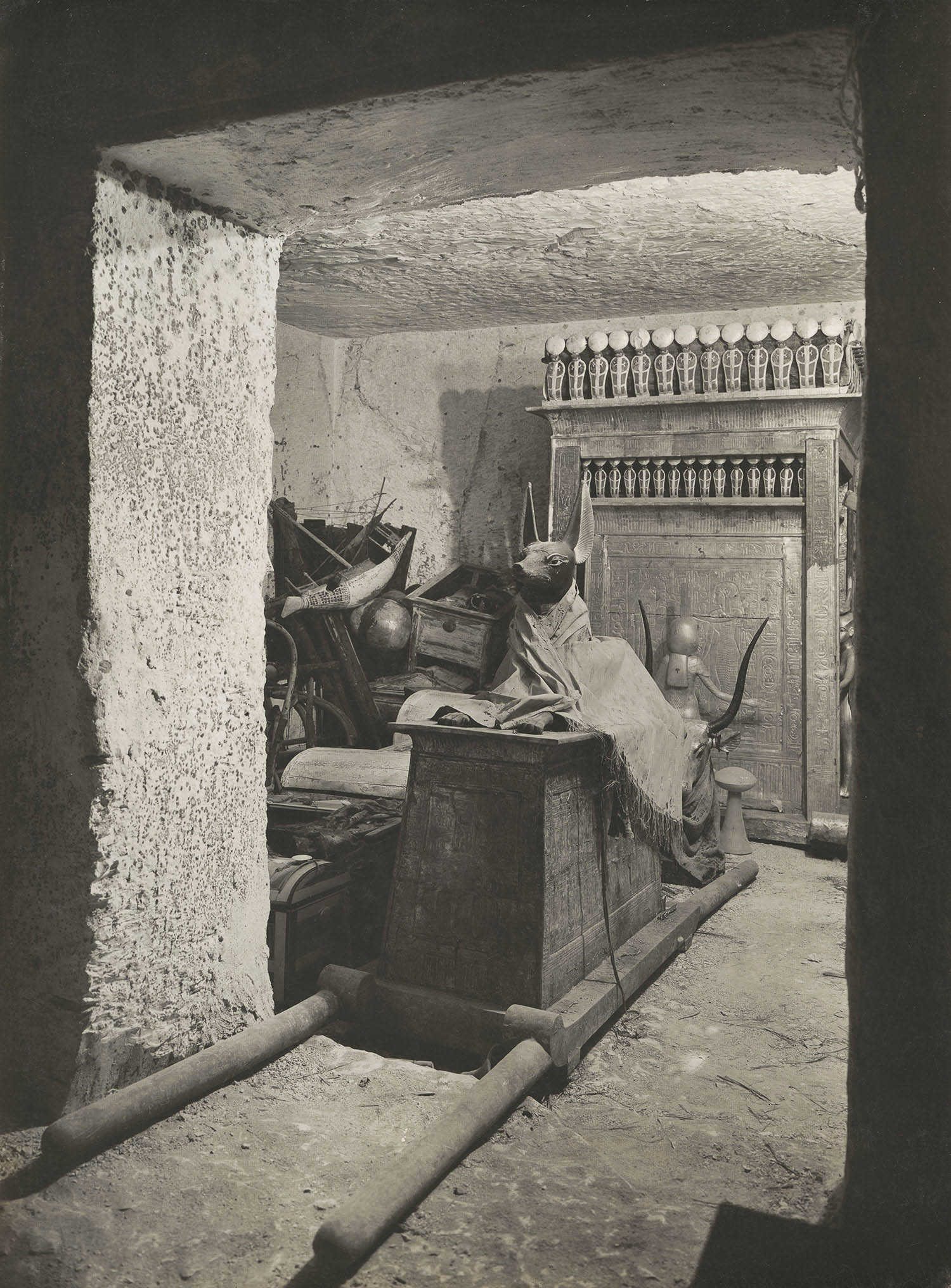
placed within the innermost part of Tutankhamen’s tomb.
Priests in Egypt often carried the statue of the god from the temple during festivals. Sometimes, the deity was mounted on a boat instead of on a box as can be seen, for example, in the Temple of Horus at Edfu.
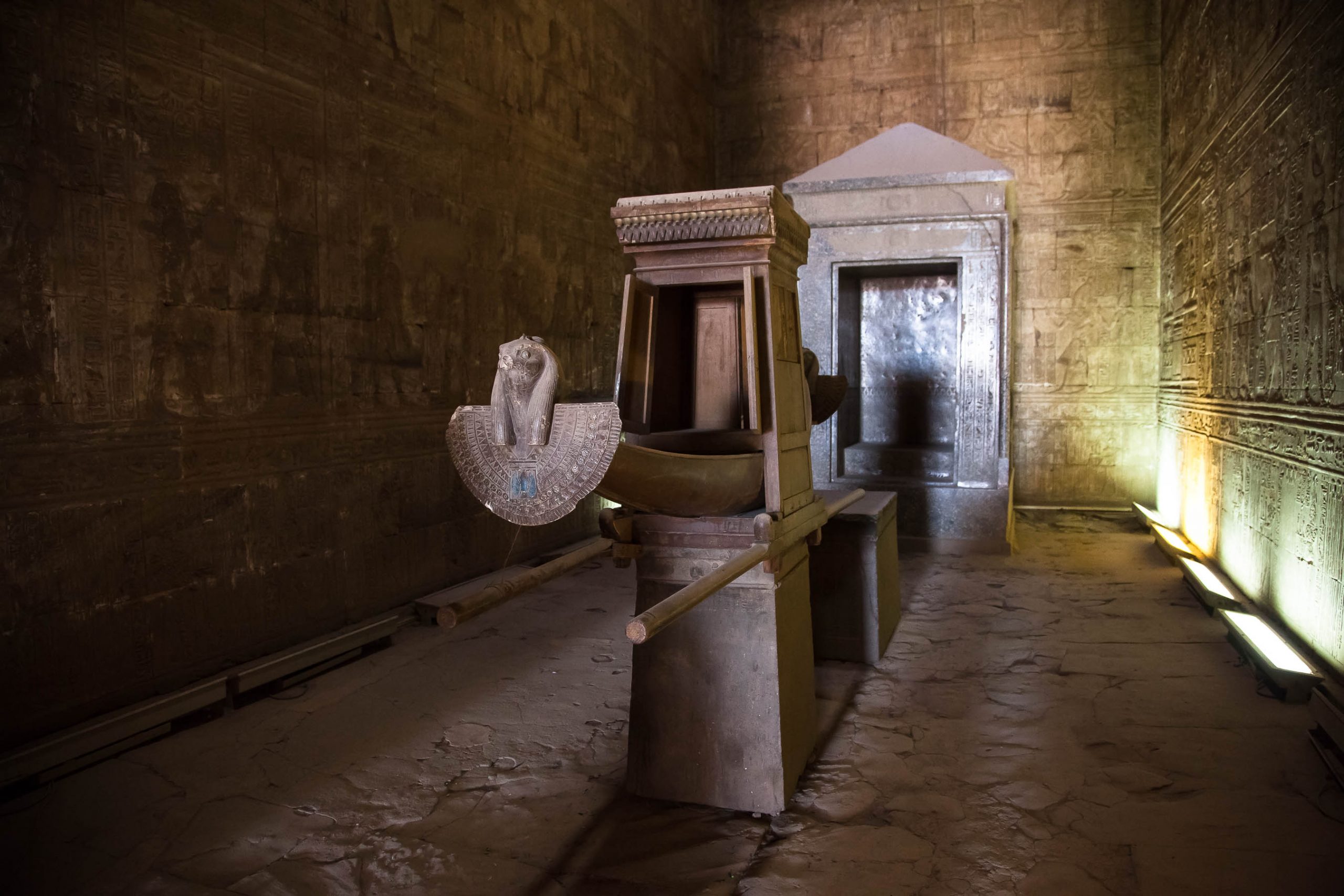
A ceremonial boat with carrying poles. A statue of Horus was placed inside the shrine. From the Temple of Horus in Edfu.
arcA similar scene of gods being carried on thrones mounted to carrying poles may be seen on an Assyrian wall relief from the palace of Tiglath Pileser III. The statues are being carried away by Assyrian soldiers who are taking them from conquered cities, perhaps in Syria, to be housed in temples in Assyria.
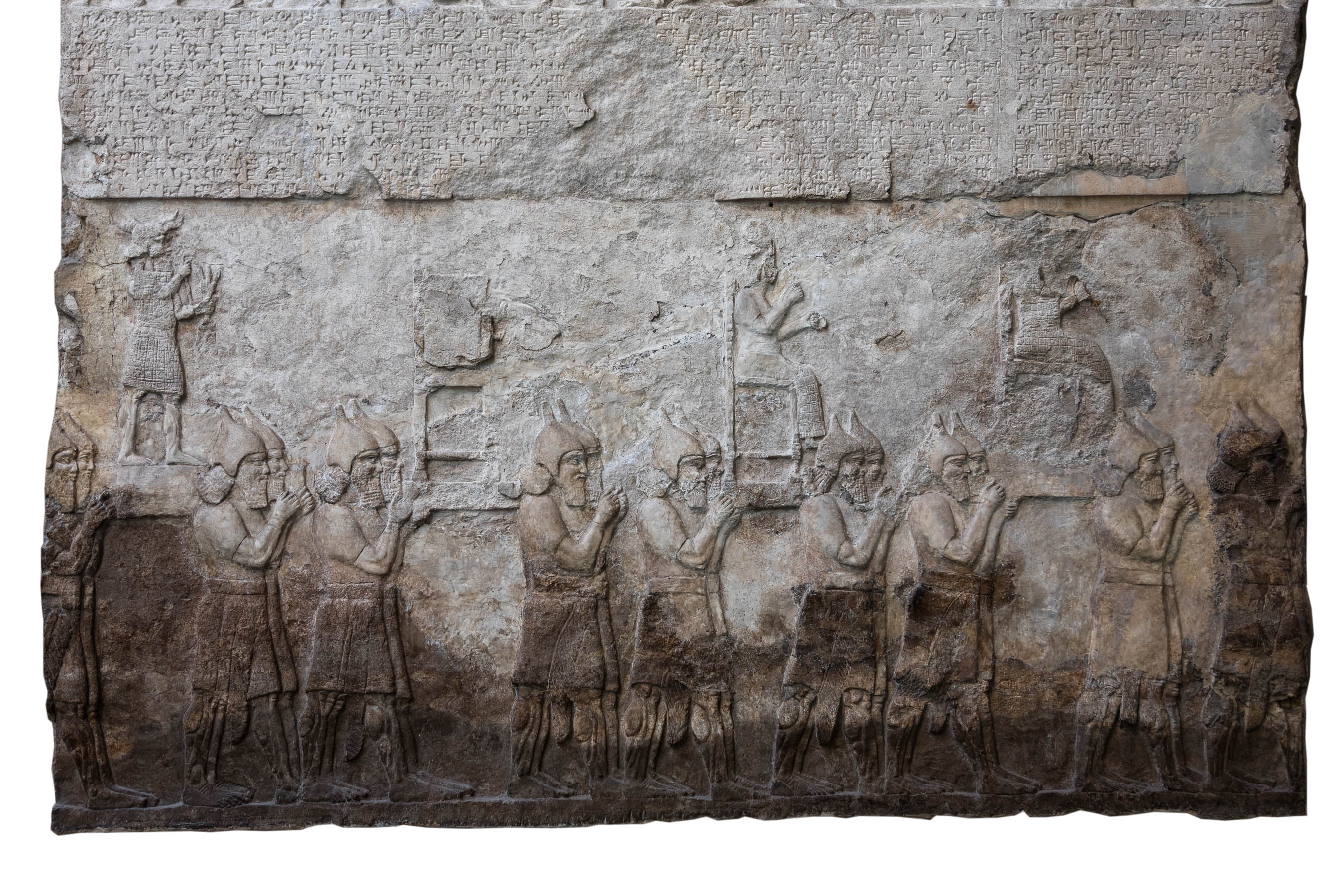
from the palace of Tiglath Pileser III at Nimrud. It shows the Assyrians carrying off statues of the gods from conquered cities – perhaps in Syria.
The British Museum arcThe Ark of the Covenant
The description of the Ark of the Covenant recorded in the book of Exodus matches the portable boxes and chests discovered by archaeologists from the Bronze Age, especially the Shrine of Anubis. Both boxes were made of wood covered in gold leaf; both were fitted with carrying poles; and both had creatures mounted on their covers. In the case of the Ark of the Covenant, these were a pair of cherubim.
In noting the similarities between these two boxes, we should also mention some of the differences. When Carter opened the box of Anubis, he found statues and amulets inside. In contrast, the Bible says that the Ark was used to carry the tablets of the law given to Moses on Sinai.
Another important difference between the Ark of the Covenant and the portable boxes, boats, and shrines mentioned above, is that there was no image or statue of the deity mounted on the Ark of the Covenant. The Law deposited inside the Ark prohibited the making of representations of God. This was an unusual prohibition, considered worthy of mention by later Greek and Roman historians. Tacitus, writing in the 1st century AD, says that when the Roman general, Pompey, entered into the inner sanctum of the temple in Jerusalem, he was astonished to find that it was empty. There was no statue there. Commenting on this unique feature of Jewish religion, Tacitus wrote,
Quite different is their faith about things divine… the Jews have purely mental conceptions of Deity, as one in essence. They call those profane who make representations of God in human shape out of perishable materials. They believe that Being to be supreme and eternal, neither capable of representation, nor of decay.”1<i>The Histories</i>, Book V, c. 110
There is a temptation, when studying ancient artifacts or texts, to make superficial equations based on outward appearances without digging deeper to understand the underlying essence of the object. When comparing two boxes, it is worth taking the time to look and see what is inside.