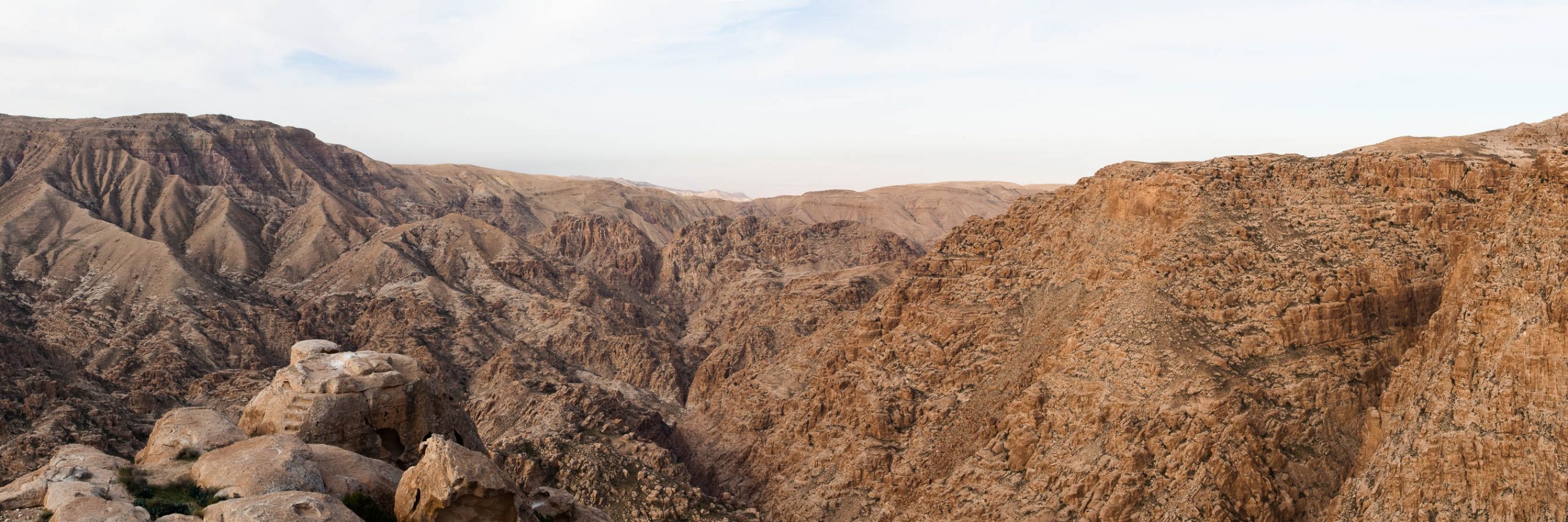
A rock-cut altar at the high place of Sela.
The book of Genesis lists the twelve sons of Ishmael, whom he had by his servant Hagar.
These are the names of the sons of Ishmael, named in the order of their birth: Nebaioth, the firstborn of Ishmael; and Kedar, Adbeel, Mibsam, Mishma, Dumah, Massa, Hadad, Tema, Jetur, Naphish, and Kedemah. (Gen. 25:13-15 ESV)
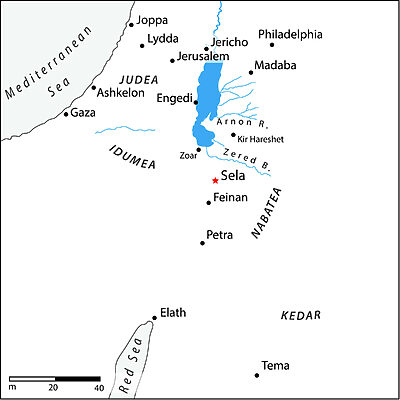
It is likely that the name of Ishmael’s firstborn son, Nebaioth, preserves the name of a people called the Nabataeans who dwelt in the region north of Arabia and east of Edom—in the vicinity of Wadi Sirhan. Aside from this reference in the Bible, the Nabataeans do not appear in the historical record until the 7th century B.C. An Assyrian tablet recounts how a certain king of Kedar, named Yauta, rebelled against Assurbanipal and was forced to flee to “the land of Nebaioth” which was a land “a far off.” From this reference it may be gathered that not even the Assyrians had managed to penetrate into the desert vastness of the Nabataeans. Another cuneiform inscription from the 6th century B.C. mentions a war between the people of Nebaioth and Teman. The latter term is also found in the Bible where it is used interchangeably with Edom (cf. Obadiah 1:9). According to the genealogy of Ishmael in Genesis, Nebaioth had a sister named Mahalath who became a wife of Esau, the father of the Edomites (Gen. 28:9 ESV).
The Nabataeans and the Greeks
Apart from these scattered references to the Nabataeans in cuneiform texts, we know nothing more about them until the Hellenistic period when they begin to appear in the works of Greek geographers and historians.
Our story picks up with Alexander the Great, who, having conquered as far east as India, turned his eye towards Arabia, a vast wilderness that not even the Assyrians or the Babylonians had been able to control. There was, however, a reason to attempt an Arabian campaign since it served as a major conduit for trade from the East. If Alexander had lived, no doubt he would have undertaken the campaign, but he died shortly upon his return to Babylon. The conquest of Arabia was undertaken, instead, by one of Alexander’s generals, Antigonus I Monophthalmus (“One-eyed”). But Antigonous was a very fat man, and he was getting old. Rather than embark on a lengthy campaign into a harsh region, he entrusted it to one of his lieutenants, Athenaeus, to whom he gave a detachment of four thousand soldiers and six hundred cavalry. The Roman historian Diodorus Siculus (90-30 BC) left an account of the campaign. Although Diodorus was writing several centuries after the events he describes, he made use of an earlier account written by Hieronymus of Cardia, who was a contemporary of Alexander the Great. He was stationed at an outpost near the Dead Sea for a period of time and thus could have been an eyewitness to some of the events he describes.
According to Diodorus, the Greek army under the command of Athenaeus happened upon the Nabataeans while most of their young men were attending a market fair. The Greeks were therefore able to win a quick and easy victory, carrying off many captives, large amounts of frankincense and myrrh, and five hundred talents of silver. When the Nabataean men discovered what had happened, they set off in pursuit. Travelling through the night, they managed to catch the Greeks completely off guard and massacred an entire contingent of their foot soldiers. Only forty or fifty of the cavalry managed to escape on horseback.
The Greeks returned the next year with a much larger army under the command of Demetrius, the son of Antigonus I Monothalmus. They tried to surprise the Nabataens with a quick march but, forewarned, the Nabateans placed their valuables in a fortress named “the Rock” with a strong guard to defend it, and then disappeared into the desert.
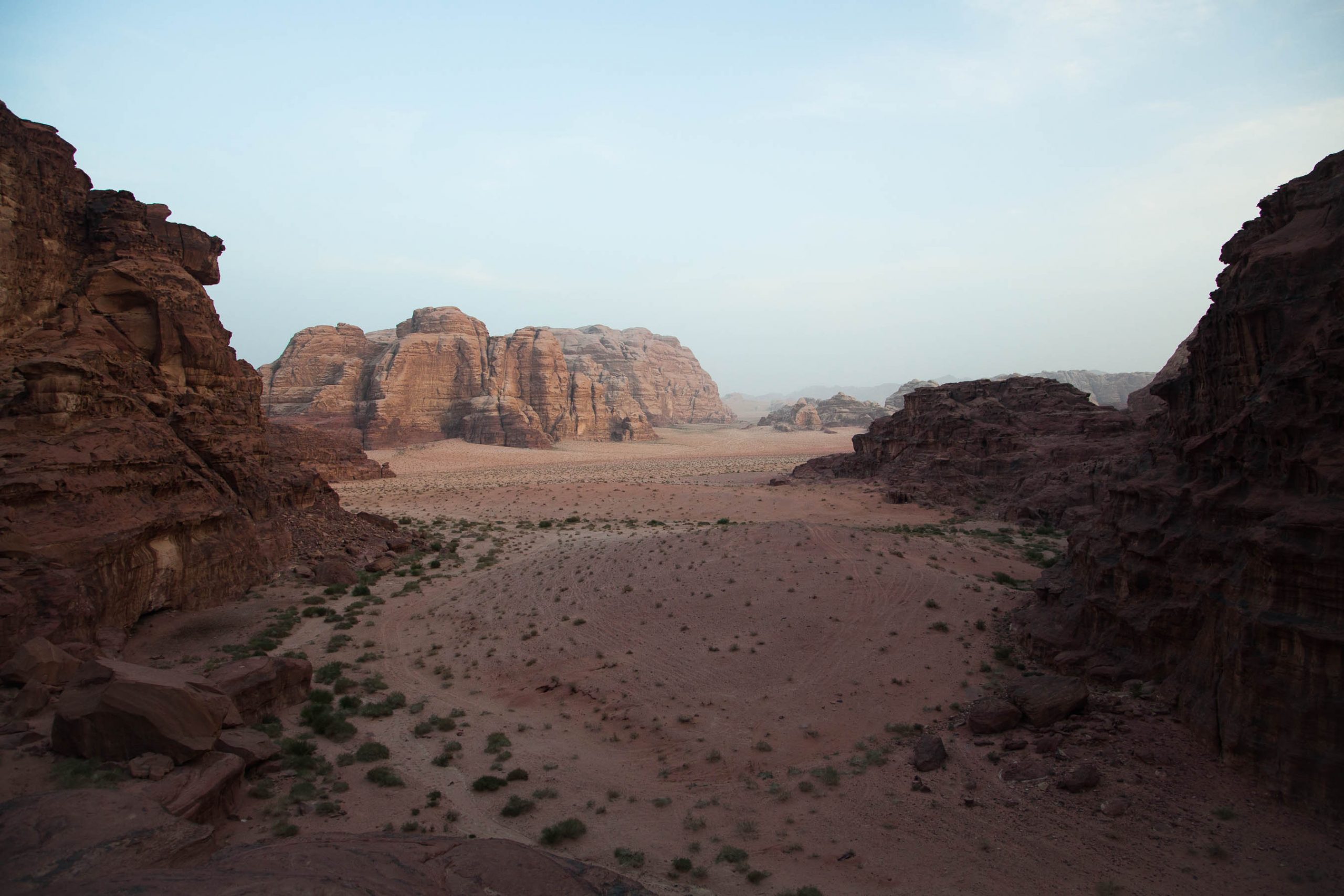
The Nabateans collected water in isolated locations in the desert that could be used in case of an emergency.
Sela
It is tempting to identify the Nabataean fortress named “The Rock” with the famous city of Petra since it was the most important Nabataean city in the Roman period and its name actually means “rock” in Greek. But the geographical details provided by Diodorus do not fit this identification. Diodorus states that “the Rock” was three hundred stades (35 miles) distant from the southern end of the Dead Sea whereas Petra is more than twice that distance. He also states that the place was without water whereas there is an abundance of water at Petra. It is more likely that “the Rock” used by the Nabataeans was located at a different place named Es-Sela. Its Arabic name preserves its ancient name, Sela, which is the Hebrew word for “rock”. Originally an Edomite fortress, the place receives a brief mention in 2 Kings 14:7. This fortress was “extremely strong but without walls,” writes Diodorus, and there was only one entrance, artificially cut into the rock. This description perfectly matches Es-Sela.
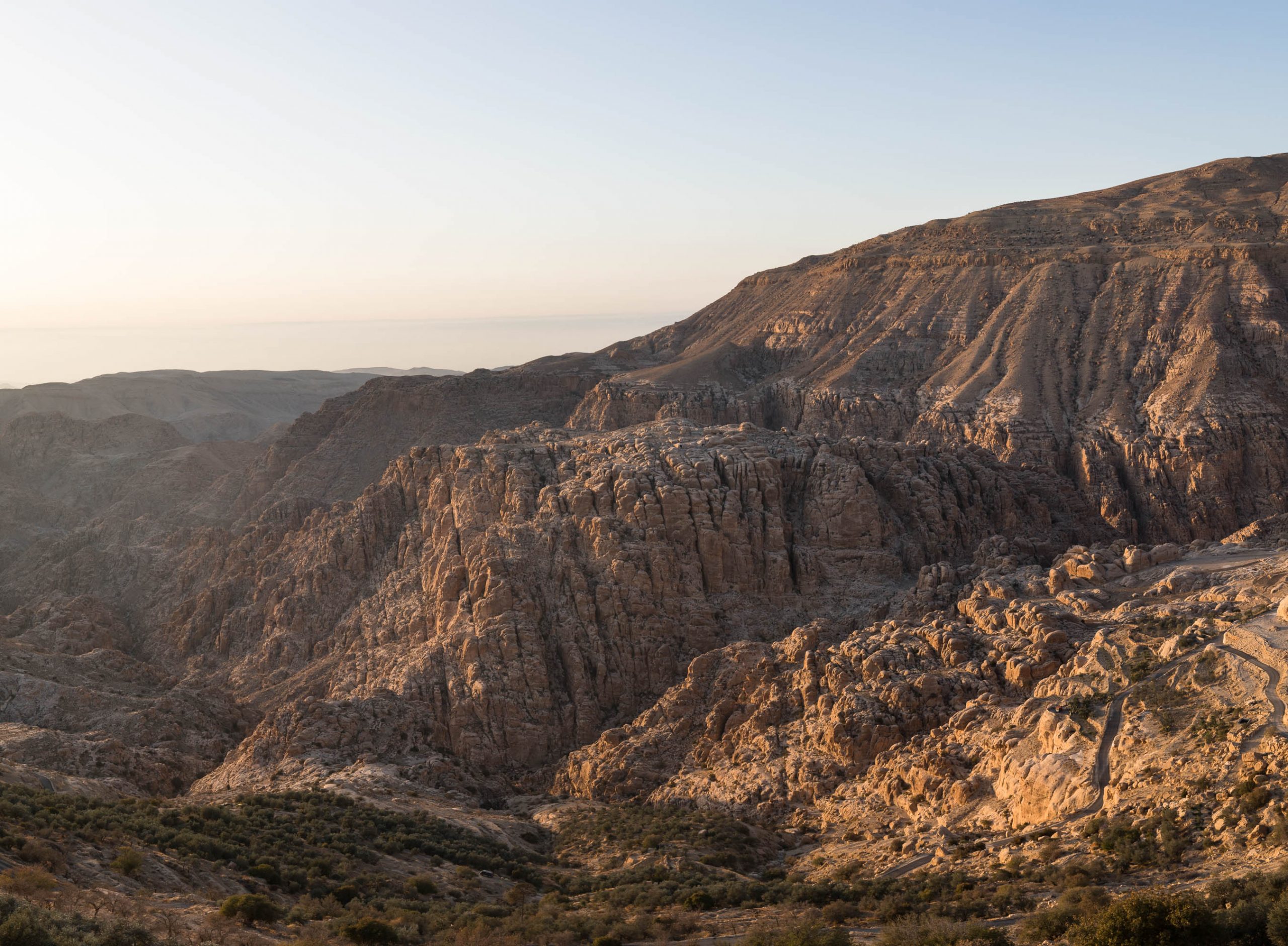
Although by no means the highest peak in the region, Sela was surrounded by shear cliffs on all sides.
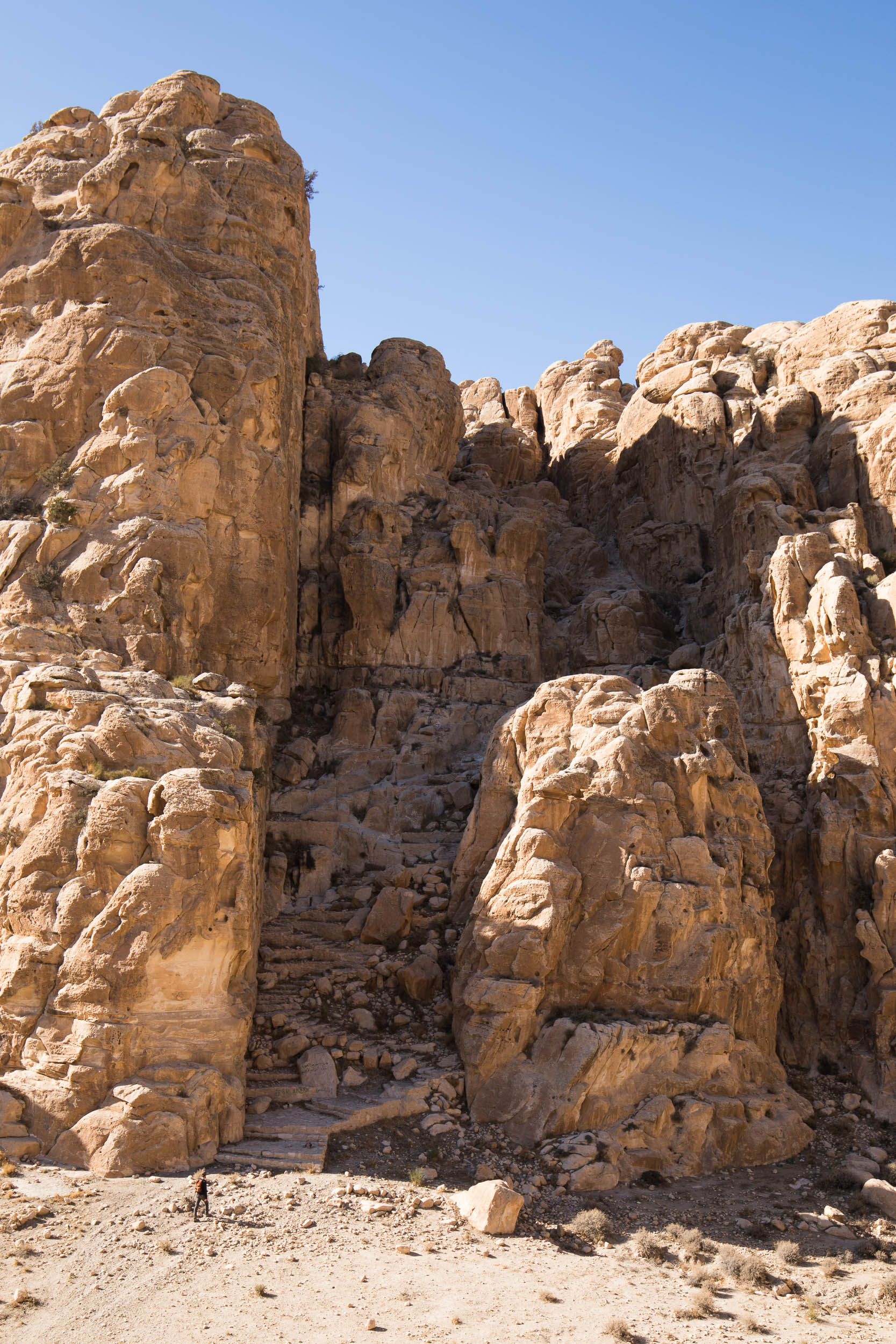
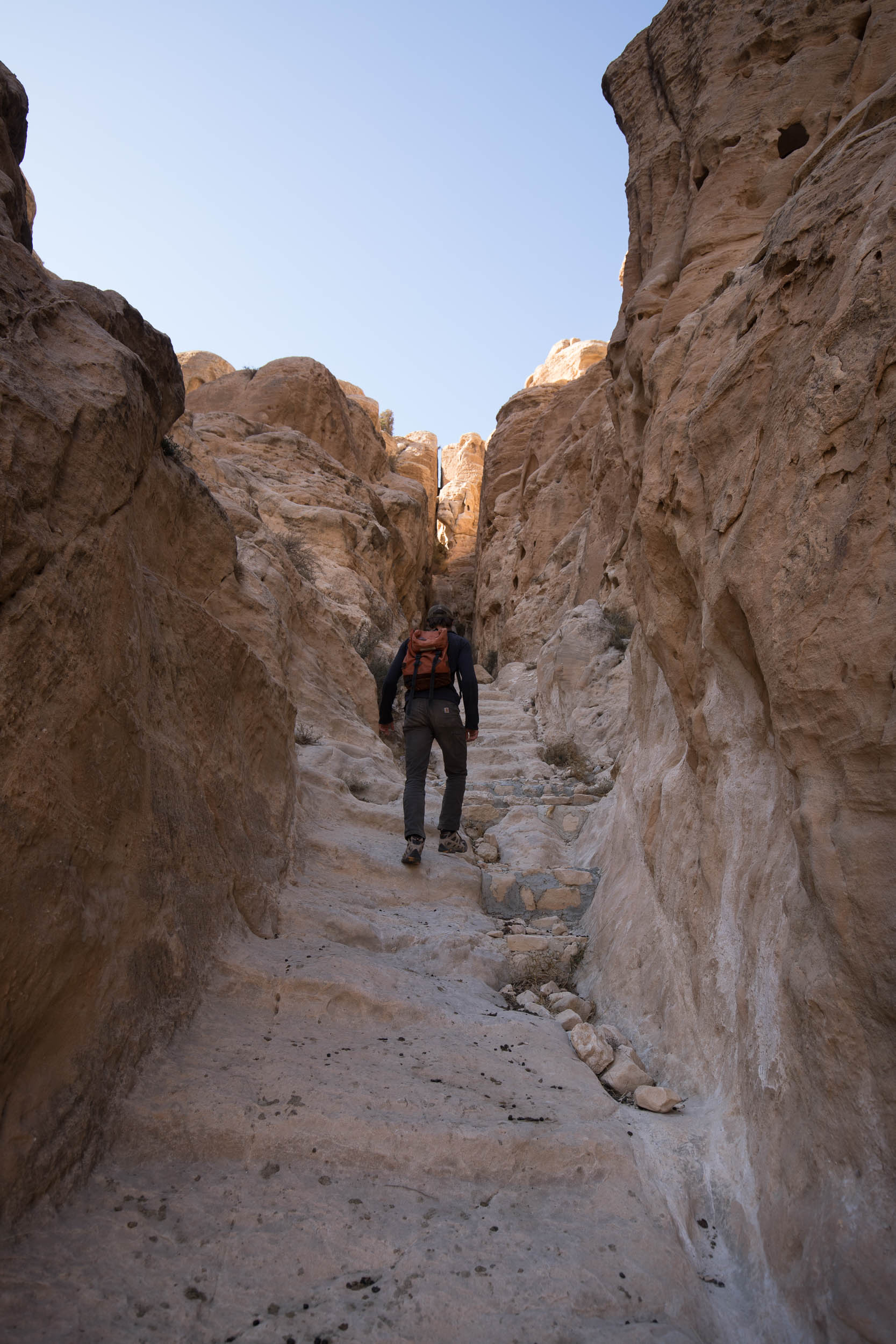
The only approach was through an artificial cleft cut in the rock.
This matches the the description of Sela provided by Diodorus Siculus.
The fortress was captured by the Babylonian king, Nabonidus, who commemorated his victory on a rock-cut relief located on a shear rock face high above the approach to Sela. It shows the king standing in an attitude of worship before the moon, sun, and a star (in that order). The inscription itself is too weathered to read. The Edomites must have still been in possession of Sela before it was captured by Nabonidus. In the years following the Babylonian conquest, the Nabataeans occupied the region formerly occupied by the Edomites, including Sela. The Edomites, in turn, migrated into the northern Negev, where they became known as the Idumeans (Herod the Great’s father was an Idumean).

the Babylonian king commemorated the capture of Sela by having his image and name carved into the shear cliff face. He is shown venerating the sun and the moon. The inscription is too eroded to read.
Demetrius attacks the Nabataeans
With this background, let us return to the siege of Sela undertaken by Demetrius, the son of Antigonus I Monothalmus. Having suffered a crushing defeat the year before, the Greeks were intent upon capturing the Nabataean stronghold. Although only a small group of Nabataean soldiers remained to oppose them, they managed to hold off the Greek attackers. Finally, after many days of siege, the Nabataeans began to parley with the Greeks. The following noble speech was attributed by Diodorus Siculus to one of the leaders of the Nabataeans.
“King Demetrius, with what desire or under what compulsion do you war against us who live in the desert and in a land that has neither water nor grain nor wine nor any other thing whatever of those that pertain to the necessities of life among you? For we, since we are in no way willing to be slaves, have all taken refuge in a land that lacks all the things that are valued among other peoples and have chosen to live a life in the desert and one altogether like that of wild beasts, harming you not at all. We therefore beg both you and your father to do us no injury but, after receiving gifts from us, to withdraw your army and henceforth regard the Nabataeans as your friends. For neither can you, if you wish, remain here many days since you lack water and all the other necessary supplies, nor can you force us to live a different life; but you will have a few captives, disheartened slaves who would not consent to live among strange ways.”
The Nabataeans were intensely independent. And if we may trust Diodorus, they maintained a nomadic lifestyle despite having settled in the lands formerly occupied by the Edomites. Thus they had a law “neither to sow corn nor to plant any fruit-bearing trees nor to use wine nor to build a house.” This is a very different picture of the Nabataeans from that provided by the Greek geographer Strabo, writing in the 1st century B.C., who says that the Nabataeans lived in stone houses and planted fruit trees. These two accounts are not necessarily contradictory since Diodorus is relying on an older Greek source from the 4th century B.C. whereas Strabo is describing the Nabataeans of his own day.
The Greeks were never able to subdue the Nabataeans. Neither could the Romans. The Nabataeans knew the ways of the desert and that proved to be a better defense than even the strongest fortress.
“Diodorus Siculus on the Nabataeans.” Livius. Link