Temples dominated the skylines of ancient cities like the financial districts of our modern cities. Six temples have been excavated at Mari so far. They were dedicated to a plethora of gods and goddesses. Of the latter, four in particular are named: Ishtar, Ishtara, Ninni-Zaza and Ninhursag. The first three are difficult to distinguish. They are goddesses of sex and war comparable to Ashtoreth, Asherah and Anat of the Canaanite pantheon, which are also difficult to distinguish. The male deities worshipped at Mari include Shamash and Dagan.
The tallest structure in the city, known as the Massif Rouge (Red Massif), was a brick platform (140 x 100 ft), made of partially baked brick, was constructed in stages. Although only the bottom two stages have been preserved, it is the earliest known stepped structure in Mesopotamia. Its final height is unknown. Nor do we know the purpose it served. It may have been crowned by a temple, perhaps dedicated to Dagan, an agriculture deity whose name in the semitic languages stands for “wheat.” In the Canaanite pantheon, Dagon is the father of Baal.

This plan shows the major architectural features excavated at the center of Mari. The rhomboid-shaped palace also incorporated a temple.
Important objects were recovered from another temple dedicated to Ninhursag (“Goddess of the Mountain”) including shell inlay pieces which look as though they were part of a frieze similar to the one displayed on the Standard of Ur, although not nearly so well preserved.
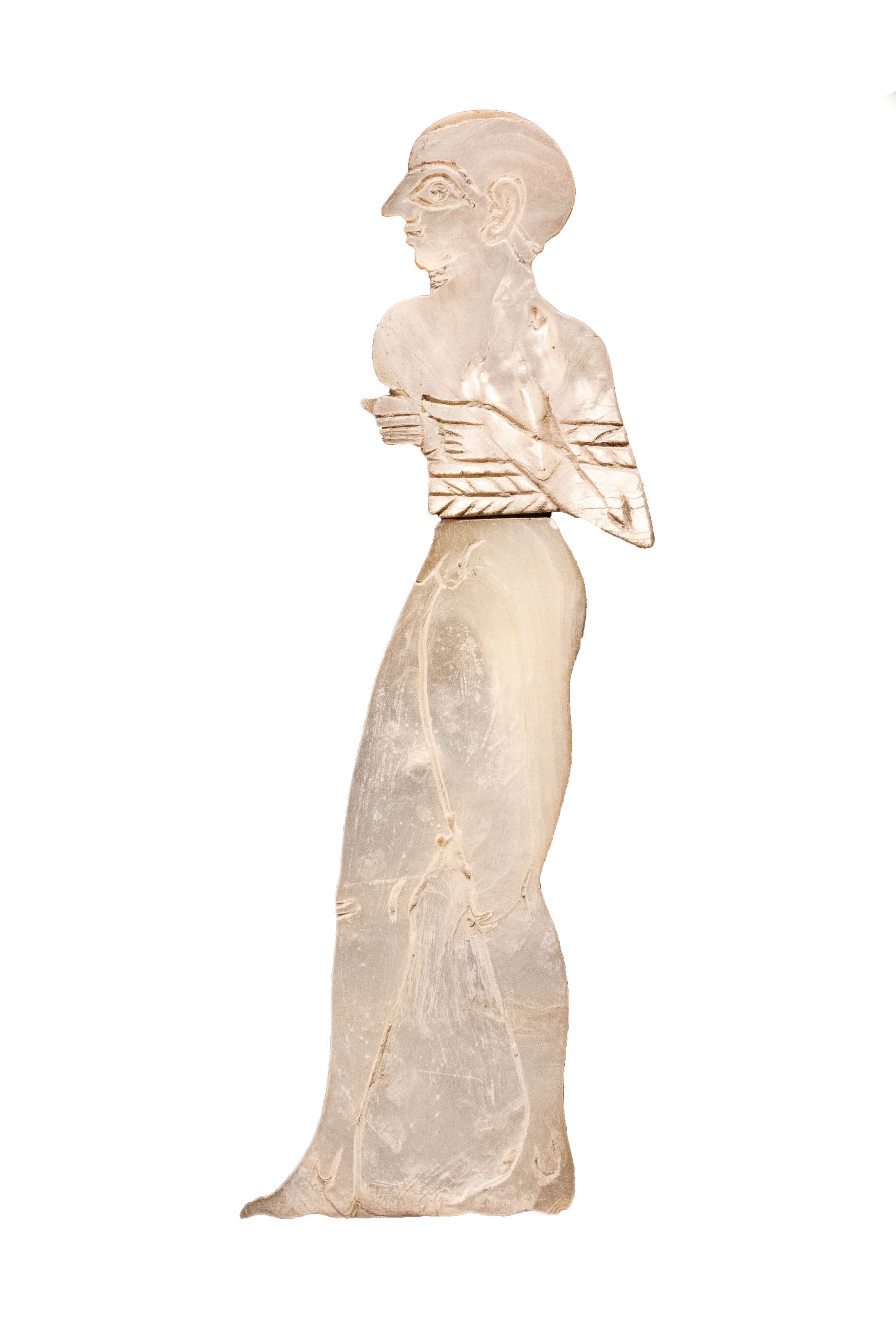


These shell inlays found in the palace precinct at Mari are thought to have belonged to a panel comparable to the Standard of Ur. Note the long scarf worn by the two men, perhaps made from leopard skin, and what is apparently a bull’s tail extending from the back of the middle figure, giving him the appearance of a hunchback. It is tempting to view the prisoner as an Eblaite.
Goddess figurines shaped like pillars were found in and around the Temple of Ishtar. They are typically very crudely made, grotesque figures. They are characterized by a pillar shape, ears pierced multiple times, hands held to breast, and the sexual aspect emphasized. Based on analogous figurines found at sites on the Middle Euphrates, the figurines are probably wearing a scarf. It is not clear what function the figurines played or even what they represent. Goddess, priestess, or temple prostitute, are all options. Very similar figurines have been found at other sites on the Middle Euphrates which likewise date to the end of the Early Bronze period (EB IV). Goddess figurines are know from the Halafian and Ubaid levels of Mesopotamian cities, although they are not the same stylistically. They are absent from Sumerian strata.


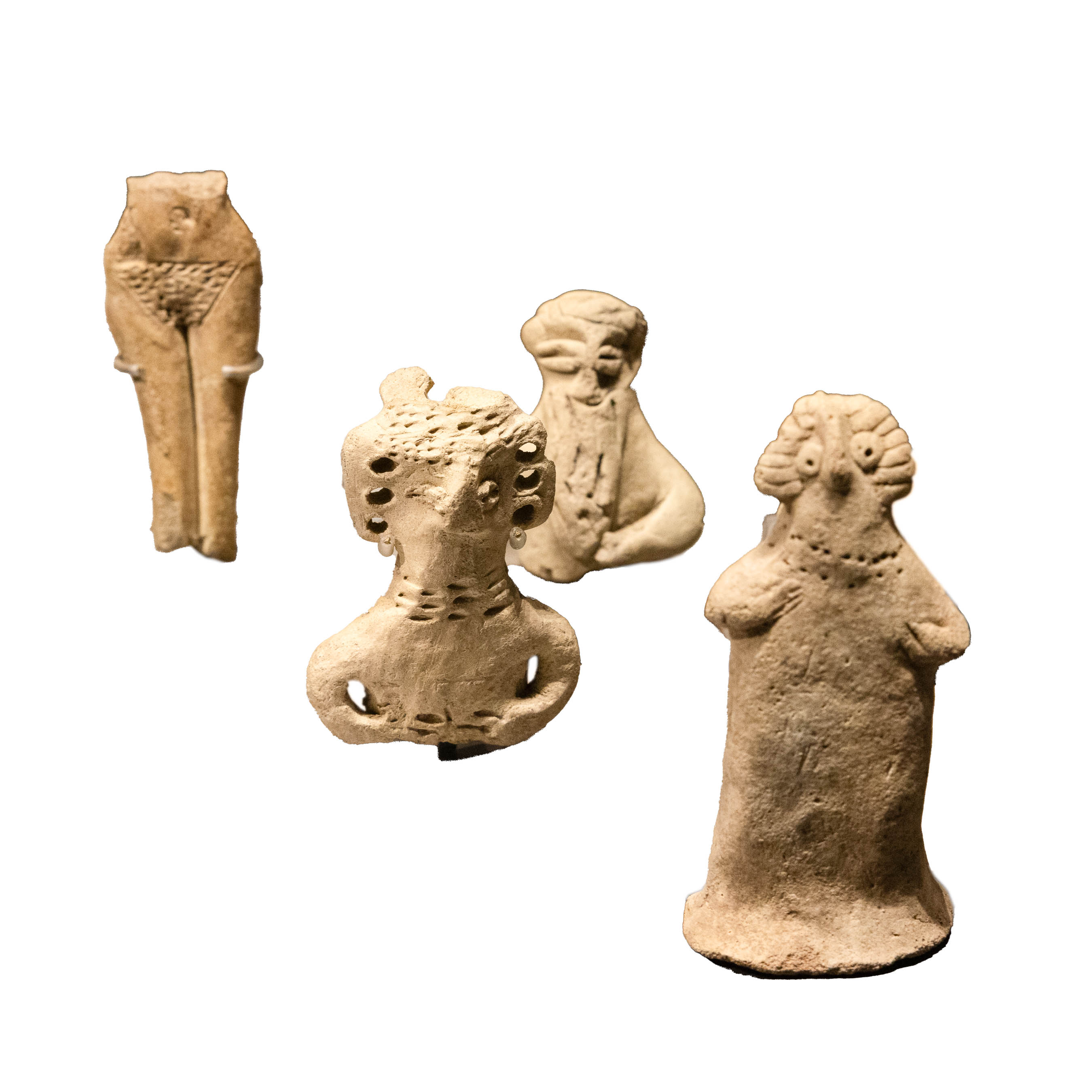
Displayed in order, from earliest to latest, The figurines from Mari belong to a tradition which can be traced to the Ubaid period.
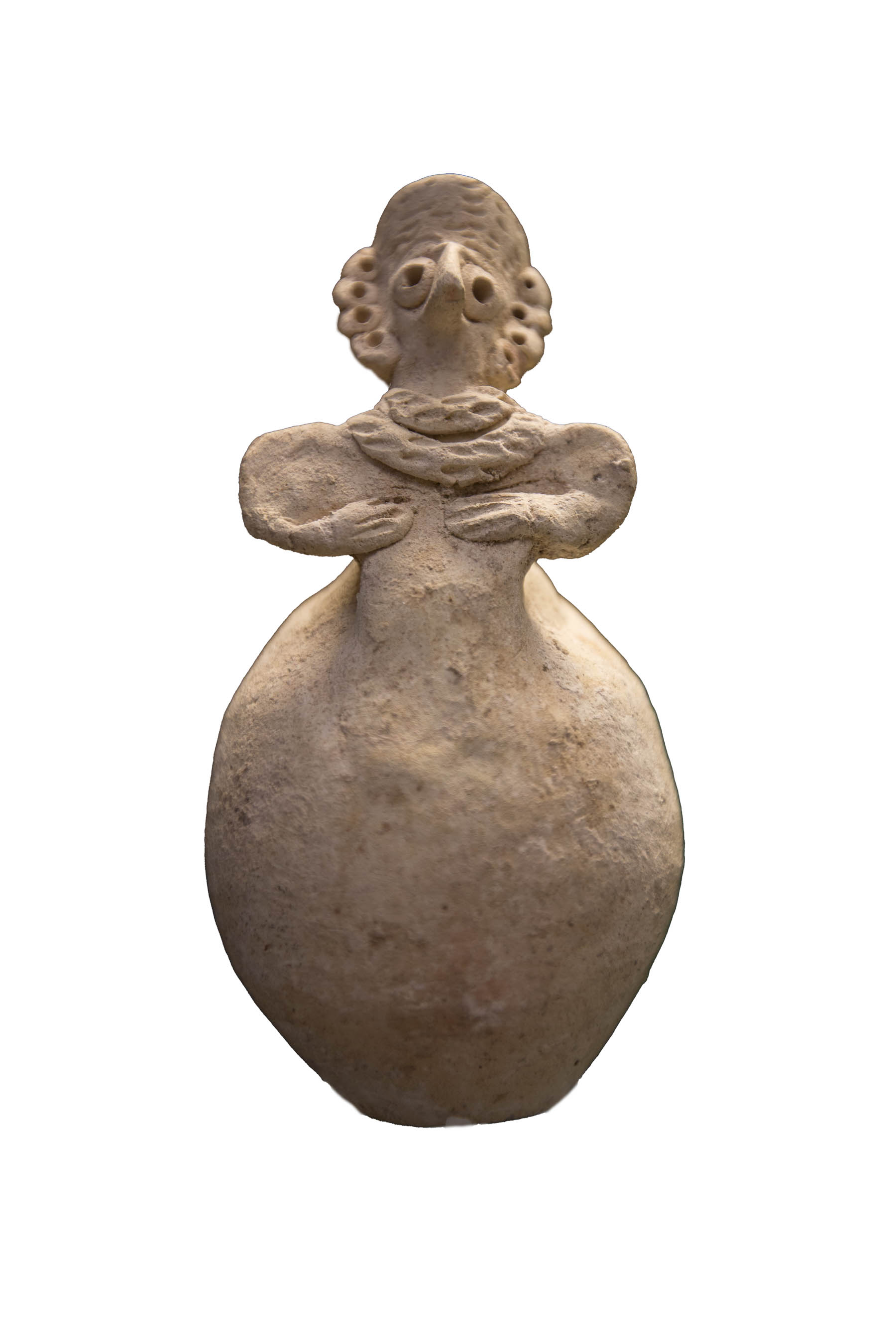
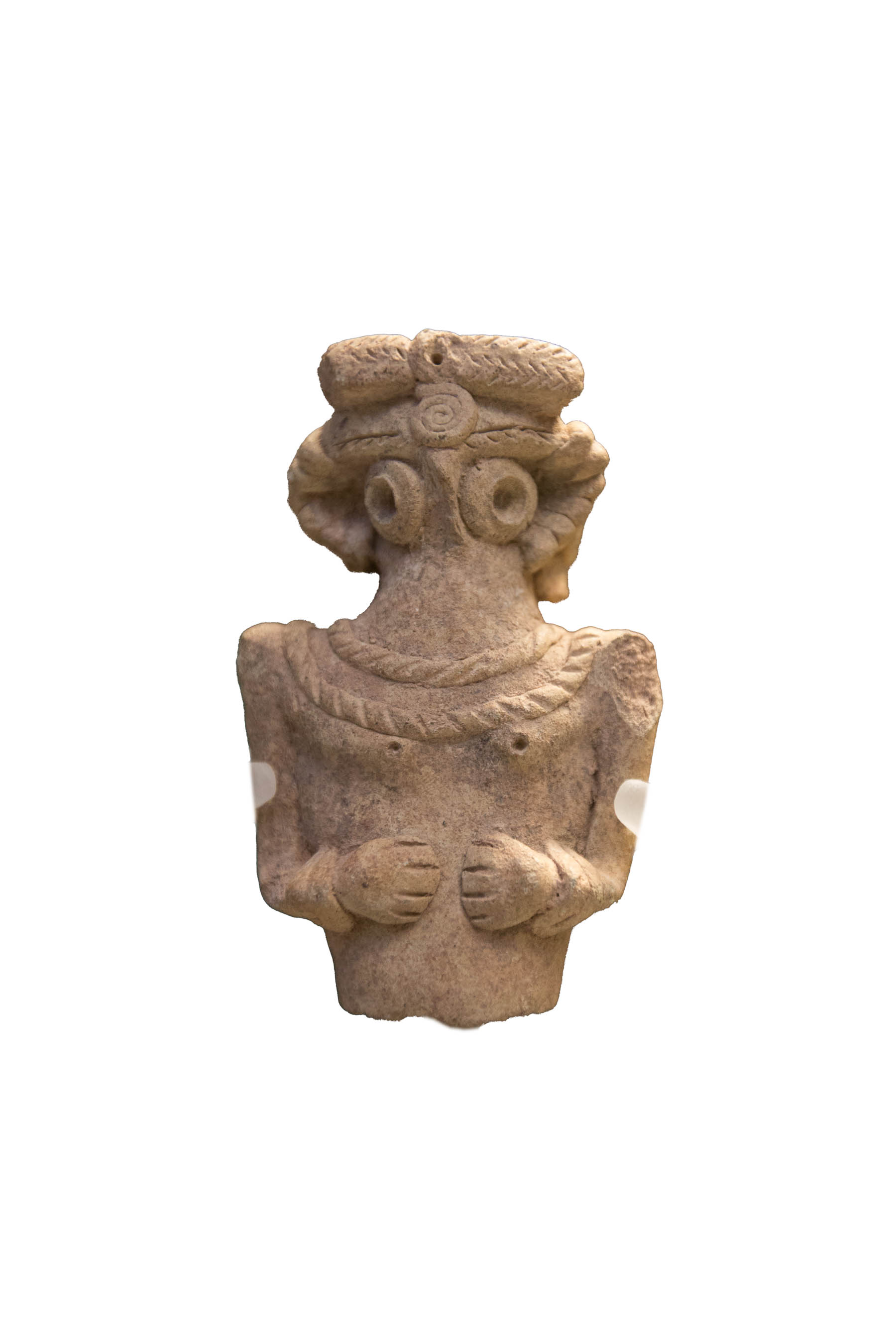

Dating to the end of the Early Bronze period (EB IV) the figurines from Mari and Tabqa, on the Middle Euphrates, are among the earliest known figurines of a type that will become very common in Canaan in later periods. The figurines from the region of the Tabqa reservoir in Syria were found during rescue excavations conducted there.
Although geographically, Mari falls within Syria, the civilization looks Sumerian, howbeit with some regional distinctives, such as the standing stone which was set up in the temple of Ninni-Zaza and the goddess figurines. As we will see, these will also become an integral part of the Canaanite religious scene. It is also worth noting that the names of the gods and kings inscribed on objects recovered from the final phases of City II bear Akkadian rather than Sumerian names. Thus Mari represents a curious mix of Sumerian and Syrian cultural influences.
Akkermans, Glenn M, Peter M. M. G. Schwartz.
The Archaeology of Syria: From Complex Hunter-Gatherers to Early Urban Societies (ca. 16,000-200BC).
Cambridge: Cambridge University Press, 2003.
Astour, Michael C.
“A Reconstruction of the History of Ebla (Part 2),” in Eblaitica : Essays on the Ebla Archives and Eblaite Language, Volume 4, edited by C. H Gordon, Gary Rendsburg.
Winona Lake, Indiana: Eisenbrauns, 2002.
Matthiae, P.
Ebla : An Empire Rediscovered.
Garden City, N.Y: Doubleday, 1981. Link
Pettinato, G.
The Archives of Ebla : An Empire Inscribed in Clay.
Garden City, N.Y.: Doubleday, 1981. Link
Rositani, Annunziata. “Work and Wages in the Code of Hammurabi.” Egitto e Vicino Oriente, no. 40 (2017): 47–72. Link