formerly attached to a piece of furniture.
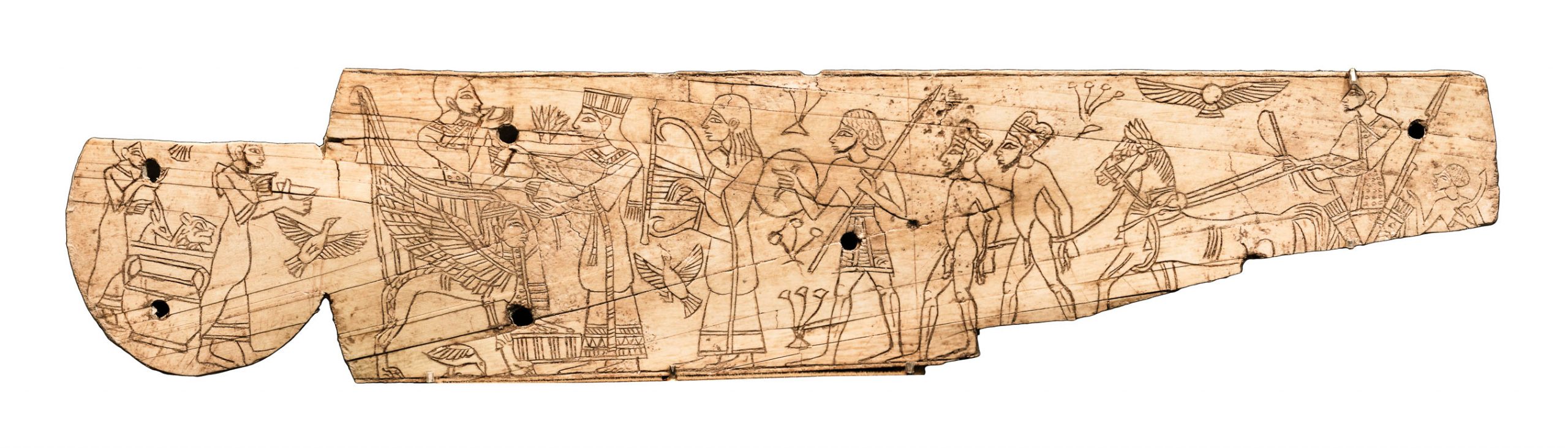
A remarkable stash of over 350 ivory objects were found while excavating a palace complex at Megiddo. These ivory pieces were once attached to furniture, or decorated the walls of the palace, but for reasons that are not entirely clear they were removed from their place and hidden in an underground vault. Some have suggested that the ivory was kept as a form of currency that could be hoarded or traded. It is more likely, however, that the ivory was detached and placed in an underground vault due to a destabilized political situation. (see discussion below) One of the ivory objects displays a cartouche of Rameses III thus the ivory objects must have been hidden some time after the reign of the reign of this pharaoh. They were found in a major destruction level that marked the end of the Canaanite presence in the city.
One of the most important objects from this cache is an ivory plaque that depicts scenes from the court of a Canaanite king. In what is by now a familiar pattern, the plaque may be divided into two scenes: victory and celebration.
Victory

In the victory scene, the king wears a leopard skin cloak. In Egypt, such an expensive garment was reserved for priests and for the pharaoh. The winged sun disk that hovers above the kings head is also a symbol of royalty. The king was often addressed as “your sun” in Bronze Age texts.
The king is driving captives, bound and naked, before his chariot. The chariot was the source of Canaanite power in the coastal regions where they could be used to good effect. The book of Judges reports that in the time of Deborah and Barak, the Canaanite rulers, Jabin and Sisera, controlled 900 “iron chariots” with which they “oppressed the people of Israel cruelly for twenty years.” (Judges 4:3 ESV)
The king’s armour bearer trails behind the chariot, carrying a scimitar. This style of sword had a heavy blade made for striking with the edge. A similar sword was found in Tutankhamen’s tomb.

Celebration
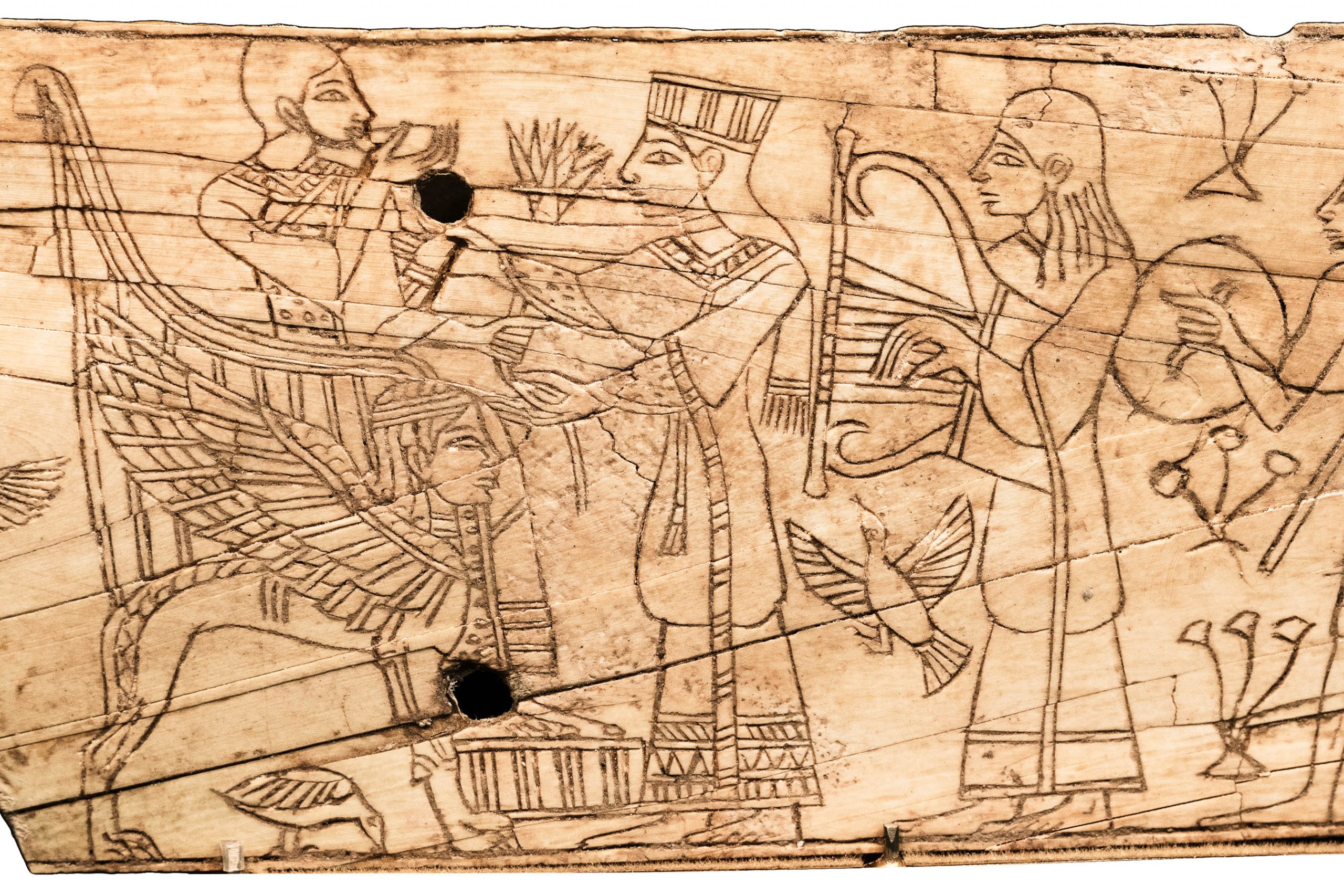
The king is seated on a raised throne flanked by female sphinxes. These recall to mind the sphinxes we’ve encountered at Hatussa and Alacahoyuk. They are also somewhat reminiscent of the throne of Solomon described in the book of Kings, except his throne was flanked by lions and not sphinxes.1Scholars have often compared these creatures with the cherubim that stood in the Holy Place of the temple, but the cherubim in Solomon’s temple stood as high as their wingspan was wide. Such proportions belong to a man and not to a four-legged creature. Elsewhere in the Bible, the cherubim appear in visions having hands and the ability to speak. In light of this, it seems best to think of the cherubim in terms of a human form rather than animal.
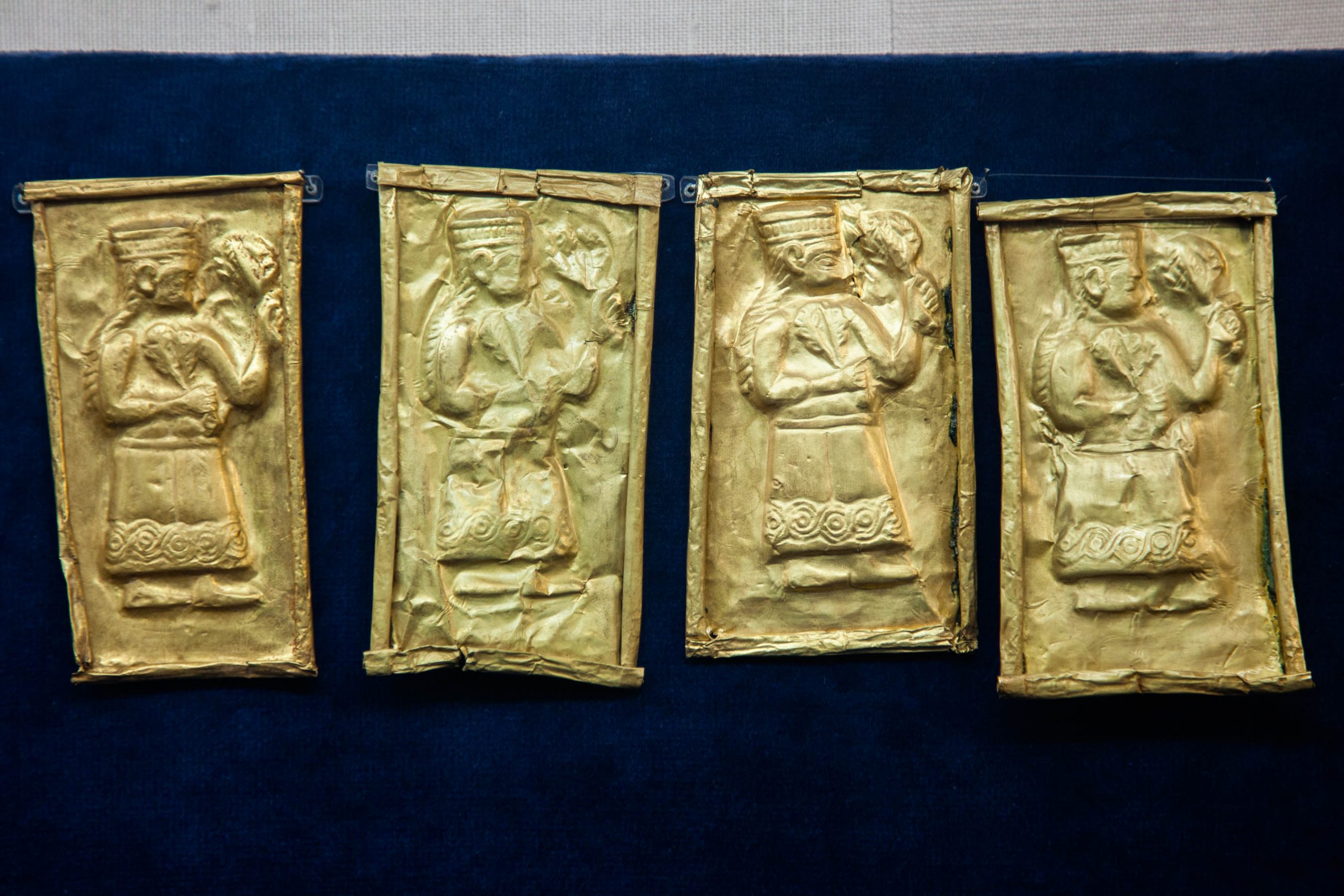
A lady is shown offering the king a lotus blossom and a bowl of wine. She should probably be identified as a priestess since we find similarly dressed women on gold plaques from a temple dedicated to Aphrodite on Cyprus. They too, wear a flat topped cap, a dress with a patterned hem, and hold lotus blossoms in their hands.
Two attendants approach from behind the throne carrying wine in a krater. The heads of a gazelle and a lion may be seen above the krater. Although it is not obvious, these are ceremonial drinking vessels (called rhyta) shaped in the form of animal heads that were used by royalty for feasting.

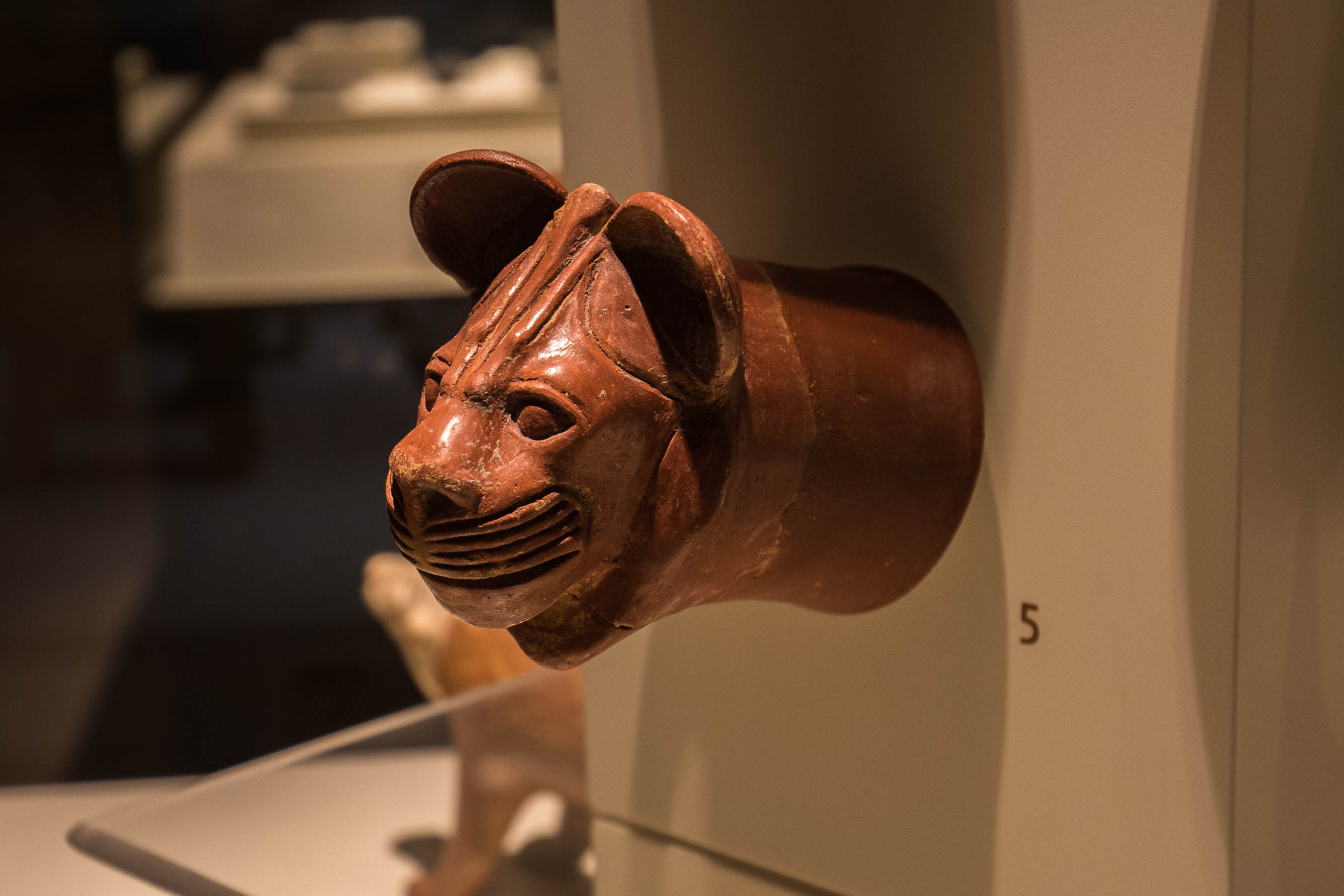
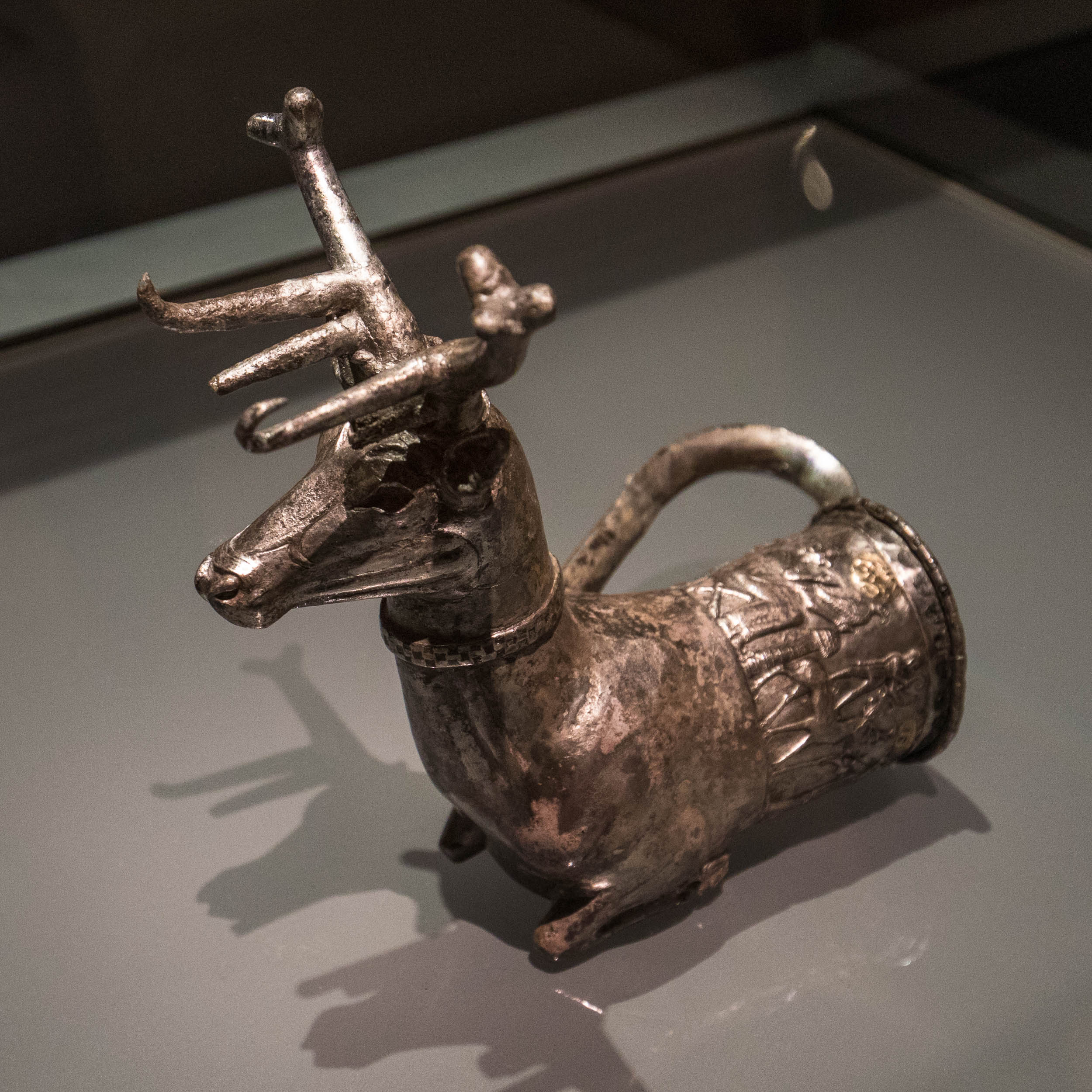
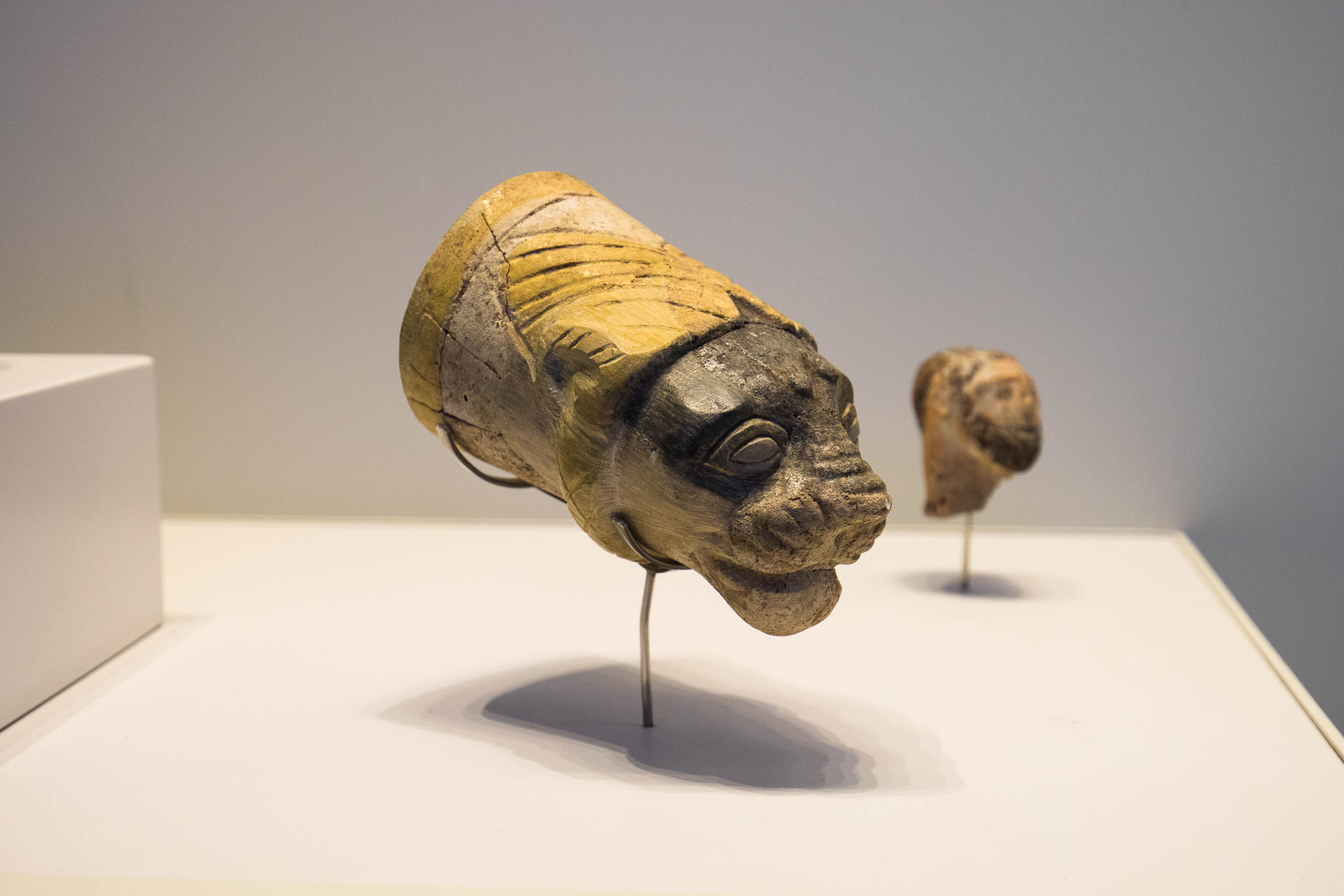
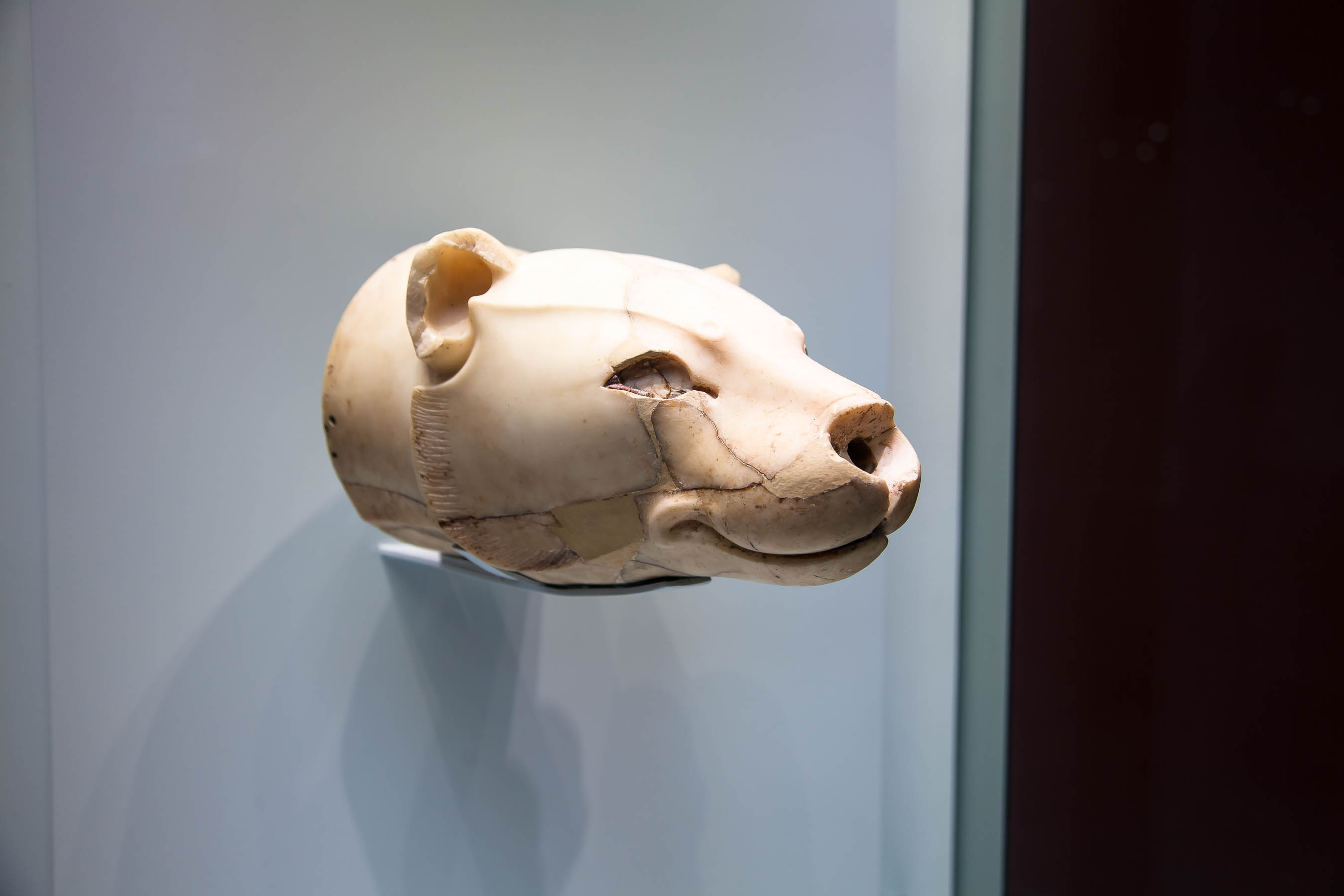
Lion headed rhyta from Pismis Toprak (Hittite – Late Bronze Age);
Silver Deer headed rhyta from Central Anatolia (Hittite – Late Bronze Age);
Lion-headed rhyta from Hazor (15th – 13th century BC);
Alabaster rhyta from Knossos (17th – 16th century BC).
Megiddo at the End of the Bronze Age
As mentioned previously, the Megiddo ivories were found hidden away in a vault under the floor of the palace. The destruction of this palace marks the end of the Canaanite presence in the city. Who was responsible for this destruction? The Sea Peoples are one candidate since we know that they began to settle in the land of Canaan sometime before and during the reign of Ramsses III. They may have attacked Megiddo around this time. The other possibility is that the Israelites captured Megiddo after Deborah and Barak defeated Sisera at the “waters of Megiddo.” This is the more likely scenario since we have a written description of the battle and there is evidence of Israelite occupation at Megiddo in the period immediately following the destruction of the Canaanite city.
formerly attached to a piece of furniture.
A remarkable stash of over 350 ivory objects were found while excavating a palace complex at Megiddo. These ivory pieces were once attached to furniture, or decorated the walls of the palace, but for reasons that are not entirely clear they were removed from their place and hidden in an underground vault. Some have suggested that the ivory was kept as a form of currency that could be hoarded or traded. It is more likely, however, that the ivory was detached and placed in an underground vault due to a destabilized political situation. (see discussion below) One of the ivory objects displays a cartouche of Rameses III thus the ivory objects must have been hidden some time after the reign of the reign of this pharaoh. They were found in a major destruction level that marked the end of the Canaanite presence in the city.
One of the most important objects from this cache is an ivory plaque that depicts scenes from the court of a Canaanite king. In what is by now a familiar pattern, the plaque may be divided into two scenes: victory and celebration.
Victory
In the victory scene, the king wears a leopard skin cloak. In Egypt, such an expensive garment was reserved for priests and for the pharaoh. The winged sun disk that hovers above the kings head is also a symbol of royalty. The king was often addressed as “your sun” in Bronze Age texts.
The king is driving captives, bound and naked, before his chariot. The chariot was the source of Canaanite power in the coastal regions where they could be used to good effect. The book of Judges reports that in the time of Deborah and Barak, the Canaanite rulers, Jabin and Sisera, controlled 900 “iron chariots” with which they “oppressed the people of Israel cruelly for twenty years.” (Judges 4:3 ESV)
The king’s armour bearer trails behind the chariot, carrying a scimitar. This style of sword had a heavy blade made for striking with the edge. A similar sword was found in Tutankhamen’s tomb.
Celebration
The king is seated on a raised throne flanked by female sphinxes. These recall to mind the sphinxes we’ve encountered at Hatussa and Alacahoyuk. They are also somewhat reminiscent of the throne of Solomon described in the book of Kings, except his throne was flanked by lions and not sphinxes.1Scholars have often compared these creatures with the cherubim that stood in the Holy Place of the temple, but the cherubim in Solomon’s temple stood as high as their wingspan was wide. Such proportions belong to a man and not to a four-legged creature. Elsewhere in the Bible, the cherubim appear in visions having hands and the ability to speak. In light of this, it seems best to think of the cherubim in terms of a human form rather than animal.
A lady is shown offering the king a lotus blossom and a bowl of wine. She should probably be identified as a priestess since we find similarly dressed women on gold plaques from a temple dedicated to Aphrodite on Cyprus. They too, wear a flat topped cap, a dress with a patterned hem, and hold lotus blossoms in their hands.
Two attendants approach from behind the throne carrying wine in a krater. The heads of a gazelle and a lion may be seen above the krater. Although it is not obvious, these are ceremonial drinking vessels (called rhyta) shaped in the form of animal heads that were used by royalty for feasting.
Lion headed rhyta from Pismis Toprak (Hittite – Late Bronze Age);
Silver Deer headed rhyta from Central Anatolia (Hittite – Late Bronze Age);
Lion-headed rhyta from Hazor (15th – 13th century BC);
Alabaster rhyta from Knossos (17th – 16th century BC).
Megiddo at the End of the Bronze Age
As mentioned previously, the Megiddo ivories were found hidden away in a vault under the floor of the palace. The destruction of this palace marks the end of the Canaanite presence in the city. Who was responsible for this destruction? The Sea Peoples are one candidate since we know that they began to settle in the land of Canaan sometime before and during the reign of Ramsses III. They may have attacked Megiddo around this time. The other possibility is that the Israelites captured Megiddo after Deborah and Barak defeated Sisera at the “waters of Megiddo.” This is the more likely scenario since we have a written description of the battle and there is evidence of Israelite occupation at Megiddo in the period immediately following the destruction of the Canaanite city.