
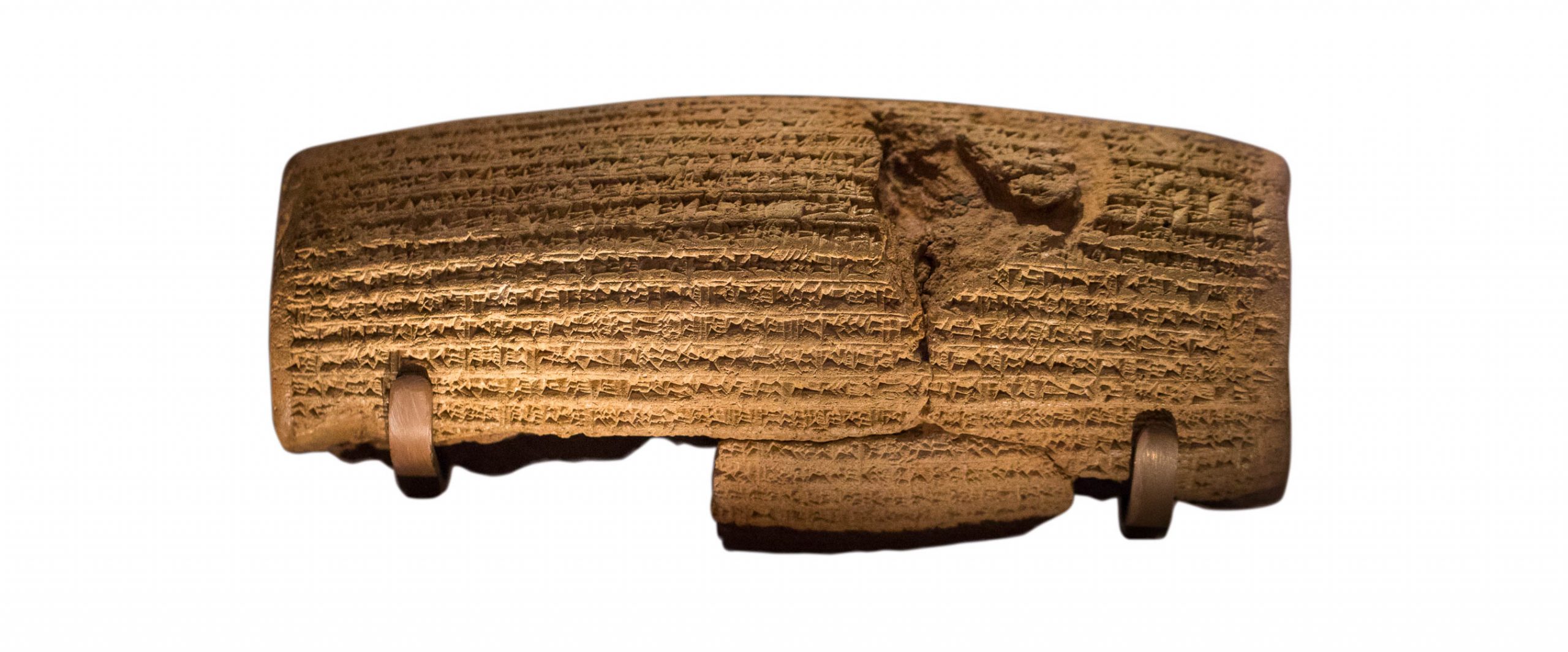
Let us turn now to the Cyrus Cylinder, discovered in Babylon. In it Cyrus states that his army strolled into the city, “their weapons packed away… without any battle…” How this occurred is not stated except that the city was handed over to them by Marduk, the god of the Babylonians! It is possible that Herodotus speaks accurately, when he describes how the Persians diverted the river, or perhaps the city was betrayed since Nabonidus was not the most popular Babylonian king. This, of course, raises a question. If Nabonidus is king, as the Cyrus Cylinder states, then who is Belshazzar? For many years scholars doubted the existence of Belshazzar, arguing that the account in Daniel was composed hundreds of years after the fact, and therefore of dubious historical value. But a tablet has since been discovered that refers to one named Bel-ushu-azar, the eldest son of Nabonidus, to whom the king “entrusted kingship.” In a puzzling series of events, Nabonidus departed Babylon and chose to live in Teima, a city in Arabia. This would have been like the president of the United States departing Washington DC to live in Ottowa. While Nabonidus lived in the Arabia, Belshazzar reigned as king in Babylon. Oaths were taken on the name of Belshazzar and Nabonidus together. (Kitchen, 73-74) This explains why Belshazzar could only offer Daniel third place in his kingdom!
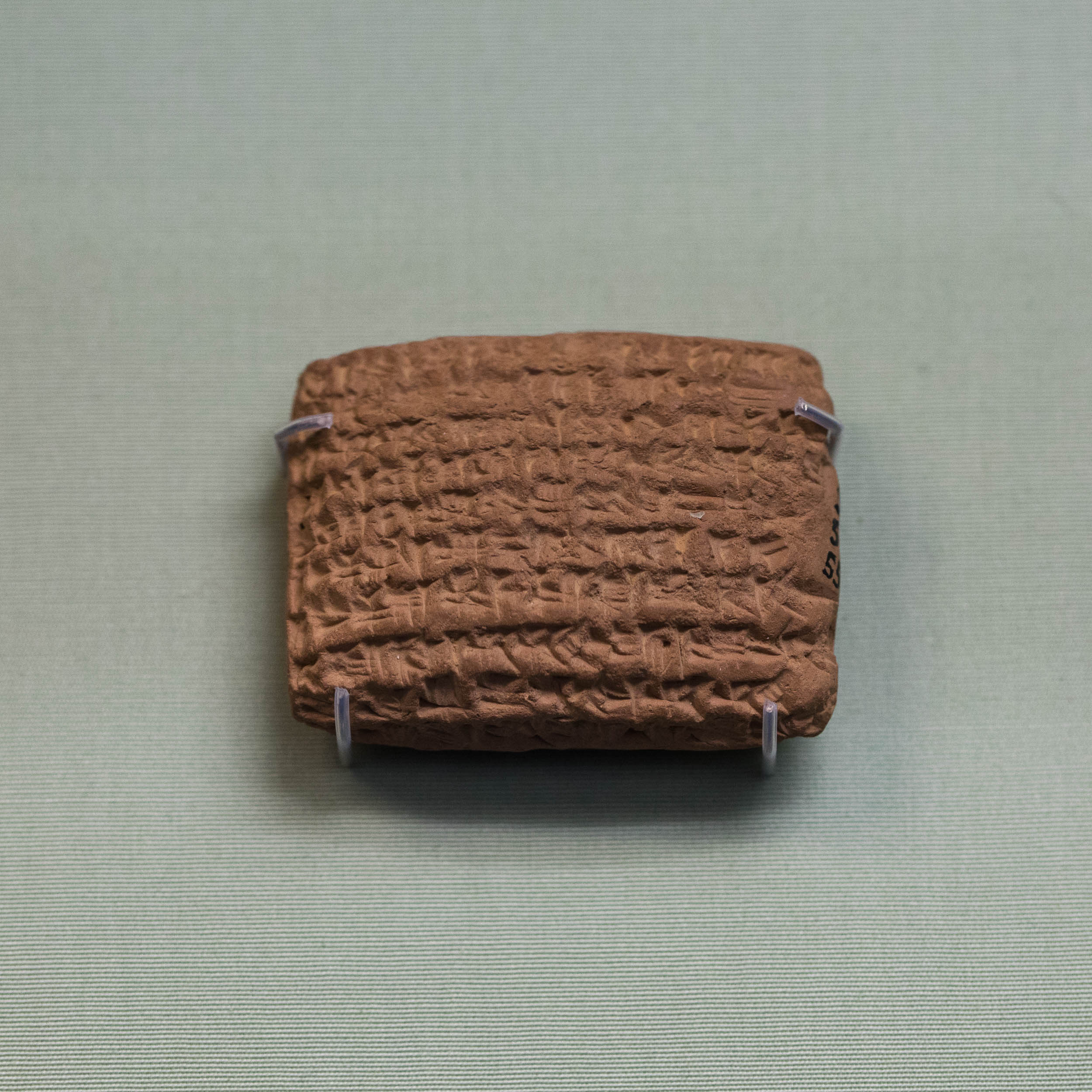
dated to the 24th day of Kislimu in the 11th year of Nabonidus, King of Babylon’. It mentions a ‘slave of Bel-sharra-usur, son of the king’. Although Belshazzar is acting as regent, the formal date shows that Nabonidus is still the reigning king. (545 BC) From Borsippa, southern Iraq.
British Museum arcThe Cyrus Cylinder recounts something more that is of great interest. Cyrus ordered that the temples destroyed by the Babylonians should be rebuilt and that exiles should be restored to their homes. This decree is also mentioned in the Bible. It marks the beginning of the return from exile for the Judeans, and the first halting step towards the reconstruction of the temple. A group of 42,360 Jews left Babylon for Jerusalem the following year.
[ahtimeline-event-heading]
Herodotus writes that the Babylonian and the Persian armies fought before the walls of Babylon. The Babylonians lost the battle and withdrew.
…whereupon they withdrew within their defences. Here they shut themselves up, and made light of his siege, having laid in a store of provisions for many years in preparion against this attack’ for when they saw Cyrus conquering nation after nation, they were convinced that he would never stop, and that their turn would come at last.” (1.90)
Herodotus further recounts how Cyrus redirected the Euphrates and sent his men into the city via the empty riverbed. The Babylonians did not realize the city was thereby taken, for “owing the vast size of the place, the inhabitants of the central parts… knew nothing of what had chanced, but as they were engaged in a festival, continued dancing and reveling until they learnt the capture but too certainly.” (1.191)
Whether this was indeed the way Cyrus took the city is impossible to know but it fits with the account in Daniel, The book of Daniel records that on the night Babylon was taken, King Belshazzar lay out a great feast.
King Belshazzar made a great feast for a thousand of his lords and drank wine in front of the thousand. (Dan. 5:1 ESV)
After tasting the wine, Belshazzar ordered that the vessels from the temple in Jerusalem be used to serve the wine to his nobles, wives and concubines. This intentional act of sacrilege would have been offensive to any nation, particularly to the Jews. Rembrandt captures the moment when a hand appears and writes the mysterious words: Mene, Mene, Tekel, Parsin on the wall of the great hall. Daniel is brought before the king to interpret the words emblazoned on the wall. Daniel interprets each word for Belshazzar. Shekel he interprets as ‘to weigh’ in Aramaic and declares to Belshazzar “You have been weighed in the balances and found wanting!” The account closes with a remarkably succinct statement, even by Biblical standards: That very night Belshazzar the Chaldean king was killed. And Darius the Mede received the kingdom, being about sixty-two years old. (Dan. 5:30-31 ESV)
The Fall of Babylon
Let us turn now to the Cyrus Cylinder, discovered in Babylon. In it Cyrus states that his army strolled into the city, “their weapons packed away… without any battle…” How this occurred is not stated except that the city was handed over to them by Marduk, the god of the Babylonians! It is possible that Herodotus speaks accurately, when he describes how the Persians diverted the river, or perhaps the city was betrayed since Nabonidus was not the most popular Babylonian king. This, of course, raises a question. If Nabonidus is king, as the Cyrus Cylinder states, then who is Belshazzar? For many years scholars doubted the existence of Belshazzar, arguing that the account in Daniel was composed hundreds of years after the fact, and therefore of dubious historical value. But a tablet has since been discovered that refers to one named Bel-ushu-azar, the eldest son of Nabonidus, to whom the king “entrusted kingship.” In a puzzling series of events, Nabonidus departed Babylon and chose to live in Teima, a city in Arabia. This would have been like the president of the United States departing Washington DC to live in Ottowa. Whatever the case, it is now clear that Belshazzar reigned as king in Babylon while Nabonidus was living in the Arabia. Thus oaths were taken on the name of Belshazzar and Nabonidus together. (Kitchen, 73-74)
The Cyrus Cylinder recounts something more that is of great interest. Cyrus ordered that the temples destroyed by the Babylonians should be rebuilt and that exiles should be restored to their homes. This decree is also mentioned in the Bible. It marks the beginning of the return from exile for the Judeans, and the first halting step towards the reconstruction of the temple. A group of 42,360 Jews left Babylon for Jerusalem the following year.
Let us turn now to the Cyrus Cylinder, discovered in Babylon. In it Cyrus states that his army strolled into the city, “their weapons packed away… without any battle…” How this occurred is not stated except that the city was handed over to them by Marduk, the god of the Babylonians! It is possible that Herodotus speaks accurately, when he describes how the Persians diverted the river, or perhaps the city was betrayed since Nabonidus was not the most popular Babylonian king. This, of course, raises a question. If Nabonidus is king, as the Cyrus Cylinder states, then who is Belshazzar? For many years scholars doubted the existence of Belshazzar, arguing that the account in Daniel was composed hundreds of years after the fact, and therefore of dubious historical value. But a tablet has since been discovered that refers to one named Bel-ushu-azar, the eldest son of Nabonidus, to whom the king “entrusted kingship.” In a puzzling series of events, Nabonidus departed Babylon and chose to live in Teima, a city in Arabia. This would have been like the president of the United States departing Washington DC to live in Ottowa. While Nabonidus lived in the Arabia, Belshazzar reigned as king in Babylon. Oaths were taken on the name of Belshazzar and Nabonidus together. (Kitchen, 73-74) This explains why Belshazzar could only offer Daniel third place in his kingdom!
dated to the 24th day of Kislimu in the 11th year of Nabonidus, King of Babylon’. It mentions a ‘slave of Bel-sharra-usur, son of the king’. Although Belshazzar is acting as regent, the formal date shows that Nabonidus is still the reigning king. (545 BC) From Borsippa, southern Iraq.
British Museum arcThe Cyrus Cylinder recounts something more that is of great interest. Cyrus ordered that the temples destroyed by the Babylonians should be rebuilt and that exiles should be restored to their homes. This decree is also mentioned in the Bible. It marks the beginning of the return from exile for the Judeans, and the first halting step towards the reconstruction of the temple. A group of 42,360 Jews left Babylon for Jerusalem the following year.
[ahtimeline-event-heading]
Herodotus writes that the Babylonian and the Persian armies fought before the walls of Babylon. The Babylonians lost the battle and withdrew.
…whereupon they withdrew within their defences. Here they shut themselves up, and made light of his siege, having laid in a store of provisions for many years in preparion against this attack’ for when they saw Cyrus conquering nation after nation, they were convinced that he would never stop, and that their turn would come at last.” (1.90)
Herodotus further recounts how Cyrus redirected the Euphrates and sent his men into the city via the empty riverbed. The Babylonians did not realize the city was thereby taken, for “owing the vast size of the place, the inhabitants of the central parts… knew nothing of what had chanced, but as they were engaged in a festival, continued dancing and reveling until they learnt the capture but too certainly.” (1.191)
Whether this was indeed the way Cyrus took the city is impossible to know but it fits with the account in Daniel, The book of Daniel records that on the night Babylon was taken, King Belshazzar lay out a great feast.
King Belshazzar made a great feast for a thousand of his lords and drank wine in front of the thousand. (Dan. 5:1 ESV)
After tasting the wine, Belshazzar ordered that the vessels from the temple in Jerusalem be used to serve the wine to his nobles, wives and concubines. This intentional act of sacrilege would have been offensive to any nation, particularly to the Jews. Rembrandt captures the moment when a hand appears and writes the mysterious words: Mene, Mene, Tekel, Parsin on the wall of the great hall. Daniel is brought before the king to interpret the words emblazoned on the wall. Daniel interprets each word for Belshazzar. Shekel he interprets as ‘to weigh’ in Aramaic and declares to Belshazzar “You have been weighed in the balances and found wanting!” The account closes with a remarkably succinct statement, even by Biblical standards: That very night Belshazzar the Chaldean king was killed. And Darius the Mede received the kingdom, being about sixty-two years old. (Dan. 5:30-31 ESV)
The Fall of Babylon
Let us turn now to the Cyrus Cylinder, discovered in Babylon. In it Cyrus states that his army strolled into the city, “their weapons packed away… without any battle…” How this occurred is not stated except that the city was handed over to them by Marduk, the god of the Babylonians! It is possible that Herodotus speaks accurately, when he describes how the Persians diverted the river, or perhaps the city was betrayed since Nabonidus was not the most popular Babylonian king. This, of course, raises a question. If Nabonidus is king, as the Cyrus Cylinder states, then who is Belshazzar? For many years scholars doubted the existence of Belshazzar, arguing that the account in Daniel was composed hundreds of years after the fact, and therefore of dubious historical value. But a tablet has since been discovered that refers to one named Bel-ushu-azar, the eldest son of Nabonidus, to whom the king “entrusted kingship.” In a puzzling series of events, Nabonidus departed Babylon and chose to live in Teima, a city in Arabia. This would have been like the president of the United States departing Washington DC to live in Ottowa. Whatever the case, it is now clear that Belshazzar reigned as king in Babylon while Nabonidus was living in the Arabia. Thus oaths were taken on the name of Belshazzar and Nabonidus together. (Kitchen, 73-74)
The Cyrus Cylinder recounts something more that is of great interest. Cyrus ordered that the temples destroyed by the Babylonians should be rebuilt and that exiles should be restored to their homes. This decree is also mentioned in the Bible. It marks the beginning of the return from exile for the Judeans, and the first halting step towards the reconstruction of the temple. A group of 42,360 Jews left Babylon for Jerusalem the following year.