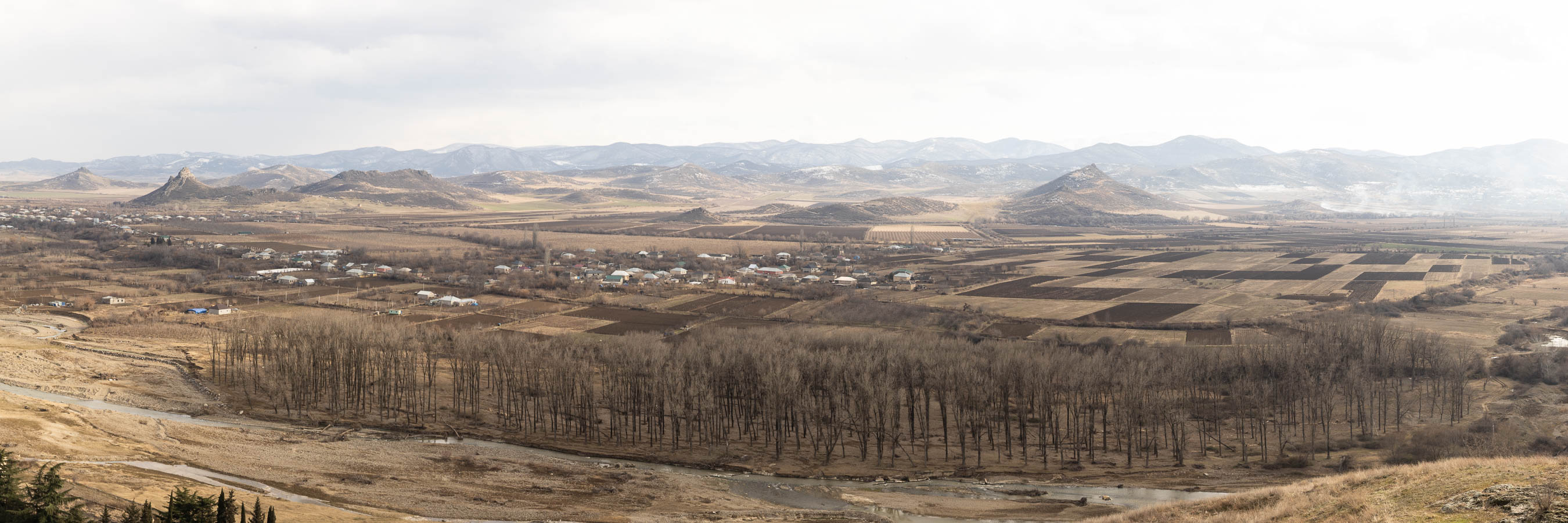
The Kvemo Kartli region of southern Georgia is one of the few mining districts in the Caucasus that can be directly connected to the Kura Araxes culture. The region is rich in copper and especially gold, which was smelted locally.
Copper, gold, and antimony were mined in the mineral rich mountains east of the Black Sea. One of the best examples of early bronze mining comes from mine shafts at Sakdrisi in the Lesser Caucasus mountains of southern Georgia. Archaeologists found charcoal in the shafts, the remnants of fires that were lit to weaken the stone before it was broken from the mountain with stone hammers. Thousands of these hammers have been found in the mine shafts of Sakdrisi.


Large numbers of stone hammers such as thee were found in the mines at Sakdrisi in the Lesser Caucasus (in modern day Georgia).
The ore mined at Sakdrisi was transported to the nearby settlement of Dzedzvebi where it was smelted into metal. Analysis of the partially processed ore suggests that gold was the primary metal smelted at Sakdrisi. Indeed, a controversial new gold mine is being constructed at Sakdrisi today, evidence that there is indeed gold in those hills. The Kura Araxes pottery recovered from Sakdrisi and Dzedzvebi indicates an Early Bronze date for this mining activity.


Kura Araxes pottery found at Dzedzvebi in southern Georgia.
Although it has long been theorized that the Caucasus was an early center for metal working, it was nevertheless surprising to find evidence of gold mining and smelting in Georgia since since very little gold has been found in the Kura Araxes settlements from the first half of the Early Bronze period. However, contemporary kurgans (“grave mounds”) of the Markopi culture on the northern shore of the Black Sea in Russia have produced a wealth of grave goods, including many items of gold. Kurgans also began to appear in the Caucasus at the transition from the Kura Araxes culture to the Early Kurgan culture (c. 2500 BC). One of these, discovered in Georgia, known as Ananauri 3, produced a wealth of gold objects, and also some remarkably fine jewelry made from amber.
In later periods, the region of Colchis, home of legendary Golden Fleece, was renown for its great wealth and rich goldsmithing traditions. Colchian gold jewelry of the 5th-3rd centuries BC is among the finest examples of goldsmithing known from the period.
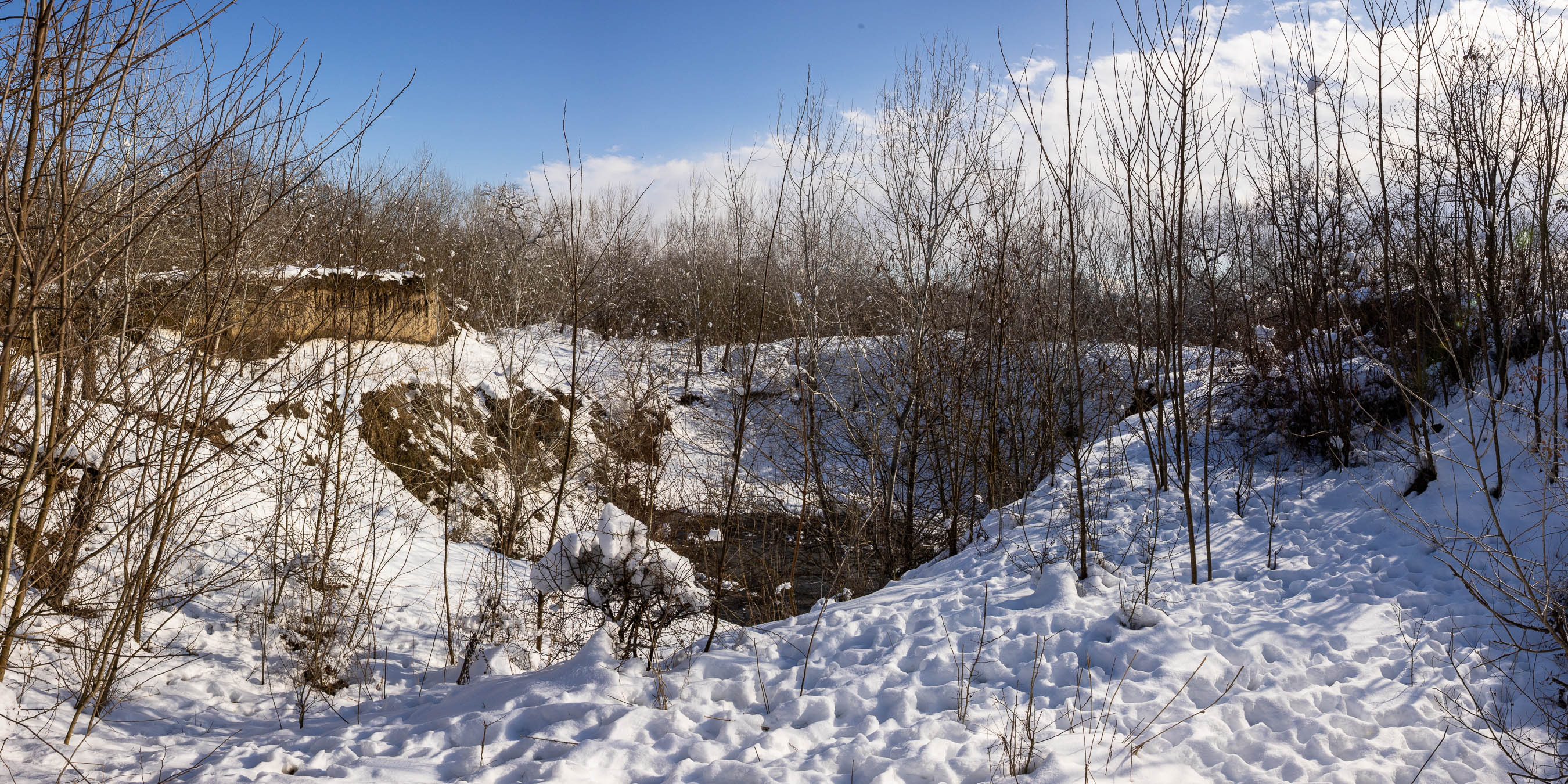
Although today a hole in the ground today, this large mound (320 feet in diameter and 40 feet high) produced rich grave goods.


Left: Gold objects from Ananauri 3 Kurgan. Right: An amber necklace. The amber probably came from the Balkans or northern Europe where the majority of fossilized tree sap is found.

One of two wooden carts found in Ananauri 3 grave mound.
Simonyan, Hakob, Mitchell S Rothman.
Shengavit: A Kura-Araxes Center in Armenia.
Costa Mesa, California: Mazda Publishers, 2023.
Stöllner, Thomas, Irina Gambashidze, Ihab Al-Oumaoui, Tobias Baldus.
Between Valleys and Mountains: The Dzedzvebi Plateau as an Intermediate Settlement Site of Late Chalcolithic and Early Bronze Age Communities in the Lesser Caucasus. Archaeologia Austriaca, Band 107 vols.
Wien: Österreichische Akademie der Wissenschaften, 2023. Link
“The Stone Axes of Troy.” Aegeus Society. Österreichische Akademie der Wissenschaften. March 12, 2025. Link
Tamazashvili, Ketevan.
“The Prehistoric Mining Implements from Georgia,” in On Salt, Copper and Gold, edited by Catherine Marro, Thomas Stöllner.
Lyon: : MOM Éditions, 2021. Link
Vajk, Szeverényi.
“The Earliest Copper Shaft-Hole Axes in the Carpathian Basin: Interaction, Chronology and Transformations of Meaning ,” in Moments in Time: Papers Presented to Pál Raczky on His 60th Birthday , edited by Alexandra Anders, Gabriella Kulcsár.
Budapest: Eötvös Loránd University , 2013.